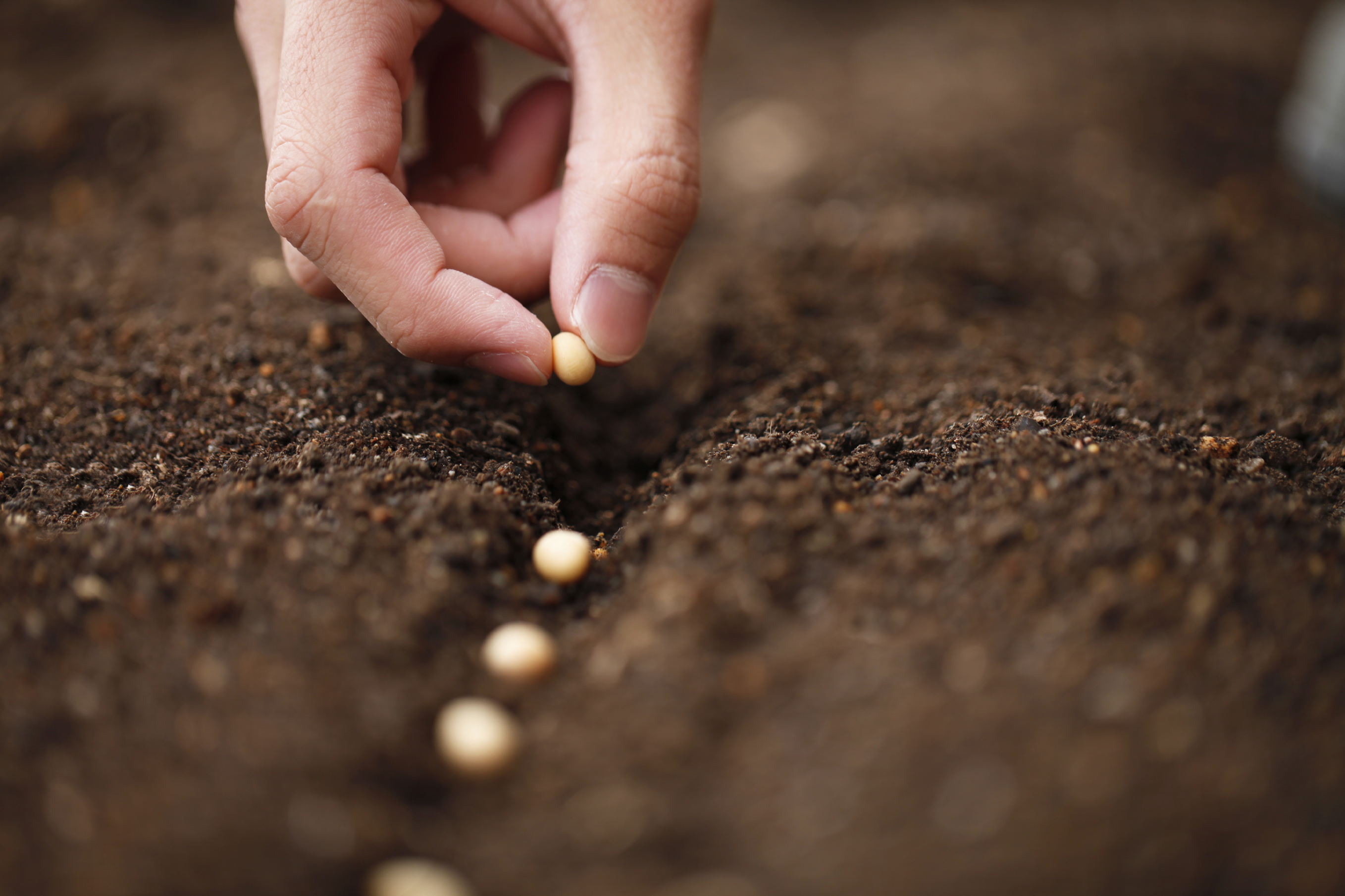
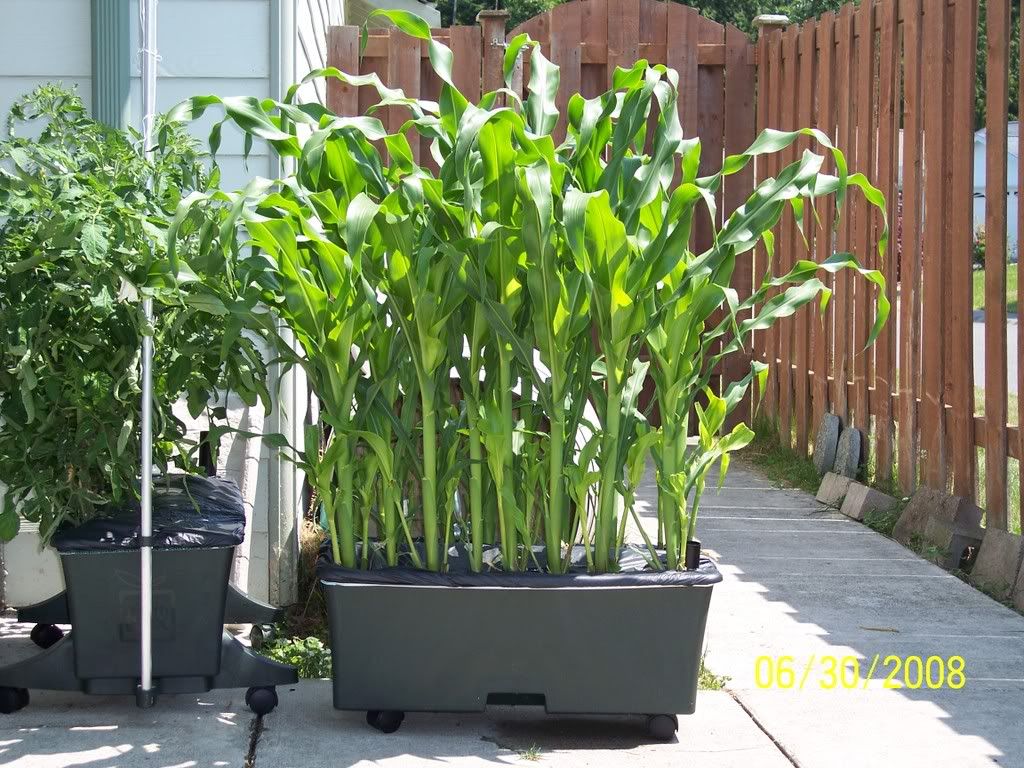
" We're fortunate that our patients wanted to get these plants started in the dead of winter - relatively speaking. It's now May, and our first crop of salad greens is ready for harvest! OK, now: let's review what is going to happen in the group today. Ellen?"
"John is going to harvest enough Swiss chard for our first salad - but, how much is that?"
"Let's see - we're not cooking it but dressing it, so - there are six of us working, patients and trainers, and we'll probably eat 1 tablespoon each (gotta be realistic!) so - 6 tablespoons!" But, can John see it?"
"Sure! I marked the boundary around the chard bed with red colored duct tape; he can't help but zero in on it."
John's treatment plan for 5/7/16: John will cut 6 Swiss chard plants within his line of vision, with no more than moderate verbal and gestural cueing, and with 83% (accurate-delayed) accuracy.
"OK - good plan; his field of vision is better but this will help him focus on the job. Becky - will Mary Anne have any difficulty pulling the radishes?"
"If I am not there for the entire time she can pick enough enough radishes, then she may go on a tangent and rip out a red light bulb from the night lights!"
Mary Anne's treatment plan for 5/7/16: Mary Anne will pull 6 radishes from the raised bed, with constant verbal, gestural and tactile cues, and with 60% (repeat prompt) accuracy.
"OK then! I think you know what to do. And I am working with Celeste today; her job is to follow John and Mary Anne, and check that they have completed their jobs before we all head to the kitchen".
Celeste's treatment plan for 5/7/16: Celeste will record the performance of both John and Mary Anne on their garden assignments, and report to both Ellen and Becky on their execution of the plans - with occasional cues, and with 93% accuracy.
"But, but - that means we have only chard and radishes for the salad?!?!?! BLecccchhhhhh....; BORING".
"OOPS"
"We'd better then go for more: I don't cook that often. How about, then....after John gets the chard, he can also cut some arugula. Then Mary Anne can....get some shears and cut some butter lettuce. That should be ready, too - right, Becky?"
"Right! And I will keep an eye on Mary Anne using shears; maybe, tell her she has only 15 cuts allotted from these shears today!"
"I agree. There is a head of iceberg lettuce from the grocery in our refrigerator; we can use it to add the "crunch" that many salad eaters tend to crave. Also, can both of your clients swallow nuts without problems?"
"Yes"
"O Yes!"
"Great. The creamy dressing should help hold everything together in a good bite to swallow. There's crunch, and there's sweetness. There's pepper in the arugula, and there's pepper and crunch in the radish. Anything left?"
"No, Doris".
"Let's go".
Saturday, May 7, 2016
Thursday, May 5, 2016
The call came in....
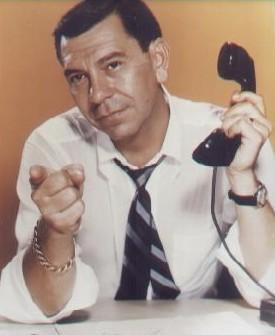
I was working the day watch out of swallowing division, and was about to go out on a call when the desk sergeant caught me: "there's a new case up on 2nd floor; go check it out". Just as I thought, as I moved to the electronic medical record and started to skim the material. Don't ever plan ahead. But the flip side of that is: you are NEVER bored here!
Minutes later, I was interviewing the suspect about the alleged swallowing incident. "Just the facts, ma'am", and so she gave me the facts. Then I talked to the persons taking care of her, asking them for the same facts. They gave me different facts. My partner gave me some facts from a book. Those facts kinda said: maybe A, but it could be B as well. Should I call forensics in on this one?
The evidence had to be procured, and so I started to work the crime scene. "Try a bite of this", then "How about a drink of ______?", followed by "Would you like to try this, or THAT??"; and then finally, "Tell me what you would like next". Always, pacing the presentation of the spoon - so the suspect had to exert active control over the material; always, awaiting her subtle bloop of the hyoid up and forward, so then another bite/sip could be offered. Always, keeping that subtle but vital communication flowing throughout the meal, so that the suspect could eat and drink to the best of her ability.
Case closed. There was to be, at least today, no end of the shift with hearing a sentence pronounced: "mechanical soft, nectar thick- THIRTY YEARS TO LIFE". This is the city. I carry an IOPI.
Minutes later, I was interviewing the suspect about the alleged swallowing incident. "Just the facts, ma'am", and so she gave me the facts. Then I talked to the persons taking care of her, asking them for the same facts. They gave me different facts. My partner gave me some facts from a book. Those facts kinda said: maybe A, but it could be B as well. Should I call forensics in on this one?
The evidence had to be procured, and so I started to work the crime scene. "Try a bite of this", then "How about a drink of ______?", followed by "Would you like to try this, or THAT??"; and then finally, "Tell me what you would like next". Always, pacing the presentation of the spoon - so the suspect had to exert active control over the material; always, awaiting her subtle bloop of the hyoid up and forward, so then another bite/sip could be offered. Always, keeping that subtle but vital communication flowing throughout the meal, so that the suspect could eat and drink to the best of her ability.
Case closed. There was to be, at least today, no end of the shift with hearing a sentence pronounced: "mechanical soft, nectar thick- THIRTY YEARS TO LIFE". This is the city. I carry an IOPI.
Sunday, May 1, 2016
Happy Better Hearing and Speech Month
May has been known as Better Hearing and Speech Month in the United States since 1927. During that year, the Holland Tunnel opened to feed traffic into and out of New York City. The Marines invaded Nicaragua and stayed until 1933. Heisenberg developed a theory of physics, but he was uncertain. The movie "Metropolis" premiered, and it certainly set the screen world on its ear. In the same vein, the American Speech-Language-Hearing Association (ASHA) set out that year, to tell the public about disorders of communication. ASHA also started to tell the story on what speech-language pathologists can do for the individuals afflicted with these disorders. So much has changed since 1927, but Better Hearing and Speech Month has not. This year's theme is titled "Communication Takes Care". Activities, events, and public relations tools are used to spread the word about what SLP's do for the persons we serve.
How do I want to commemorate the month? Above all, I want to say "thanks" to my current and former employers, for giving me the chance to serve persons in need. I have grown tremendously as a professional, from the wise experience and advice I had received from patients, their families, my colleagues and my peers. Following is a list of those employers.
* Kindred Rehabilitation Services, Streamwood IL
* Payne Wellness Center, Schaumburg, IL
* Brookdale Senior Living, Des Plaines IL
* Independence Plus, Inc., Oak Brook IL
* Elmhurst Memorial Hospital, Elmhurst IL
* Michael Reese Hospital, Chicago IL
* Allendale Association, Lake Villa IL
* Exceptional Persons, Inc., Waterloo IA
* University of Northern Iowa, Cedar Falls IA
* Covenant Health System, Waterloo IA
* State of Idaho Dept. Health and Welfare, Rupert ID
* State of Louisiana Dept. Health and Welfare, Thibodaux LA
* Assumption Parish School Board, Napoleonville LA
* University of Iowa Healthcare, Iowa City IA
* St Luke's Methodist Hospital, Cedar Rapids, IA
* University of Iowa, Iowa City IA
* Mississippi Valley State University, Itta Bena MS
* Veterans Administration Medical Center, Gulfport - Biloxi MS
* University of Mississippi, Oxford MS
Happy Better Hearing and Speech Month, everyone!
How do I want to commemorate the month? Above all, I want to say "thanks" to my current and former employers, for giving me the chance to serve persons in need. I have grown tremendously as a professional, from the wise experience and advice I had received from patients, their families, my colleagues and my peers. Following is a list of those employers.
* Kindred Rehabilitation Services, Streamwood IL
* Payne Wellness Center, Schaumburg, IL
* Brookdale Senior Living, Des Plaines IL
* Independence Plus, Inc., Oak Brook IL
* Elmhurst Memorial Hospital, Elmhurst IL
* Michael Reese Hospital, Chicago IL
* Allendale Association, Lake Villa IL
* Exceptional Persons, Inc., Waterloo IA
* University of Northern Iowa, Cedar Falls IA
* Covenant Health System, Waterloo IA
* State of Idaho Dept. Health and Welfare, Rupert ID
* State of Louisiana Dept. Health and Welfare, Thibodaux LA
* Assumption Parish School Board, Napoleonville LA
* University of Iowa Healthcare, Iowa City IA
* St Luke's Methodist Hospital, Cedar Rapids, IA
* University of Iowa, Iowa City IA
* Mississippi Valley State University, Itta Bena MS
* Veterans Administration Medical Center, Gulfport - Biloxi MS
* University of Mississippi, Oxford MS
Happy Better Hearing and Speech Month, everyone!
Saturday, April 30, 2016
Who has the best approach?
With a previous post ("Are You A Technician? A Psychometrician?"), I began to describe two perspectives the SLP might bring to the job, regardless of the customer base or service setting where the SLP might work. With the roles of the technician vs. the psychometrician, I wanted to call attention to not only how each role is endowed with unique responsibilities, but also how each role can limit the autonomy of the SLP.
To keep it real, the majority of my days and those of most of my peers have significant portions devoted to repetitive, focused tasks. We all spend time at specialized and circumscribed activities available for our use by our education, training and experience. But if this were the entirety of the workday, I would run, run like the wind from such a job. Growing in this profession means, to me at least, that you should be able to use all your skill set; to challenge yourself to think while you work; to use your good work to indirectly market your profession: I can hear it now....
(Sung to the tune of 'Dark End of the Street') -
"Do you know - what an SLP can do?
She may help you talk, but you hear better too;
He helps you swallow; helps you think on your feet -
She lives in the real world so your life's more a treat.
YOU AND ME - tangled tongue, straightened out by an SLP....
He sees the big picture,
Not just the skill constricture;
She works well with mothers, bosses
And your MDddddddddddddddd
YOU AND ME - tangled tongue, straightened out by an SLP" -
I am calling this perspective on the clinician, the "diagnostician". How do all three perspectives compare in a nutshell??
I see the diagnostician as the apogee of evolution in our field: the diagnostician draws her/his decision making skills from a broad general skill set, in addition to the specialized knowledge required for the CCC. Technician and psychometrician skill sets are folded into what the diagnostician does, but there remains much more. Perspectives #1 and #2 are domain specific, but #3 is more and more a generalist - though knowing how to be specific, for the needs of each of the persons she serves. Where the technician and diagnostician fill a role, the diagnostician embodies an identity.
I hope that these ideas can help fuel more thought and discussion about how the SLP approaches her work.
To keep it real, the majority of my days and those of most of my peers have significant portions devoted to repetitive, focused tasks. We all spend time at specialized and circumscribed activities available for our use by our education, training and experience. But if this were the entirety of the workday, I would run, run like the wind from such a job. Growing in this profession means, to me at least, that you should be able to use all your skill set; to challenge yourself to think while you work; to use your good work to indirectly market your profession: I can hear it now....
(Sung to the tune of 'Dark End of the Street') -
"Do you know - what an SLP can do?
She may help you talk, but you hear better too;
He helps you swallow; helps you think on your feet -
She lives in the real world so your life's more a treat.
YOU AND ME - tangled tongue, straightened out by an SLP....
He sees the big picture,
Not just the skill constricture;
She works well with mothers, bosses
And your MDddddddddddddddd
YOU AND ME - tangled tongue, straightened out by an SLP" -
I am calling this perspective on the clinician, the "diagnostician". How do all three perspectives compare in a nutshell??
WHO DOES IT?
|
HOW DO THEY THINK?
|
WHAT DO THEY THINK?
|
||
SLP as technician
|
Let’s do this one thing.
|
I’ll do all the ‘x’ you want to give me.
|
||
SLP as psychometrician
|
Let’s do this exactly right.
|
I am your lab bench jockey.
|
||
SLP as diagnostician
|
Let’s do it so this person cans communicate/swallow/think better.
|
I do it all for person ‘Y’.
|
||
I see the diagnostician as the apogee of evolution in our field: the diagnostician draws her/his decision making skills from a broad general skill set, in addition to the specialized knowledge required for the CCC. Technician and psychometrician skill sets are folded into what the diagnostician does, but there remains much more. Perspectives #1 and #2 are domain specific, but #3 is more and more a generalist - though knowing how to be specific, for the needs of each of the persons she serves. Where the technician and diagnostician fill a role, the diagnostician embodies an identity.
I hope that these ideas can help fuel more thought and discussion about how the SLP approaches her work.
Sunday, April 24, 2016
Would you like a garden?
Regular readers of this blog, or of my other writings and presentations, know how enthusiastic I am about gardening in clinical speech-language therapy. It is fun. It's rewarding for clinicians who do the work, and for the persons enjoying the 'fruits' of the work. Though not expensive to carry out, the creation of gardening structures and the sweat equity you put into their use, can offer incredible returns on investment in a clinical laboratory to serve the persons you are entrusted.
Entertaining, innovative; providing multisensory stimulation; a haven from the clamor and buzz of modern life; and you can eat the toys! Like hippotherapy, aquatherapy and corporate SLP, gardening can energize the SLP'S career - but I believe the gardening laboratory should be an experience that SLP's have from the beginnings of their career.
I would like to see a laboratory garden (or teaching, training, therapy or whatever kind of garden you call it) in every SLP training program: very simply put. You learn during your training to assess phonology; you learn to train phonatory function to help someone speak clearly in real life; you learn how to use FEES for swallowing - and you can also find 10 words that go with 'tomato', while growing Napa grape tomatoes.
The options for stimulating communication and thinking are too numerous to count now. Would this garden require an SLP student to develop a horticultural skill set, in addition to their professional training? Not necessarily. But at least 4 options exist for starting and sustaining the 'therapeutic garden' for a university speech and language clinic, with various levels of start-up and maintenance costs. Are there other advantages to the new professional? To the training program? To other programs and departments at the school?
Yes, yes and yes. The new professional gains working experience in a real-life environment that is conducive to clinical magic. The training program has a recruiting tool, as well as a student training site that can be shared and coordinated with the help of other departments (e.g. life sciences, consumer science, nutrition) to achieve unique or unified missions.
In the state of Illinois, there are 15 college/ university programs that prepare future speech-language clinicians for the bachelor's degree or above. I look forward to reaching out to each program as an unpaid consultant during the program's summer term. The goals of consultancy are to identify programs committing to development of a therapy garden by fall 2016. SO - Illinois SLP training program directors: Do you want a garden?
Entertaining, innovative; providing multisensory stimulation; a haven from the clamor and buzz of modern life; and you can eat the toys! Like hippotherapy, aquatherapy and corporate SLP, gardening can energize the SLP'S career - but I believe the gardening laboratory should be an experience that SLP's have from the beginnings of their career.
I would like to see a laboratory garden (or teaching, training, therapy or whatever kind of garden you call it) in every SLP training program: very simply put. You learn during your training to assess phonology; you learn to train phonatory function to help someone speak clearly in real life; you learn how to use FEES for swallowing - and you can also find 10 words that go with 'tomato', while growing Napa grape tomatoes.
The options for stimulating communication and thinking are too numerous to count now. Would this garden require an SLP student to develop a horticultural skill set, in addition to their professional training? Not necessarily. But at least 4 options exist for starting and sustaining the 'therapeutic garden' for a university speech and language clinic, with various levels of start-up and maintenance costs. Are there other advantages to the new professional? To the training program? To other programs and departments at the school?
Yes, yes and yes. The new professional gains working experience in a real-life environment that is conducive to clinical magic. The training program has a recruiting tool, as well as a student training site that can be shared and coordinated with the help of other departments (e.g. life sciences, consumer science, nutrition) to achieve unique or unified missions.
In the state of Illinois, there are 15 college/ university programs that prepare future speech-language clinicians for the bachelor's degree or above. I look forward to reaching out to each program as an unpaid consultant during the program's summer term. The goals of consultancy are to identify programs committing to development of a therapy garden by fall 2016. SO - Illinois SLP training program directors: Do you want a garden?
Saturday, April 2, 2016
Are you a technician? A psychometrician?
(Blogger ' s note: I was unabashedly a fan of MAD magazine parodies when much younger, and still admire them for what they taught me about truth-telling. Here's the truthiness I see in how an SLP structures her/his job.)
To the tune of "Take Me Out to the Ballgame"
Are you just a technician?
Do you do one job o'er and o'er??
Even if your one job is in demand
The pent-up boredom splits you where you stand:
Where a half of you works your butt off,
And the other half ' s going numb -
I'd much rather get techie, when all in one piece
So find your butt, and insert thumb!
(To the technicians everywhere who really love their job: when you are mindful about your work, even a repetitive SLP activity is rewarding. Sometimes, though, it's hard to be mindful. Doing all day 'bedside swallows', hearing testing, oral peripherals, MBS's, and back in my training days, "IT- PAHS" (Illinois Test of Psycholinguistic Abilities"; - it was a pivotal life lesson to learn how to appreciate the discipline involved in doing repetitive tasks. Pinning your ears back, staying attuned to the needs for high quality in repetition, and keeping the ideals of quality customer service up front - equally important. But maybe, when you hear yourself referred to by physicians as "the swallow technician" - that actually happened - you want to use more of your skills acquired in graduate training. Why, otherwise, would a physician use your services for much more than the finite job )
To the tune of "La Bamba"
You are a psychometrician!
Your day is filled up with
Testing people from dawn to dusk
If there's a protocol to be had
You'll pull it off the shelf,
You'll glean it from its husk
And when it's time to know the score, they ask -
What is the score?
That is the score!?
YOU know the score....
(I do admire the skill of a professional tester: such an armamentaria for truth - telling in those test kits! Training and experience allow the psychometrician to capture systematically a portrait of a person's function. The pressures of the modern human service workplace, be it education or health care, - be it for adults or children - seem to benefit the services of this "psycho - ", as standardized data collection appears the favored documentation of outcomes, by third party payers. Inevitably, though, management of the person's case teaches you that understanding a person's needs cannot simply be - placing a frame about a photograph.)
What else can be done? Is there another approach to patient care that allows an SLP to consider multiple dimensions; that allows you to apply the art of communication, as well as the science?
To the tune of "Take Me Out to the Ballgame"
Are you just a technician?
Do you do one job o'er and o'er??
Even if your one job is in demand
The pent-up boredom splits you where you stand:
Where a half of you works your butt off,
And the other half ' s going numb -
I'd much rather get techie, when all in one piece
So find your butt, and insert thumb!
(To the technicians everywhere who really love their job: when you are mindful about your work, even a repetitive SLP activity is rewarding. Sometimes, though, it's hard to be mindful. Doing all day 'bedside swallows', hearing testing, oral peripherals, MBS's, and back in my training days, "IT- PAHS" (Illinois Test of Psycholinguistic Abilities"; - it was a pivotal life lesson to learn how to appreciate the discipline involved in doing repetitive tasks. Pinning your ears back, staying attuned to the needs for high quality in repetition, and keeping the ideals of quality customer service up front - equally important. But maybe, when you hear yourself referred to by physicians as "the swallow technician" - that actually happened - you want to use more of your skills acquired in graduate training. Why, otherwise, would a physician use your services for much more than the finite job )
To the tune of "La Bamba"
You are a psychometrician!
Your day is filled up with
Testing people from dawn to dusk
If there's a protocol to be had
You'll pull it off the shelf,
You'll glean it from its husk
And when it's time to know the score, they ask -
What is the score?
That is the score!?
YOU know the score....
What else can be done? Is there another approach to patient care that allows an SLP to consider multiple dimensions; that allows you to apply the art of communication, as well as the science?
Sunday, March 27, 2016
Who Exactly Are We?
Back in November 2012, an early blog post of mine proclaimed "I am a speech-language pathologist ". I talked about what we do in the field, and what I hope to do through the work years still to come, but - little emphasis was placed on what makes an effective speech-language pathologist. I know how I became me, but - am I the right kind of me for this work? I set out to look and look for what others say makes an effective SLP, and what else makes the field alive for me.
One source document on this topic comes from my employer (Schmidt 2014). Here are the categories they attribute to persons having success as clinical SLP's, with some abridgements and annotations:
1. Compassion
2. Creativity
3. Enthusiasm
4. Intelligence
5. Persistence*
6. Adaptability*
7. Resourcefulness*
8. Versatility*
9. Proactive approach*
10. Team spirit*
11. Innovativeness*
12. Stellar interpersonal skills
The skill set items marked with an asterisk (*) are not only for persons who are trained in the fields, but also are those personality characteristics that may yield greater success in the work site. For example, a persistent SLP comes back to the person needing swallowing treatment, after five preceding attempts to conduct the visit has been thwarted by the visit of another therapist, bathroom needs, interruption from a CNA or volunteer, etc. This makes us a profession in the world, but not necessarily of it.
Do I measure up to the demands of my own workplace? I come back again and again to help meet the patients' needs. I have much still to learn from them. When barriers arise to meet a plan of care, I try something else to meet the goal. I will find the tools I need to get the job done. I can do many things during the workday; I am a generalist. I think ahead for the needs of the patient, and I am ready for whatever they need. I can not do all the work the patient needs by myself - but I will support my peers in doing so, together. I will help everyone helping this patient, in new and different ways. Is that enough?
ASHA has additional attributes or 'traits' of the successful SLP of the future. they include (also annotated):
1. Teachable
2. Strong ethics*
3. Good communication skills
4. Capable technologically*
5. Conversant with good business practice*
6. Entrepreneurship*
7. Social consciousness*
8. Civility*
9. Objectivity
10. Analytic ability
11. Patience*
12. System advocacy*
13. Positive*
14. Strong values*
Once again, the asterisk signifies the skill set that does not strictly come out of academic training. These skills may contribute to your successful completion of academic training, but more often they are catalysts of success outside the preserve setting. So, I strive to do what is right. I war daily with tablet and phone. I keep in mind, how making sure my employer, helps assure I am paid. Can I close the sale? Yes. Do I sell a service that contributes to a better world? Yes. May I accomplish this in a way that respects all those involved? Can I be ready to do my work, when everyone else involved is? Do I have the skills to influence the human service system? Is my gaze forward and up? Since these are only "traits" of the ideal future SLP - not including the knowledge and skills that will be required, I must ask again - is this enough?
Lubinsky (2002) compiled still another list, "The Making of a Good Speech Therapist", for the Council of Graduate Programs in Communication Sciences and Disorders. The successful employee has:
1. Report writing skills
2. Good verbal skills*
3. Ability to relate well with clients and Co workers*
4. Organization and Time Management Skills*
5. Professionalism*
6. Knowledge of Tests
7. Knowledge of Disorders
8. Shows Creativity and Flexibility*
9. Establishes proper Goals*
10. Accept Criticism and Direction*
This third and final compendium includes more behaviors that are a direct result of formal CSD training; still, those items marked indicate job skills desired of successful applicants, that either come with the student to training, or that are grown through preservice training. In this scenario, I have to ask of myself: Can I communicate well "on my feet"? Can I establish a comfort level with people I serve, and with those working with me? Do I use my time wisely during the treatment day? Am I devoted to the bottom line of the work? Can I find approaches to a problem that work, if the primary approach does not? Can I help my patient pace her/his work toward improving function? Do I benefit from mentorship and guidance to meet the patient's and the organization's goals?
With only three perspectives examined, it seems there is a dichotomy between the skills born out of the didactic experience (classwork, university clinic) and the field experience (externship, CF, and early employment years); The didactic skills are built from more distinct hierarchies of knowledge, than are the field experiences: some emerge from cycles of human development prior to professional training, and others are grown best in the workplace. With all the skill sets an SLP professional should have in today's marketplace, I think we all had better get a good night's sleep.
One source document on this topic comes from my employer (Schmidt 2014). Here are the categories they attribute to persons having success as clinical SLP's, with some abridgements and annotations:
1. Compassion
2. Creativity
3. Enthusiasm
4. Intelligence
5. Persistence*
6. Adaptability*
7. Resourcefulness*
8. Versatility*
9. Proactive approach*
10. Team spirit*
11. Innovativeness*
12. Stellar interpersonal skills
The skill set items marked with an asterisk (*) are not only for persons who are trained in the fields, but also are those personality characteristics that may yield greater success in the work site. For example, a persistent SLP comes back to the person needing swallowing treatment, after five preceding attempts to conduct the visit has been thwarted by the visit of another therapist, bathroom needs, interruption from a CNA or volunteer, etc. This makes us a profession in the world, but not necessarily of it.
Do I measure up to the demands of my own workplace? I come back again and again to help meet the patients' needs. I have much still to learn from them. When barriers arise to meet a plan of care, I try something else to meet the goal. I will find the tools I need to get the job done. I can do many things during the workday; I am a generalist. I think ahead for the needs of the patient, and I am ready for whatever they need. I can not do all the work the patient needs by myself - but I will support my peers in doing so, together. I will help everyone helping this patient, in new and different ways. Is that enough?
ASHA has additional attributes or 'traits' of the successful SLP of the future. they include (also annotated):
1. Teachable
2. Strong ethics*
3. Good communication skills
4. Capable technologically*
5. Conversant with good business practice*
6. Entrepreneurship*
7. Social consciousness*
8. Civility*
9. Objectivity
10. Analytic ability
11. Patience*
12. System advocacy*
13. Positive*
14. Strong values*
Once again, the asterisk signifies the skill set that does not strictly come out of academic training. These skills may contribute to your successful completion of academic training, but more often they are catalysts of success outside the preserve setting. So, I strive to do what is right. I war daily with tablet and phone. I keep in mind, how making sure my employer, helps assure I am paid. Can I close the sale? Yes. Do I sell a service that contributes to a better world? Yes. May I accomplish this in a way that respects all those involved? Can I be ready to do my work, when everyone else involved is? Do I have the skills to influence the human service system? Is my gaze forward and up? Since these are only "traits" of the ideal future SLP - not including the knowledge and skills that will be required, I must ask again - is this enough?
Lubinsky (2002) compiled still another list, "The Making of a Good Speech Therapist", for the Council of Graduate Programs in Communication Sciences and Disorders. The successful employee has:
1. Report writing skills
2. Good verbal skills*
3. Ability to relate well with clients and Co workers*
4. Organization and Time Management Skills*
5. Professionalism*
6. Knowledge of Tests
7. Knowledge of Disorders
8. Shows Creativity and Flexibility*
9. Establishes proper Goals*
10. Accept Criticism and Direction*
This third and final compendium includes more behaviors that are a direct result of formal CSD training; still, those items marked indicate job skills desired of successful applicants, that either come with the student to training, or that are grown through preservice training. In this scenario, I have to ask of myself: Can I communicate well "on my feet"? Can I establish a comfort level with people I serve, and with those working with me? Do I use my time wisely during the treatment day? Am I devoted to the bottom line of the work? Can I find approaches to a problem that work, if the primary approach does not? Can I help my patient pace her/his work toward improving function? Do I benefit from mentorship and guidance to meet the patient's and the organization's goals?
With only three perspectives examined, it seems there is a dichotomy between the skills born out of the didactic experience (classwork, university clinic) and the field experience (externship, CF, and early employment years); The didactic skills are built from more distinct hierarchies of knowledge, than are the field experiences: some emerge from cycles of human development prior to professional training, and others are grown best in the workplace. With all the skill sets an SLP professional should have in today's marketplace, I think we all had better get a good night's sleep.
Subscribe to:
Posts (Atom)