Speech-language pathology (SLP) has become a well known commodity in the US human service economy. In most urban areas and many rural ones, there are speech-language pathologists serving the population from cradle to grave. Many SLP's are focused upon the needs of children, while scores more are specialists in the needs of adults. The need to communicate stays constant throughout the life span, though the aims of good communication differ with the different demands of human development - cradle to grave. The majority of SLP's are found within educational settings, though a growing number of professionals work within healthcare settings.With wholesale changes being brought to the field- through increasing demands by payors for accountability, and by the tightening of efficiency standards by employers looking to get the best return on investment, there are SLP's who have their clinical practices streamlined to keep the productivity high. When more people are served, that furthers the profession and all those who benefit from our services. More SLP's work as well.
But when quantity of service may jeopardize quality - and anecdotal reports from the field hint at such a degradation of service quality in some work settings - it is worthwhile to consider a service model that holds communication between person served and clinician uppermost; where the person served directs the care but is accountable for the outcomes achieved; where meeting the person's needs includes treating problems at the level of participation (involvement in life situations), instead of predominantly at the level of impairment (breakdown of bodily functions);and where the SLP uses all the tools available to her/him in the worksite. This participation-based approach to practicing clinical SLP we will call "organic SLP", to contrast it with impairment-based approaches to SLP that might be called "mechanistic SLP". Why is there a need for this approach to clinical treatment of communication problems?
* Mechanistic SLP makes us the 'question lady'. SLP is often known simply as answering questions from drill books, where human communication is a dynamic and versatile skill set that one does in all conditions. There is a need for skill development where persons served will use them, as early as possible. The person served should be a partner in all interventions whenever she/he has the capacity to do so, giving feedback often on the effectiveness of intervention. Communication thus becomes the game, the transaction that is demanded by real life - not the rigid stimulus-response routine of drill settings.
* Mechanistic SLP makes us too much like physical and occupational therapy. In a multidisciplinary treatment setting, most persons served identify mobility and self-care needs as the reason they are in "therapy". SLP may follow treatment sessions of the other professionals, at which time the person served may say "I'm tired from therapy!" or "I talk just fine" or "Are you going to ask me questions?". Organic SLP approaches establish a positive, affirming relationship with the person served, so that treatment time is not solely a number of repetitions completed, or a % age of trials attempted. It is building a therapeutic relationship based on cooperation, built throughout the person's day and for which the SLP will provide high levels of customer service.
* Mechanistic SLP forces us to train persons to change behaviors at the component skill level - it is not real life. Clinicians who follow the evaluation with a roster of component skill exercises (e.g. sentence completions to improve formulation of thoughts; contrastive word pronunciations to improve speech clarity) - and that is all there is - face a person served who does not know how to turn success at drill, to success in real life where that skill is desired. There need be, from the time of evaluation, time given in each session to map the person's success at use of a component behavior - onto the real life setting where the behavior will be ultimately used.
*Mechanistic SLP does rely upon the latest advances in applied behavioral science, to help persons with communication (and swallowing) disorders keep the highest quality of life. Regardless of the high degree of reliability and validity for many of these treatments. SLP clinicians must finally keep it simple when it comes to training the person served towards independence. The component skills should be stepping stones over which the person served will move, to get to a level of competence with real life. The person served should hear from the SLP, something to the effect: "You're trying to get rid of me, so you can do this on your own. We will both know when that day has come. Until that day comes come, we will review often what we are doing and why. I will need your input about what we are doing, so that we can both be confident we have achieved YOUR goal". That is the mission of a practitioner of organic SLP.
What else can we ask of clinical SLP's, such as those who work with adults, that allow the persons served to touch real life in their training?The next post will provide some answers.
Sunday, June 29, 2014

Sunday, September 22, 2013
Information Has to Get In to Be Used
The referral message came one day, as a hurried hand-off discussion in our office with my therapy coordinator: "She's pretty demented". When I later asked the person in question to consider an evaluation with speech-language pathology (me), she asked more than once - "what does this have to do with my walking?" I told the woman, who reclined in her wheelchair but occasionally vented energy by chewing at her nails, that there was no connection between her recent fall and problems communicating. She then asked me to repeat what I had just said. There; I had my diagnostic hunch confirmed. You can't use information if it does not get in first.
As many as half the population of seniors in America may be afflicted by hearing loss, though prevalence figures vary widely among age ranges and cultures. When an older adult who has hearing loss attempts to engage her/his community - to meet needs; to share information; to follow the rules of etiquette for the community; and - to maintain social closeness - there are often breakdowns in the efficiency of sharing information. When communication routinely breaks down, the person with hearing loss often may cut off, decline or withdraw from interaction entirely. The person's impaired sensory status can pose a significant safety risk. Speech-language pathology is one profession called upon to increase the hearing-impaired person's function.
Communication breakdown can be a factor of the type of hearing loss a person has: is more loudness needed to make the speech clear, or is more clarity? It can be due to the noise in the background: TV, other speakers, clattering dishes, or hard and smooth surfaces that reflect sound well. It can be affected by the cognitive status of the person, so that a person with impaired cognition who also does not hear well may not use strategies to listen intently. SO, what can be done to help the person with hearing loss communicate better??
Speechreading cues are often key tools in the tool box of a communication partner. Those cues include: giving the hearing-impaired listener a constant view of your face; keeping your face lighted; controlling your speaking pitch, its loudness and the speed of your conversation; stressing key words with either pitch, loudness or timing changes; and overarticulating (using exact pronunciation) each conversational turn you take. Each hearing-impaired person who benefits from speechreading has learned to apply the cues in both familiar and unfamiliar environments.
Background noise is often the lingering pest that nags at a hearing-impaired person's daily activities. Arrange for it to be turned down or off, or get away from it. The current generation of hearing aids, expensive though they may be, are much more successful at filtering out that noise. Hearing aid users should get help in adjusting to the aid though guided listening exercises.
Cognitive strategies for improved communication may be initiated by the hearing-impaired person, or by her/his communication partner and the community. Examples of strategies not previously discussed include keeping sentence structures and vocabulary concrete and simple; pairing conversational turns with gestures that clarify the message; conveying the emotions of the message with facial expressions; guessing of the intent of the message when not all words are understood; and writing key words for your message, if the listener does not initially understand what you said. Hearing-impaired persons who may benefit from strategies should have practice in their use.
The brief listing of helping strategies for hearing loss above is not comprehensive. For example, not all the current assistive technologies for hearing are hearing aids. Contact your friendly neighborhood speech-language pathologist, for more information on helping hearing-impaired persons better communicate.
As many as half the population of seniors in America may be afflicted by hearing loss, though prevalence figures vary widely among age ranges and cultures. When an older adult who has hearing loss attempts to engage her/his community - to meet needs; to share information; to follow the rules of etiquette for the community; and - to maintain social closeness - there are often breakdowns in the efficiency of sharing information. When communication routinely breaks down, the person with hearing loss often may cut off, decline or withdraw from interaction entirely. The person's impaired sensory status can pose a significant safety risk. Speech-language pathology is one profession called upon to increase the hearing-impaired person's function.
Communication breakdown can be a factor of the type of hearing loss a person has: is more loudness needed to make the speech clear, or is more clarity? It can be due to the noise in the background: TV, other speakers, clattering dishes, or hard and smooth surfaces that reflect sound well. It can be affected by the cognitive status of the person, so that a person with impaired cognition who also does not hear well may not use strategies to listen intently. SO, what can be done to help the person with hearing loss communicate better??
Speechreading cues are often key tools in the tool box of a communication partner. Those cues include: giving the hearing-impaired listener a constant view of your face; keeping your face lighted; controlling your speaking pitch, its loudness and the speed of your conversation; stressing key words with either pitch, loudness or timing changes; and overarticulating (using exact pronunciation) each conversational turn you take. Each hearing-impaired person who benefits from speechreading has learned to apply the cues in both familiar and unfamiliar environments.
Background noise is often the lingering pest that nags at a hearing-impaired person's daily activities. Arrange for it to be turned down or off, or get away from it. The current generation of hearing aids, expensive though they may be, are much more successful at filtering out that noise. Hearing aid users should get help in adjusting to the aid though guided listening exercises.
Cognitive strategies for improved communication may be initiated by the hearing-impaired person, or by her/his communication partner and the community. Examples of strategies not previously discussed include keeping sentence structures and vocabulary concrete and simple; pairing conversational turns with gestures that clarify the message; conveying the emotions of the message with facial expressions; guessing of the intent of the message when not all words are understood; and writing key words for your message, if the listener does not initially understand what you said. Hearing-impaired persons who may benefit from strategies should have practice in their use.
The brief listing of helping strategies for hearing loss above is not comprehensive. For example, not all the current assistive technologies for hearing are hearing aids. Contact your friendly neighborhood speech-language pathologist, for more information on helping hearing-impaired persons better communicate.
Thursday, December 13, 2012
A Christmas Party
Excerpted from the novel On the Trail of Evil with Dick
Daring, Speech Therapist (out of print)
The upshot of this whole affair was contained in a statement
I had heard a colleague make in a case conference some years ago. His patient was
in the acute rehabilitation unit, in treatment after a traumatic brain injury.
The guy was giving his rationale for the patient to feel optimistic about her
recovery. He said this to her – “You are your neurons; but you are not just your neurons!” My colleague had
started his training with a liberal arts undergraduate degree, so I usually gave
him some slack for the unorthodox things he said and did in his practice. But –
he was right, and his soft and sweet aphorism helped me get my own patient
through her first Christmas after her own concussion.

You always have to take what the patient is willing to give you
was what kept running through my mind as I initially met with her. Married,
mid-50’s, and found dangling from atop the compartment of her flipped sedan, saved from a worse
fate by a stubborn seat/shoulder belt. Now in my office that mid-November, she
could give a history of her immediate past through conversation pocked by
pauses and nonverbal musings. The Boston Naming Test demonstrated mild-moderate
anomia (problems finding words). On the Ross Information Processing
Assessment, she had signs of mild global cognitive impairment, with
short-term memory and problem-solving being the most affected of all her skills.
Screening for anosmia, or impaired
smell, showed that she could not identify peanut butter when blindfolded. She did
pick up the smell of instant coffee. We had a brief rest-break segue’ from the
testing to interview. My patient told me then of her need to get back to
homemaking. Her hubby just expected it, and – and she – well, gosh, she said, I
feel like I can do it!
I knew better, but I also surmised from our initial
conversation that it would be my head banging the wall if I attempted to talk
her out of her homemaking routine. Our
twice-weekly sessions were made up of training, on the component skills that
were weak in testing (memory, problem solving). A few minutes of review and
warm-up preceded the skill training, and then a little cool-down, teaching and counseling
ended each hour. My patient faced the training very well, and seemed to make
steady progress with accessing words in conversation – and solving simple problems.
She regularly, though, needed a few extra minutes to talk about how hard it had
become at home to get her daily homemaking done.
I knew she needed to develop insight about who she is now.
When she was able to reveal how well she lived her life with her cognitive
challenges, then we could together find ways to get the best outcome she could
imagine. What could she imagine? Her
husband had reminded her one day that the family Christmas party was
coming up soon. She had already told me that, when making a casserole and a “Jell-O
salad” one evening, she had the casserole ready to plate but couldn’t find the
salad. Lifting the casserole dish cover, she reported feeling mortified that
the Jell-O box was looking back at her, baked into the casserole!
Therapy then grew from just the component skill training, which
we also call treatment of the impairment,
to work on the skills she needed to hone to pull off this party. That was
treatment at the activity level. Our
activities included assembling and arranging all the ingredients to make the
dishes my patient was serving (there were 5!); re-creating and stepping through
each recipe; and completing individual recipes in the accustomed time span. The
last activity took 2 weeks to reach criterion, where she could make a dip, bake
some cookies or – make a Jell-O salad as efficiently as possible in the
available time.

You take what your patient gives you, I reminded myself as I
got an apron almost saturated every session with flour and water. Finally, my patient was
ready for the big test. We simulated the party in the outpatient rehab lounge. In
the professional lingo, this is training at the participation (real life)
level. Our practice sessions allowed her to gradually recognize the real-life
context cues for starting baking for the cookies, and for making the salad! As
we did after each activity training session, we spent all the time my patient
needed to review the successes and her own need to ‘tighten up’ her control
over the session. Though she admitted she was tired and a little mindblown from
the work, she expressed confidence she could pull off the real party. And , a
week later, at our next-to-last scheduled session, she reported that –
exhaustion and an extra day required to reassemble the house afterwards – she did
just that!
She was her neurons, but not just her neurons - yep. Her love for her family, and her
strong desire to get back into life after her injury – that made her decision
to train her impaired central nervous system easier. As the training reached
its zenith with the simulated party in our shop, my patient had learned much
more about herself: how to get more rest; how to assert herself with hubby, so
that he did volunteer more assistance at the party than he initially might
have; how to plan her routines to get more done with the energy and focus she
felt each day – rather than to say Oh, I’ve
done that for years, no problem, she learned to say today, I’ll do that as well as I can with the skills I have.

I think she had a better-than-average Christmas that year.
Saturday, December 1, 2012
McGyvering Therapy
You sometimes get a chance, in your work as a CSD professional, to make a singular difference for someone you serve. It's the
responsibility of the mindful clinician, fully focused in the moment of
the clinical encounter, to marshall all possible resources, techniques
and training and enhance this person's outcome with perhaps one simple decision. It is a testament to the primacy of communication
in everyday life, that the mindful clinician can find a key to a
successful outcome in everyday life.

Do you remember the ABC television series, “McGyver”? The hero stands atop a very tall dais in the pantheon of series TV, for his ability to solve fantastic and seemingly overwhelming problems with simple solutions. Is it possible that the speech-language pathologist has at her/his disposal such simple solutions to clinical problems? In this EBP day and age, “McGyver” solutions to clinical questions are not the solutions often sought. Yet, even though the solution chosen may not be strictly based upon experimentally-tested methods, the persons served often learn from these procedures and make positive change towards their desired outcomes. What are examples of “McGyvering” in speech-language therapy?
Originally published 9/11/2012 in different form in ASHAsphere, the blog of the American Speech-Language-Hearing Association.

Do you remember the ABC television series, “McGyver”? The hero stands atop a very tall dais in the pantheon of series TV, for his ability to solve fantastic and seemingly overwhelming problems with simple solutions. Is it possible that the speech-language pathologist has at her/his disposal such simple solutions to clinical problems? In this EBP day and age, “McGyver” solutions to clinical questions are not the solutions often sought. Yet, even though the solution chosen may not be strictly based upon experimentally-tested methods, the persons served often learn from these procedures and make positive change towards their desired outcomes. What are examples of “McGyvering” in speech-language therapy?
- Take a “Life Savers” sugarless candy. Tie a strand of waxed dental floss to the candy, then instruct the person served to take it on the middle third of her/his tongue. The person sucking the candy receives discrete sensory feedback for isometric exercise. Concerns about salivary production and salivary control are easily addressed. The person wishing to practice the Mendelsohn maneuver (assigned to persons to improve laryngeal elevation and upper esophageal sphincter function) has a hard target for pressing the tongue dorsum into the soft palate.
- Inspired by Netsell’s work with the U-tube manometer, the clinician may give a person served a glass that contains approximately 2 inches of water and a drinking straw. The person is asked to blow a continuous stream of bubbles for at least 5 seconds. Expiratory strength training such as that achieved by this activity, benefits persons with all variety of needs: voice, swallowing, speech and cognition.
- Horticulture to go? In a long-term care setting, there are often persons served who do not want to leave their rooms – therefore wishing to decline your scheduled treatment – due to pain, depression, fatigue, cognitive impairment, etc. The speech-language pathologist may then take to the patient’s room, on a cart, a variety of horticultural materials for the patient to cultivate while sitting, or even while lying in bed. The mindful clinician can map onto the horticultural activity, a large number of cognitive, linguistic and communicative goals.

Originally published 9/11/2012 in different form in ASHAsphere, the blog of the American Speech-Language-Hearing Association.
Wednesday, November 28, 2012
Primary Prevention Products

Recently I walked through a speech clinic of the near
future. You might expect that the examination rooms of this clinic would be
stocked with high-powered flexible endoscopes, to see with stunning detail oral,
laryngeal and pharyngeal structures. You might also look around for powerful tablets/smart
phones and high-fidelity digital audio speakers, to provide crystal clear
reproductions of a person’s speech output. Today’s communication sciences and
disorders (CSD) professional is rapidly reformatting current practice models,
with wholesale changes for third party reimbursement occurring as this blog is
written. But instead of the high technology fittings of a large scale speech
clinic, this speech clinic of the near future barely has changed, but for
shelves that contain a number of prevention
products. The CSD professional encounters something new but also something
old, when introducing prevention activities into a clinical practice. But – what
is prevention to a CSD professional? How futuristic is the push to include prevention
as a CSD product line? Can most CSD practices absorb prevention into their
business models?
When the American Speech-Language-Hearing Association (ASHA)
advocated for prevention of
disorders of communication, cognition and swallowing in its 1987 position paper,
a slow-rolling but persistently accelerating snowball had been born. Prevention
of communication* disorders, on the one hand, seems a radically divergent
activity from traditional clinical practice for many speech-language
pathologists and audiologists. “You mean I have to not only work with my
patients to help them improve, but I also have to help change the world so I
have fewer patients?” Exactly. That’s it. On the other hand, prevention is set
firmly within the foundation of ASHA practice patterns. Prevention may in the
short term help some in your community forestall the need for treatment. It
will also in the long term bring more persons in need to the CSD professional’s
door.

With primary
prevention, the CSD professional attempts to reduce or eliminate conditions
that may bring about a communication disorder. You do this through either
altering a person’s susceptibility to a condition (if I am exposed, what
are the odds I will stay healthy?), or reducing the degree of exposure (should
I simply avoid the risk in order to stay healthy?) that makes you susceptible.
An example of altering your susceptibility might be improving your speech breathing,
to speak over noise you encounter while working at a busy restaurant. The same
restaurant worker may, in turn, reduce exposure by changing her/his work
schedule to rest the voice.
Primary prevention appears the most alien of the prevention
concepts to CSD professionals. After all, most of us stop considering a new
product line when there is no reimbursement for it! And – it’s not testing or
treatment, but – but – it’s selling or teaching stuff, to people who may not
have impairments. Can I teach healthy people things that may head off their
becoming disabled? Can I sell things, and keep track of sales taxes? Yes, we can. If we are willing to lurch
out of our comfort zones as clinicians, there may be tremendous return on
investment with the increased community visibility we gain as health promotion
professionals. So, - how do we do primary prevention in CSD? What is the stuff
of it? What are the outcomes we want?
On the primary prevention shelves of this near future
clinic, I saw tools that included:
I.
Oral-motor/motor speech:
A. Kazoobie
kazoo @ $2
B. Hohner
beginner harmonica @ $8.50
II.
Fluency
A. Mouth
Sounds, by Fred Newman @ $10
B. The
Speech Choir: With American Ballads and English Poetry for Choral Reading by
Marjorie Gullan @ $1 (used)
III.
Voice:
A. C.D.
Bigelow Elixir White/Green hair and body wash @ $10
B. 1
gallon of distilled water @ $1
IV.
Swallowing:
A. 1-qt
Ziploc bag, containing a roll of Life Savers and a dispenser of mint waxed
dental floss @ $5
B. 1
–qt. Ziploc bag, containing a bound supply of 1 doz. sterile tongue depressors
@ $5
V.
Cognition:
A. Radius
model ergonomic garden trowel @ $10
B. GAMES
magazine: single issue @ $5
VI.
Speech and language:
A. The
New Moosewood Cookbook, by Mollie Katzen @ $10
B. Walk
Off Weight with Your Pedometer: A Simple
28-Day Pedometer Walking Program, by Jan Small @ $10
Readers should note that the selection of brand name
products is purely coincidental by the blogger. Products have neither been trialed
prior to this writing, nor are there financial or non-financial relationships
between the blogger and any product company. Primary prevention products are
chosen for stocking in this clinic of the near future for their relatively low
price; their ready availability in the community, and their applicability to the
needs of the prevention consumer. Price points are strictly ad hoc at this
writing; experienced CSD practitioners will adjust the price point and product
selection to a level that their customers will bear.
The sales area for primary prevention has its own entrance
from street level, thereby controlling the mixing of regular clinic patients
(tertiary prevention consumers) with those shopping for their CSD wellness
needs. Adjacent to the sales area is a video viewing room, with four computing
devices available to consumers to view demonstrations of each primary prevention
product. Reading racks mounted at eye level near the viewing stations, contain
fliers and magazines from community services that support and announce wellness
activities on community calendars.
But – let’s make sure the original questions posed are answered.
To wit:
How do we do primary
prevention in CSD?
What is the stuff of it?
What are the outcomes we want?
Ideally, primary prevention products and activities bring
your customer into your marketplace. You help them stay healthy to function in
their communities, so that the probability of their entering the healthcare
system to identify and treat impairments is lowered. You do primary prevention
through teaching, training, referring, marketing, selling, cooperating and
participating in a large network of community and supports and services for
your customer. Your collaborators in primary prevention may include office
managers; health educators; fitness center trainers; bodyworkers; priests,
rabbis, imams and healers; drama and singing and cooking teachers; and all
those who work in wellness and health promotion. Outcome measurement may be as
simple a function as that of measuring the customer’s changes in both health
literacy and patient “activation”, as in the Patient Activation Measure
of Hibbard and colleagues. The long-term outcome desired is that community
healthcare costs are ratcheted downward. The story of primary prevention in CSD
is, again, being written as we walk through this near future clinic. What do
you see in the clinic of the future? Time to move into the secondary prevention wing now….*communication, cognition and swallowing

Tuesday, November 20, 2012
I am a speech-language pathologist!

….because at first, I needed a speech-language pathologist
to speak better. I hope I am always communicating clearly and effectively with
those I serve.
….because I have a set of skills and tools, that can help some
people in need do some amazing things. Let me try everyday to keep my skills finely
honed, and responsive to the needs of all my customers and stakeholders.
….because of the research and clinical advancements of my
forebears and peers, I find even more lightning bolts at my fingertips for
those I serve. Give me the energy and vision to leave some nugget of clinical
riches for the next generation of professionals.
….because my
customers make me proud often, at how much better they assert themselves for a
better life. Can I keep showing them that ‘moxie’ is not just a cola brand in
the Northeast US?

….because our society has room for everyone to live, work,
recreate and participate in its functions. Can you name some of the ways your
community can be made more accommodating to persons with communication,
cognition and swallowing problems?
….because communication* is a complicated process that
allows legions of science enthusiasts like me to get our geek on, when doing
research and helping our customers. Let me keep on exploring, innovating,
hypothesizing and discovering new ways to help.
….because communication is essential across all domains of
humanity, the clinical professional needs to get along with and learn from all
kinds of people. Help me at a small scale, affect humanity BIG.
....because as it is for traumatic brain injury, it is for everything else we deal with: "the only cure is prevention". Let's develop activities, products and societies that prevent communication disorders.
….because when we communicate we will “only connect”. Wanna
connect?

Friday, November 9, 2012
What I Want to Do


A few years had elapsed when, one day at my first job after the master’s
degree, a copy of Elizabeth Bates’ Language and Context: the Acquisition of
Pragmatics arrived in the mail. It took a few days to skim the book’s
chapters, but then – I heard the voice exiting the stage… “That’s what therapy
is all about, Charlie Brown”. Pragmatics, a hybrid born of philosophy, sociology and
linguistics, led me to discover that for me, the object of therapy was establishing
then following the rules of your context. You do good therapy by constructing and
nurturing the environment that best grows your client’s skills. The focus of my
treatment plans became – “in here, you do this”. How do I apply these concepts to
daily operations of a clinical CSD program?
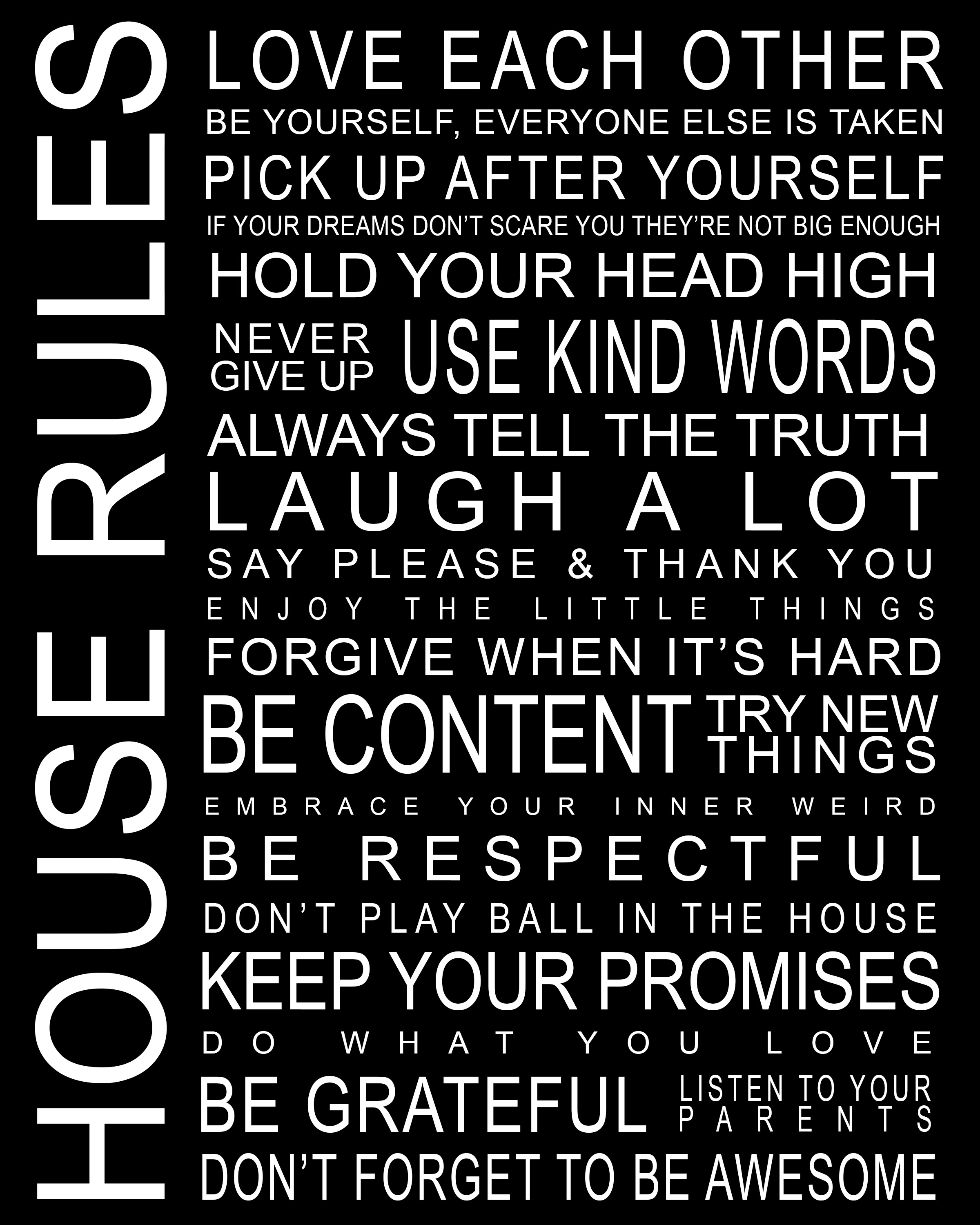
In the present-day clinical environment, when I have to confront an
inattentive or resistant client I say in essence: “This is not your house. You
are here to (play/work on your goals/learn to speak [swallow] better.)” You reinforce clients who show they agree with
you. When you begin training generalization of target behaviors: “You are here
for only 1-2% of the entire time you are awake. How can you build a strong new
habit by just using 2% of your week?” If a client expresses reluctance to
generalize a skill e.g. drinking thickened liquids at home, my answer might be:
“When you leave here, I won’t know what you do. All this work is not for me but
for you. You’ve seen this has worked. We’ll do our best to get you back to
regular liquids”. I learned how to say “What I Want to Do….” I learned how to
help my patient focus in the moment, to respect the therapeutic environment and
use it as intended, and to bring the most energy possible to each time we meet.
That’s what it’s all about.
(originally submitted in different form to ASHAsphere, the blog of the American Speech-Language-Hearing Association)
Subscribe to:
Posts (Atom)