Happy New Year, blog readers! We are all ready for a fresh start in 2021, and this posting reflects my need to start towards a new horizon for my CSD work.
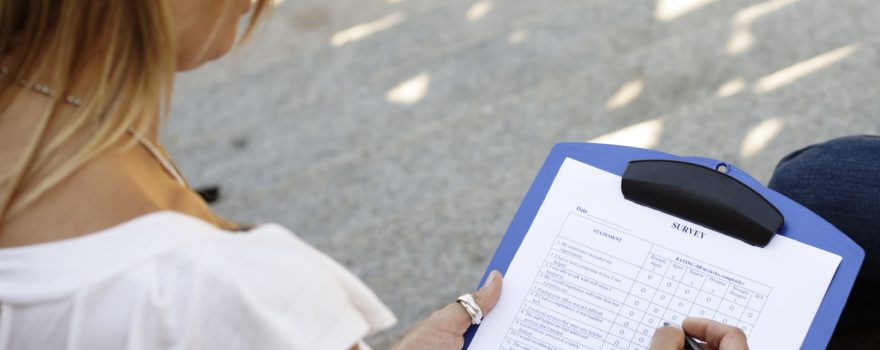
You'll find below a link to a second survey, that wants to find out how much you know about cardiovascular disease (CVD), what causes it, and how its impact can include the onset of speech, language, cognitive and swallowing disorders. I hope you find the survey interesting, and that it might whet your appetite to learn more about CVD, and how prevention efforts against it must start as early as possible for your consumers.
You'll find the survey at https://www.surveymonkey.com/r/TFT87DH
I hope you might complete the survey by 1/31/21. Thanks for your interest.
Hustle? Yes, we SLP's have hustle in spades (hearts, clubs, and diamonds)! Whether squeezing in an improvised consumer visit, or an unexpected hard right turn to the daily schedule, we always have a higher gear.
Traveling among facilities I serve, there may be texts and emails to scan and process. Voice calls from consumers and their supports need answering. The therapy session for which you had prepared the BEST customized materials ever, need be replaced with a priority evaluation you discovered when arriving at your next stop. A family meeting for which you had mentally budgeted fifteen minutes, is now running past AN HOUR and fifteen minutes. The COVID - 19 mitigations are changing again, so an ad hoc training meeting is called. Hustle.
Discipline? Pish tosh. People depend on us. We have great science, great methods and great history to keep us focused and propelled to reach the best outcomes possible.
I think many of us would want to wear a patch that resembles the image above, if we have a standard work uniform like a scrub outfit. The medieval scribe toiled and squinted endless hours to get manuscripts copied. We squint, toil, copy and paste, curse at files lost that must be redone, and distill often detailed observations into rigid technical prose. It's what we do. It drives the healthcare and educational systems. It isn't what we aspired to do, when graduate training started. It's what we get flagellated for when it's not done well, and for which we flagellate our tablets, laptops, desktops and phones to get through the workday. It's what we do.
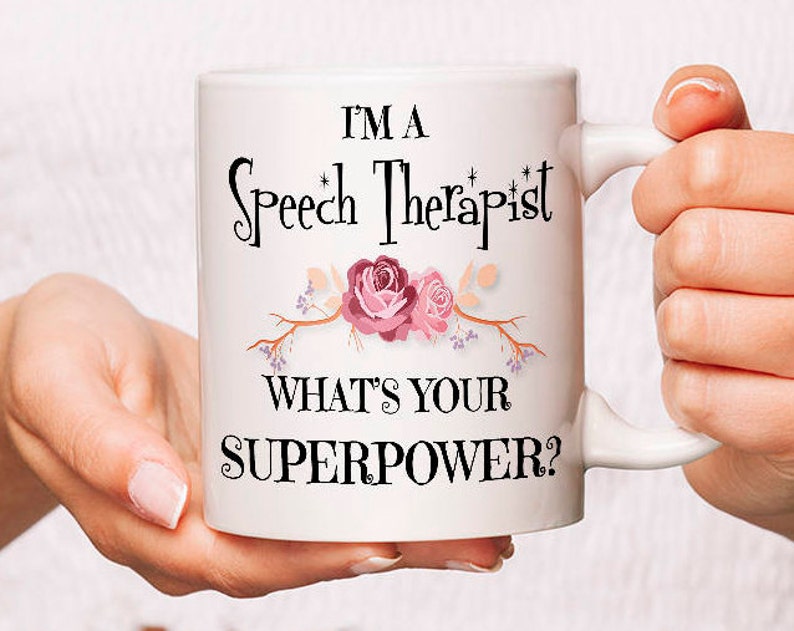
Power? We help people communicate, think and swallow better. As the slogan asks, what's your superpower?
The more we do 'that voodoo that speech therapists do' (a manager actually told me that once), the more we realize and take to heart that our profession is one of civilizations great levelers; that even with the wide and deep reach the field now has, we have - all clinicians of all credentials, in all settings - the wish to help all who have a need, to grow their quality of life throughout their lives. This is what we really do.
Farewell to 2020, so fast, and all the best to my colleagues, their circles of support, and all people they support, all around the world!
I hope the survey accompanying this post perks your interest in the science of chronic disease prevention. My goal for sharing the survey with you is to discover how many of us include prevention activities in our practices.
* Do you help your consumers lessen or avoid risks for disability?
* Do you participate in screenings that will help identify potential consumers of your services?
* Do your evaluation and treatment sessions include lessons in health literacy, so that your consumers might continue to function at their best?
You can access the survey by going to - https://www.surveymonkey.com/r/MQ7K658
Please try to complete the survey by 1/15/2021, to help me understand how prevention is influencing our field.
Since this blog was started in 2012, I've discovered that I can and do get lost in the forest of ideas I've published - 133 posts so far! Following is a list of principles that I have tried to follow with these blog entries. And, in the spirit of the post title, these ideas may seem rough and raw, but there's a lot of flavor in each position I've taken in posts. So, what does this blog believe? Please be patient with the bullet points. They can make a narrative choppy, but each concept is like a bite of the raw ingredient - equally yummy, and we hope you agree. Comments on these posts are always welcome. .
* The communication sciences and disorders (CSD) professions, whether audiologist, teacher of the deaf, or speech-language pathologist, develop highly specialized practitioners who work in basic science and evidence - based practice;
* College graduates take the jobs in CSD, yet they serve persons of all ages, educational and social levels, cultures and needs. The persons served deserve their needs to be met, as they see them.
* Evidence - based practice (EBP) exists as an equilibrium of clinical knowledge, scientific evidence, and the expressed needs of persons served;
* The three - legged stool of EBP is realistic about how CSD professionals make day - to - day decisions in their work.
* External scientific evidence (eg randomized controlled treatment trials) is held up as a gold standard of proof for effective clinical intervention;
* The randomized controlled trials have not been done for some clinical interventions. Will you participate in such a study, or will less robust evidence suffice to guide your clinical work?
* Clinical knowledge and experience allow the therapeutic alliance of client and therapist, to craft an ideal plan for behavioral change;
* Ask your consumer, "How will you know when you're better?", or "How will you know if what we do is working?". This perspective may help identify the discrete goals the consumer has in mind.
* The needs and wishes of persons served by CSD intervention should remain primary for the clinical practitioner;
* Buy - in for the plan of care by the consumer, and by the circles of support, helps the CSD professional offer a broad range of interventions to meet the goals identified;
* The CSD practitioner, through focus upon the goals that encompass a plan of care, helps persons served attain the best quality of life;
* The CSD consumer builds a quality of life through high - quality services, that helps the consumer gain more control over life's outcomes;
* The quality of life for persons served by CSD professionals increases along with increased bodily function;
* At times the CSD practitioner treats the impairment of persons served; at other times, treatment is at the level of activity; still other times require treatment of participation;
This line of argument should lead you to think about the WHO International Classification of Function (ICF), which for me has been a major anchor for my clinical work over the past 20 years.
More on that later! Let's leave you with another bite:
I just have one day off per week, and even then they can find me. THEY can find me....voice, text, Tweet, email, Facebook message, Zoom; one day I imagine they'll insist on FaceTime, Skype, AppleWatch and whatever the newest methods to 'stay connected', are out there! Seven days a week, I am their stable pony. Since March of 2020, I have worked the day and evening shifts out of the 'Rona Division (gotta keep up with the young people and their language). After all, 'Grandfather likes to be modern in his language'.'Rona Division is not much different than the rest of the SLP workforce, yet it takes this fight against the 'invisible enemy' as its core mission. The core mission of the Division, is to exert the force of the 'Rona mitigations generally recognized as effective, so that the virus becomes part of the noise floor and we clinicians can do our real work.
Since 'Rona Division was formed back in the spring, we're continually reminded that healthcare never closes. Our education colleagues have realized this as well, with recent events in their work settings. With the dangers of 'Rona ever present, everywhere, all our days, and all our work bags, are filled with personal protective equipment. Hand sanitizer bottles can be found in the bags, in our pockets; riding in cup holders of our cars, and even filling bottles that used to bear motor oil, Coke, bottled water, etc. Ziploc bags are bulging with masks, and with gloves. Since the Spring, I've worn out three face shields. A couple bottles of disinfectant are also stuffed in my portable office. I think we're ready to get out there and do good work, with our armor secured. Then, it's just another day at the office.
What makes us different than other SLP's? Technique, technique, technique. From the time we arrive at each worksite in which we do our magic, until the final mile to our home base is traced in reverse order to the morning; - keeping the little 'Rona buggers at bay. After all, we're continuing to have close, proximal contact with all persons we serve. There's no teletherapy. There's no apprehension about being close enough, to interact with your persons served. Following clean technique, so that clean hands manipulate all materials used, - then we do all the normal SLP things we do. We're very clean SLP'S. That cleanliness? Part of the noise floor. The rest is, living in the present.
It's the noise floor, but it's also a very anxiety - producing part of SLP practice. We're so stressed out, still, by the ominous nature of the disease, that there is an almost dreadful tone we give to each day. You make a mistake in technique, then 'Rona can get you. You get exposed to an infectious person or environment, then 'Rona can get you. You allow yourself to get run down by appointments, commuting, by hours of prep and doc time, - then 'Rona can get you. "There Is A Danger", a post for this blog published 4/5/2020, touches on the dread. I have had to remind my consumers, my colleagues and supervisors, that if you are not old enough to remember the last US polio outbreaks of the 1950's - you may have no memory of real dread.
The world is, regardless, figuring out what works to mitigate spread of the 'Rona. Cleanliness. Distance and time. Barriers. All part of the noise floor, so 'Rona Division SLP's can live in the present....and help the persons served have a better future. Till therapeutics and vaccines allow us to get the upper hand on this virus, the 'Rona Division keeps us going to deal with real life for our consumers. We keep going through sustained efforts at simple prevention. The rest of the world has also taught us those simple ways.
Checking my texts and emails now. Back to work soon.
I've not been here for some time, that's right. I know the reasons I haven't been here, and they're not that hard to discern if you have been an 'essential worker' on the 'front lines', working under 'an abundance of caution' and 'sheltering in place' when not serving your patients. An aside:
Geez! I know buzz words are useful sometimes to bind together members of a language community, but how far does the trend have to extend? What can cut through the murky meanings in buzzwords, to actually share what is these days, on our minds? There's enough to do in daily therapeutic alliances we engage as SLP's, without having to swim through linguistic muck that impedes. Where does true communication emerge? How can we achieve better therapy outcomes, without having to swim through word sludge?
SLP's, where is thy mojo?
I decided to share a source of my positive energies for clinical work, and all associated foolishness, because I know this blog is one evidence of me. In the final analysis, 'who the hell am I?' (Ferris Bueller); yet, many of us want a legacy. So be it. The die is cast. I write here, not only to give my own perspectives on the fields of communication sciences and disorders, but to give evidence of how one life can be lived.
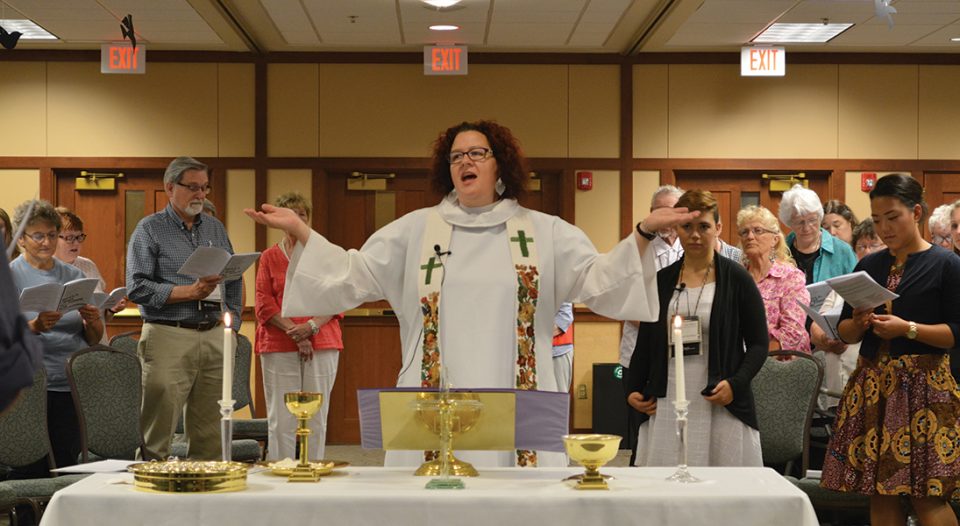
I married a Lutheran woman and soon afterward, joined her church. We found a small church body near home, listed in church registries as an "American Lutheran Church" congregation. Shortly after we established membership there, the church became part of the "Evangelical Lutheran Church in America", through merger with another group. The cultural lineage of the church, Northern European, was not that important to me, but the culture of the church did influence its message.
That culture was embodied not in the color of the hymnal (red vs green), nor in the ethnic heritage of the charter members (German vs Norwegian vs Danish), but in the personality of the pastor. He's dead many years now. He and his mojo have been a huge influence on me, for many reasons. In the Lutheran traditions, scholarship by history, chemistry, psychology, linguistics, and other fields have tempered their/our use of the Bible. That scholarship has allowed teachers of church doctrine to spread their news, prepared to back it up with data. This pastor did that with exuberance, with intelligence, and with drive.
Drive was both a blessing and a curse for this guy; he was a Type I diabetic, and the demands of his vocation eventually took him. But this is not a testimonial to a single personality; it is a testimonial to the spirit of the place - where two or three gather together in Her/His name.
I spent my years there busy: teaching Sunday school for grade and high schoolers; assisting the Pastor in worship service; taking part in adult education; serving in stewardship, deacon, education and chairing the church council. Not only was it a bonding force for my family, but it also was a deep, rich internship in true communication - in connecting with the larger family.
What is the ultimate benefit, of being part of a church family? How does it translate to how the SLP clinician does her/his daily work? Like the clinical setting, where we may think in jargon but share what our persons served will understand - we share with members of the church body, and the wider world, in the language they use. We do it with drive, because there is so much need to be clear and meaningful. We do it with compassion, because our world wide diverse family becomes even healthier and intertwined with that emotional binding. And we do it with data, because in this world of alternate facts and social mudslinging, facts matter....so that when we make that connection and the persons we serve benefit, that connection to the greater good is locked in.
That might mean for the SLP professional, that a well - structured and well - paced training session, may switch abruptly to a counseling session; - that, in addition to helping the person served build confidence in new habits, the family members and community supports also have their needs attended; also, that clinicians who enjoy their jobs, enjoy it for more than that designated outcomes are achieved.
Minister, SLP's. "Flatten the curve" and get right to the issue. Communicate well, so we won't need a tissue.
My profession. My ministering. My church. It's clear.