For the rest of my life, I will hold dear the years I grew and (sort of) matured to manhood while living in the Mississippi Delta...."Where I was born and raised", with grateful acknowledgement to the estate of David Cohn for the use of that phrase. In the 1950's and 1960's; from the time I was sentient and halfway curious about the world, I realized that my Delta world was circumscribed with magic; with danger, with the marvels of nature and the burdens of history. It incubated ageless wisdom, and it attempted to crush impertinent questioning. But what the hell did I know - I was a kid; a clumsy, left handed, fat, stuttering kid, and I wanted above all to do what I was told. I have realized that it's only been in the last 17 years or so, that I have actually become a man. It's time for me to trace the crooked path I took from the Delta to the present.
There were numbers of warm, bright and wonderful outdoor spaces in the magical Delta in which a young kid could play: cattails in marsh, ball fields choked often with buckshot dust, and creeks containing turtles and snakes, winding through high grasses. The grade school lay about a ten minute walk from home, where bullies had numerous opportunities to mug me for my lunch money - and they did! - ; the Pepsi distributor for our town lived just NEXT DOOR, and for many of us neighborhood kids, that would have been Nirvana....but only one of us 3 kids at my house was a Pepsi drinker. My drink of choice was to be found at the corner grocery, after a long (to us) and rather hot walk along a gravel path. For some obscure reason known only to my long term recall, I never remember my walking to this corner grocery while wearing shoes. The bare, flat feet were burned, bruised, and only after the trip home with the soft drink and bag of potato chips - or something Mom had asked I pick up - was I rescued from the urchin abuse I had suffered. I suffered while at the store, telling the owner or his wife my order. My stutter was a snake that could suddenly paralyze my tongue, make it fasciculate and lock up tight, and drain my brain of drive.
I did have a more basic drive; that of being very pleased by food. It was very easy to please me; I was the reincarnation of J. Wellington Wimpy from the "Popeye" cartoons: I will gladly take out the trash Tuesday for a hamburger today. I think the one evening that I had talked Mom into making spinach for me, so that I could be stronger, and then I couldn't abide by the strong mineral flavors in the greens: I think a hamburger ended that meal, too. Luckily for me, there were also fresh vegetables. Delta climate, Delta soil and Delta culture made vegetable farming and vegetable gardening accessible. My long term memory is very good to me, for the images of produce departments in the corner groceries, the neighborhood markets and the roadside produce stands - they are warm memories that fed us well, and brought the family together through the shopping, the preparing and the yummy eating!
The image of family sitting on the back stairs, off the kitchen door of our home, shelling peas: it was a hard learning curve for a school aged boy, but even I got the routine down. I thought getting bruised and seared feet was traumatic! Getting in the groove to yield a substantial serving of peas for 5 people, leaving your fingertips abraded and smelling of the verdant garden - ahhhhhhhhhhhh such an apprenticeship it was. Fresh vegetables grown locally: what good sense that made. What a glorious sensory carnival they made. What a salvation they created for me.
Sunday, May 7, 2017

Sunday, April 23, 2017
Communication Fitness
"Good morning, and thanks very much for coming to this little gathering. We provide this talk each month on various health topics, for people who live in the community....and before I go on, - I want a show of hands: can everyone understand me OK? YES? NO? OK, thank you for the feedback. This little check-in, about your being able to understand me, is a good example of what we're talking about today: KEEPING FIT for good communication and swallowing. Just as people of all ages go to the gym, eat a more healthy diet, and are taking better care of their health to prevent getting disabled, - people can learn and practice skills for preventing communication and swallowing problems!"
"Another show of hands, please. Who's heard a program on 'preventing communication problems' before? YES?? NO? OK, thanks. You're right, all the 'no' votes. But speech-language pathologists like me, -we're supposed to help the public prevent becoming disabled, as part of our job. This talk is being held just prior to Better Hearing and Speech Month, in May, when we spend time teaching about communication and swallowing, and how to keep these skills strong through your life."
"Let's get down to business, now: what is prevention; how does this connect with your ideas of 'fitness', and what are ways you can prevent disabilities for talking and swallowing?"
Prevention for the purpose of this discussion, refers to the prevention of disability and handicap when the function of your body changes. What does that mean? How can that happen? Can you actually prevent having a disease, or be totally free from injury, that affects your ability to speak, or to listen and understand speech? Can you reduce your risk of having a problem with thinking, or with swallowing? You actually can do things - you can carry out some very common - sense activities in your daily routine that, when properly planned and executed, can help you maintain the quality of life you want for yourself.
Do you need a doctor's prescription for them? NO. Do you need any special training or equipment to complete these activities? NOT AT ALL. If you can do these activities successfully alone or with a friend or two, you have the chance to lessen the risk that a disability can occur, or avoid the risk altogether. How might this work for communication or swallowing skills?
An example of primary prevention (minimizing or eliminating risk), where the SLP is providing direct service is through training the use of expiratory air. We exhale with force when we cough, and when we speak loudly. To keep the respiratory tract functioning well for those normal uses of expiratory air, we need to pick an exercise activity that encourages you to exhale with near maximum capacity. A roster of these activities might include:
* singing holiday carols
* spitting watermelon seeds for distance
* blowing a continuous stream of bubbles through a straw into a glass of water
* blowing a crumpled tissue down the full length of a dining table, then off the table
Those activities, - just one example of the steps a person wanting to minimize her/his risk for disability- can happen when the person served is working with a solo practitioner. Prevention activities are, regardless of the mandate from where they emerge, more often a collaborative effort of a team of professionals. In this situation, the SLP may not offer direct service to the person served, but may instead be a consultant for specific needs the person may have while in the direct service of another professional. For example, a person served by a singing teacher, a pulmonologist, or an acupuncturist might contact an SLP for tips to sustain her/his professional voice. Examples of direct service and consultative intervention models exist in our literature, for primary prevention of communication and swallowing impairments.
So much remains to be done by our professions, before prevention - and for this discussion, primary prevention - can become a trusted and powerful tool in the toolkit of clinical SLP's. The language and the techniques need be learned and incorporated into our clinical practice. Successes in prevention should be documented and replicated. The importance of prevention, as part of the total skill set of clinicians, needs examples of successful business models that allow this largely neglected piece of your work day GET PAID. There, that got your attention.
Keeping people well, by giving them access to tools to keep them away from, or neutralize the risk of disability; keeping the model of human service evolving from a top-down model with an expert and a "patient", to a consumer-driven consultation model that helps the person meet her goals; - with the potential to actually reduce the need for direct service - ? Will that pay? "Can I have a show of hands?"
Sunday, March 19, 2017
A brief break, then -
https://www.nytimes.com/2017/03/19/business/media/jimmy-breslin-dead-ny-columnist-author.html
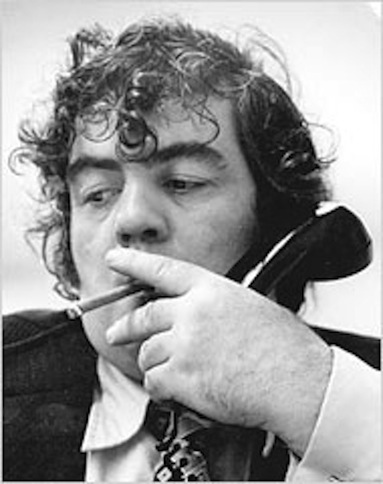
(RIP Jimmy Breslin. This blog post is in his memory: finding a paperback copy of _The World of Jimmy Breslin_ for sale in 1968 at the Marion Parlor drugstore in Greenville, Mississippi, changed my life.)

For many reasons, we sometimes need to step back from the job and regroup, recharge and refocus. The late writer Jimmy Breslin needed that hiatus from his New York newspaper column, after witnessing the killing of Robert Kennedy in June 1968. Breslin completed his first novel during this hiatus, when he needed to discover if he could go back to the routine of newspaper work. Too much information to manage, until the novel was out and had its own life. When it was time, Breslin would have said that no one else in the news business was telling the news as they should. As he would.

Spring baseball is progressing as it should, with the opener for the 2016 World Champions of Major League Baseball away in St. Louis. The rivalry remains fierce, for the Cards got Fowler one year after the Cubs got Heyward. Spring games in the Arizona Cactus League are not only entertainment for the faithful fans, needing an early respite from Winter, but for the players - an initial respite after respite after respite. After one game, you decide you had better choke up more when there are two strikes. After another game, you saw that you had better catch the defensive signs signaled from the bench. Every respite after a spring game lets you collect and assimilate the motor memories you'll need, once the regular season starts and it is a wild ride until game #162.

If you're in a university training program in SLP, you may have either started or completed your spring vacation. If you are employed in a clinical position, you're collecting your thoughts today for the work week to come. "Should I have given that stimulus so quickly after the first series?" "Why didn't I make a note about the paraphasia on that part of the Boston?" "They ask me to attend all these meetings, and then they criticize my productivity numbers!" One lesson learned with time in the professions, as in life, is that an omission can't be un-omitted, and that you have to discard with a respite, regrets and recriminations about what has happened. Herbert Simon indeed remarked in 1971, that the growth of information to be processed in our daily life, occurs at the expense of attention required to process it.
Once the new week engages, the communication game with persons served begins again.
 Engage.
(RIP Jimmy Breslin. This blog post is in his memory: finding a paperback copy of _The World of Jimmy Breslin_ for sale in 1968 at the Marion Parlor drugstore in Greenville, Mississippi, changed my life.)

For many reasons, we sometimes need to step back from the job and regroup, recharge and refocus. The late writer Jimmy Breslin needed that hiatus from his New York newspaper column, after witnessing the killing of Robert Kennedy in June 1968. Breslin completed his first novel during this hiatus, when he needed to discover if he could go back to the routine of newspaper work. Too much information to manage, until the novel was out and had its own life. When it was time, Breslin would have said that no one else in the news business was telling the news as they should. As he would.
Spring baseball is progressing as it should, with the opener for the 2016 World Champions of Major League Baseball away in St. Louis. The rivalry remains fierce, for the Cards got Fowler one year after the Cubs got Heyward. Spring games in the Arizona Cactus League are not only entertainment for the faithful fans, needing an early respite from Winter, but for the players - an initial respite after respite after respite. After one game, you decide you had better choke up more when there are two strikes. After another game, you saw that you had better catch the defensive signs signaled from the bench. Every respite after a spring game lets you collect and assimilate the motor memories you'll need, once the regular season starts and it is a wild ride until game #162.

If you're in a university training program in SLP, you may have either started or completed your spring vacation. If you are employed in a clinical position, you're collecting your thoughts today for the work week to come. "Should I have given that stimulus so quickly after the first series?" "Why didn't I make a note about the paraphasia on that part of the Boston?" "They ask me to attend all these meetings, and then they criticize my productivity numbers!" One lesson learned with time in the professions, as in life, is that an omission can't be un-omitted, and that you have to discard with a respite, regrets and recriminations about what has happened. Herbert Simon indeed remarked in 1971, that the growth of information to be processed in our daily life, occurs at the expense of attention required to process it.
Once the new week engages, the communication game with persons served begins again.

Sunday, March 12, 2017
Lead Every Day
Thanks go to Walter Isaacson, author of THE INNOVATORS, for an inspiration to this final post in the blog series, "In Case Sally Is Right". Isaacson described in his book, the triumvirate leadership of Intel Corporation as an example of great qualities necessary to effectively lead a group. Noyce, Moore and Grove were portrayed in the book as the big picture visionary, the inspiring scientist and the disciplined project manager, respectively. Wouldn't you really rather be led by just one of them? I wonder if leadership training in our field of speech-language pathology, can encompass all those traits.
Our 2016 national convention had leadership as its theme, and one perspective on leadership was offered by the Convention co-chair for SLP: "Leadership is always a team sport". That is to say, being your best at leading people is a product of the quality of the group you are allowed to lead. I can buy into this concept, for the reason that my best work teams have always made me look very good. I think there is a middle ground, or synthesis of all the best qualities of leaders, that gives all of us in the CSD field, from undergraduate observer to seasoned researcher, leaders and trendsetters in what we do.
On the surface this seems counter-intuitive; how can I lead? I barely know what I'm doing! That was the initial reaction I had during the first week of rehearsal, the summer the USA School Band and Chorus toured the UK. The late Col. Arnald Gabriel, Conductor of the US Air Force Band, told us after we struggled to master a symphonic piece, "You're PROFESSIONALS! Play like it!". My Spider Sense, my crap detector and my obsessive geek mind - they all screamed in my head, 'Colonel! No!!'. But soon, I knew what he meant.
Professionals master their work and become a priest(ess) of its mysteries. Leaders learn to see the way to success, break down and highlight the steps to success, then set out on a relentless push to that success. All of us in the field of CSD are primed to be leaders, and there are steps to be taken for us to grow in leadership skills:
* Study. Read, take courses, attend talks and lectures, and learn from people who discuss in depth you need to learn the competencies for leadership.
* Listen. Watch. Who are the models of leadership skills whom you admire? What do the good leaders you have known over your life span -what do they have in common?
* Dare. See those opportunities to share the big picture, to have the mechanics for bringing solutions to problems, and guide your peers, your persons and their stakeholders to the finish line.
"Everyday leadership. Lead, every day". How'd I do, Sally Brown?
Wednesday, March 8, 2017
Tell Their Stories
We are who we are because of the persons we serve. We can extol the virtues of our professors, our mentors, the vendor guy who found a 'just like new' test kit for you at a Walmart price, former Sen. Tom Harkin, or the staff at your school who make the coffee - but our customers/clients/patients are not just sufficient to give us identity, they are necessary. Through our work, we speak for those who do not speak for themselves. We need to tell their stories.
When we tell and share their stories, the larger public comes to know: these people are a lot like me. I can help them - or are they helping me? If what happened to them someday happens to me, will I adjust to this condition better than they did? What can I take away from my experience that might help another person? Caveats abound with this task, regardless of the audience for these stories, or the purpose you intend for their publication.
It is the law where I live, that you do not ever, forever, now and always...no confiding protected health information about persons served, unless the person or the legal representative has given written permission for its expressed uses. A law is not a 9900 pound aggressive animal that kills hundreds of humans each year, but its power and reach is to be respected. When you attempt to tell the person's story, respect their rights to privacy while telling a great story!
HIPAA protections assured, you are at an advantage at storytelling with your finely honed powers of observation. Your writing chops are continually toned, by the saily grind of what we do! There are then, numerous professional and commercial venues to lift up your persons served; whether the stories are in the form of case reports, first person diaries, feature stories in periodicals and websites, investigative news reports, documentary films, applications for AAC device funding, testimonials by the person's circle of support, books written by the person to teach others about their life journey, or school newspaper stories the person may write....there are so many good stories to tell!
Who benefits from telling the stories of persons served? The clinician, the person, the support circle, the community naive to the field of CSD, and the professional community - continually benefiting from the laboratory ' s connection to real life - they all hunger for the stories to be told. Will you hold the pen?
Sunday, February 26, 2017
Teach the secrets
There is one function of the clinical life of SLP's; one component that is trained best, without a doubt, in the daily trenches where we find ourselves. It is a fundamental tenet that learning is most successful in the environment where the learning will be used. What we want to train in new and inexperienced SLP's, is their ability to teach the persons served, and their support systems, what is happening with the individual therapeutic encounter.
Teaching the person served, the skills that may help sustain the level of performance on skills you have seen in therapy. EXAMPLE: a schoolkid who has learned in the quiet room to use his "s's" clearly for reciting in therapy....gets to read to his family each weeknight the dinner menu, loaded with "s" sounds his mother has written out for him. "Tonight's meal: the spices include stevia, sarsparilla and sage..." Since the child gets to be the center of attention while practicing his speech skills back in real life, there is an increased chance for buy-in. The mindful SLP, one who realizes early in the clinical encounter that, - one day, sooner than later that this special relationship will have to end, begins to teach the persons and those around him some of the secrets of therapy.
After all, when the encounter is over and there is no longer means or rationale to continue treatment, someone else need be in control of using the skills treatment focused upon. In the majority of cases, the person becomes her/his own therapist. For those who benefit from continued guidance, the SLP brings in the circle of support.
Here's another example: when an adult with a swallowing disorder is progressing through her training, the earlier she or her surrogate can help perfect the skills that are desired through massed real life practice. Swallowing behavior having implications of high risk to health, the more frequently the training should occur. As the person served and his support gain confidence in generalizing a skill, from the clinic to everyday life, the final form of a long term skill use can be seen.
Some general tips for continuing a skill set introduced in SLP treatment, might include:
* Explain all procedures in simple terms. Instead of "paraphasia", say "word finding problems" or an equivalent; instead of "mand", say something like " "when you command someone to get a behavior you want". You are giving up management of this learning to others.
* Empower the persons who are assuming the management. "When I am not here, I won't know what you do....but if you have liked what has occurred, try to do it this way. I hope it has made sense to you. You can DO this!"
*Establish the final form of the training material and carefully document the process and outcomes you get. There is a great satisfaction for the SLP who has seen a good outcome for the person served, equipped the person and the circle of supports, then communicated the program events clearly and efficiently.
Teaching the secrets of therapy to the person and the support circle? It increases buy in, improves the stature of the profession among its potential consumers; it brings closure to the therapeutic alliance for this specific instance, and expands the perspective of the person served for future encounters that could occur.
Comments, as always, are welcome!
Sunday, February 19, 2017
Grab the Ledge

Why anticipate those life changing moments in your SLP work? Can't you just deal with them as they come? Consider it a function of your growth as a professional, that you experience and grow your powers to predict these pivotal changes happening within yourself, for the people you are helping, or in the environments around you. Many change events are the cycles every person served may face, whether they are among your total caseload, or within a group of persons with a similar diagnosis. An example is called for:

Feeding someone who does not do it well for themselves - that's a good one. The person may only occasionally raise the spoon herself, so you scoop up the food, briefly hold the delivery system at eye level so she might open her mouth and accept the spoonful, then apply light pressure to the tongue - so she will EXTRACT the food from the spoon bowl, not just receive a DUMPING of the food at the front of her mouth; this action alone helps engage the oral preparation phase to swallow what she has taken - and so the spoon is withdrawn, she closes her lips in rhythm with the withdrawal; the cycle starts again. You are the change agent in this instance, at least the one more empowered to accelerate the change at a critical moment - to hurl yourself into the void. To be that adventuress/r, you should know -


Subscribe to:
Posts (Atom)