
Wednesday, April 10, 2024

Please allow me to re-introduce myself

By November of 2024, I will have been kicking this blog can down the road for twelve years! Since audiences evolve, as do bloggers' points of view, I thought I might redraw an outline around myself to explain where this chronicle of speech - language pathology/communication sciences and disorders (CSD) is going. We who work in the trenches of the CSD fields, we're ready to celebrate! ASHA, our national credentialling and professional education organization, will be 100 years old in 2025. CSD has become much more vigorous and valuable a group of professions over the past century. By "professions", I include speech-language pahtology (SLP), audiology, education of the deaf, and speech and hearing sciences. And more of us are needed: The U.S. Bureau of Labor Statistics noted in its Occupational Outlook Handbook (March 6, 2024), that positions for speech - language pathologists were estimated to be 19% higher over the decade ahead - "much higher", per the Handbook entry, than the average for all occupations. In that light, I want this blog to continue to tout CSD professions, presenting what we do so that "T.C. Mits" (the celebrated man in the street**) gets it. And wants to know more about it!
I'm a speech - language pathologist, in my 41st year of practice after experiences in the preschool, Head Start, public school, residential DD facility for severe/profound impairment, day preschool for DD children, acute hospital, inpatient rehab, outpatient rehab, skilled nursing facility, independent living, assisted living, memory care and home health care worlds. I'm currently on staff of a home health agency in the Midwest U.S., working at a "casual" or PRN status. I like this pace, honestly. Not working full - time anymore: it gives me space and pace to focus on the caseload that I can acquire, providing the highest - quality service to everyone I see. Gone are the days when I might travel over 150 miles, or see up to 17 persons in eight hours (and that's before documentation). I enjoy home health now, because I can be trusted as "the expert" among the multidisciplinary staff who can work autonomously. I can also be trusted to model efficient and clear communication with all the team working with any of my patients. The team? The nurses, therapists, the patient, her/his support circles and professional stakeholders.
The decades have served up for me, a lot of lessons about what brings "success", working in the CSD professions. After time in a number of different work settings, in various areas of the United States (Mississippi, Iowa, Louisiana, Idaho and the present-day), some principles seem to survive in importance. They include: * The SLP's workplace effort is largely devoted to meeting documentation quality standards and timelines. Clinical practice skills become automatic, self - managed by the clinician outside work hours. * The SLP must be proactive in managing each patient episode, given the tendency for case managers to supply a minimum number of visits for a discipline. "Utilization", one of the current buzz words for the practice of keeping our number of visits allowed to a minimum - so we will get paid. * The SLP must be proactive in educating team members, stakeholders and the public, in a constant cycle of marketing and training those who might support the communication/cognition/swallowing needs of the population we serve. I wish sometimes, that I did not have the ego that seems to propel me outside the clinical world to toot a horn (mostly French). It can get embarrassing, when the stream of toilet paper magically appears, stuck to your oblivous heel and eye. But someone told me recently, "You write so well, that....". So I've been bitten by the bug to continue blogging about CSD, and why we do what we do. What do I want for the fields of CSD, particularly for my home field of speech - language pathology? * I want the depth and breadth of who we are, where we live and work, and what we can bring to the quality of life of persons we serve; all that known as well or better than what Kim K. wore to Albertsons last week. I'm tired of our being the best kept healthcare and education secret in town. * I want SLP's to be involved in contributing to the health of populations; with CSD's current investment in selected knowledge bases e.g., social determinants of health, health literacy, and interprofessional collaboration, I feel we are on our way in linking up with public health - as our sisters and brothers in audiology are managing to do, quite nicely. * I want our young professionals, as well as those earnest, energetic and excited young people who want a future full of purpose - nope, sorry, riches not easy to find - to bring their skills and their sass to play in our field! If you want to guess this blogger's name, please look over the posts preceding this one.
** Not to be missed: _The Education of T.C. Mits: What Modern Mathematics Means to You_, by Lieber, Lieber and Mazur....first encountered in the library at E.E. Bass Junior High School, Greenville, MS, way back when....

Sunday, March 24, 2024

We love nurses

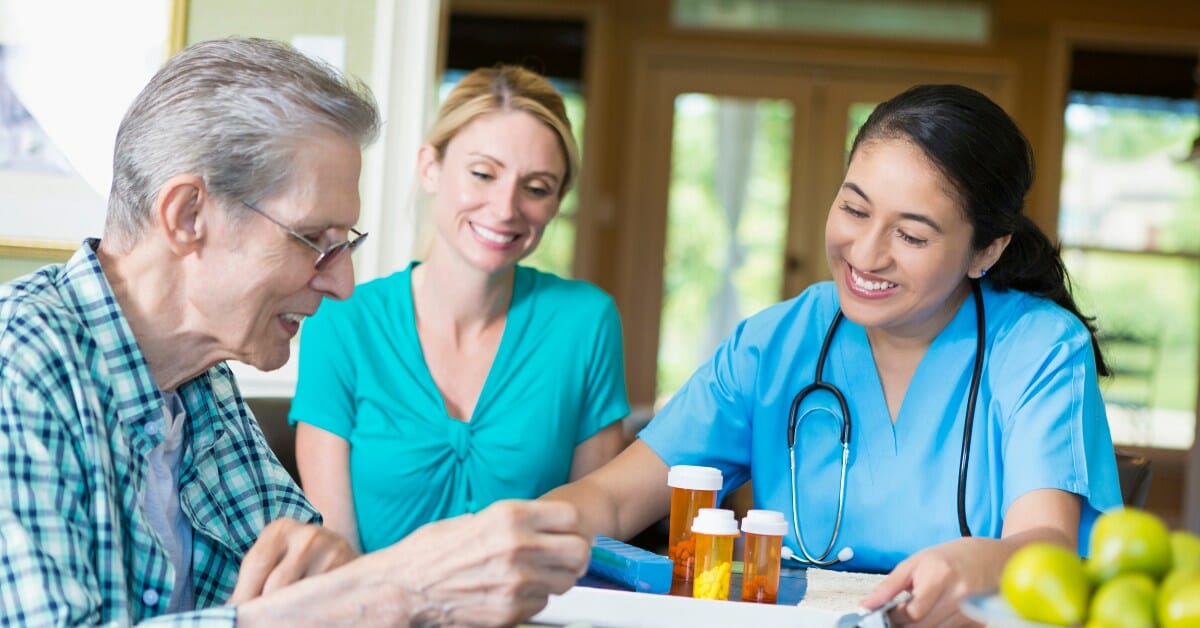
"Good afternoon, and welcome to home health care. I understand, you both are new nursing grads? That's great - congratulations! Welcome to home health. I have been a speech - language pathologist, or SLP, since '83, and at this Agency over five years. In all? Thanks for asking; I've been doing home health about eight years, off and on. Our Director has asked me to give you a brief introduction to speech therapy. Have either of you worked with an SLP? No?? OK then. Let's look over the handout in your binder.
"First: it's my responsibility to reassure you, we are well - trained and well - credentialled healthcare professionals. There are a lot of strange ideas about who we are: https://www.woosterhospital.org/speech-therapy-myths-debunked/ (Wooster Community Hospital, Ohio) https://www.speechease.net.au/our-voice/common-misconceptions-about-being-a-speech-pathologist/ (SpeechEase Speech Therapy, Queensland, AUSTRALIA) https://vozspeechtherapy.com/debunking-the-myths-about-speech-therapy-for-adults/ (VOZ Speech Therapy, Washington, D.C.) "Our national organization for credentialling and for maintenace of professional standards, the American Speech - Language - Hearing Association or ASHA, has tons of information about our field and what our professionals do: https://www.asha.org/public/speech/disorders/adultsandl/ "If you are looking for a career and think SLP might meet your career needs, over 300 training programs in the U.S. are available to help you prepare to provide clinical services: https://find.asha.org/ed/#sort=relevancy "The academic and practical training that speech - language pathologists receive in accredited university programs addresses the complex interplay of factors impacting human communication. https://www.elmhurst.edu/academics/departments/communication-sciences-disorders/programs/m-s-communication-sciences-disorders/ https://youtu.be/Rh2_bS5BRFE?si=GyhoUGVhB11pr5VW https://youtu.be/cT44f62PNjc?si=InqmwlhXbdPiaXVw
"Now, when an SLP student gains her/his master's degree, and becomes certified and licensed, home health care is often NOT a first job option. Agencies tend to look for experienced clinicians to staff SLP positions, largely because of the autonomy required of the SLP to develop, drive and manage a patient's plan of care throughout the home health episode. Some guidelines you might use to decide: will my home health patient benefit from referral to SLP? - are available from the ASHA website. "Now, since there are three SLP's within our Agency, individual professionals have individual bags of tricks for patient care. You'll now get a peek at my tool kit, while we review the most common types of impairments that might benefit from referral to us. Using the 2023 ASHA Healthcare Survey as a guide, here are five most common impairment domains. The "%age" number accompanying each domain, indicates the percentage of SLP's surveyed, who indicated that the domain was among the top five impairments bringing a referral. "The most common referral is for a swallowing problem. A big honkin' 92% of all clinicians surveyed, said this domain was among their top five referrals. Beyond the goals of helping the patient consume the least restrictive diet with the lowest possible aspiration risk, we may address management of hydration levels and sustained oral health. Common tools for swallowing treatment can include a foam swab, a packet or container of thickening agent, an NMES (neuromuscular electrical stimulation) or SEMG (surface electromyography) unit, or a breathing trainer (Aspire, spirometer, Acapella or Aerobika). But can you believe, that a drinking straw in a glass of water would be swallowing therapy? A sound level meter (free software app)?? Infant spoon??? A lollipop that you might receive from the bank teller???? Swallowing terms you might see in an SLP report could include: the Masako or tongue-hold maneuver, the modified barium swallow evaluation and 'eating, drinking and swallowing'. Also, if a home health nurse wants to document beyond the OASIS, swallowing issues for a patient, there are easy - to - use screening tools available on the Web: the 3 ounce water swallow test, and the EAT - 10 survey. https://youtu.be/GbRC488niqE?si=G1m2-r-D56wGQMrG https://www.ncbi.nlm.nih.gov/pmc/articles/PMC9029253/ "We'll follow the same format, to discuss the remaining four impairment domains that SLP's often see in home health. Each DOMAIN has some expected OUTCOMES after an SLP treatment episode. The domain has some TOOLS associated with the specialty, with commonly used TERMS cited. A SCREENING INSTRUMENT for the domain, that nurses and other home health staff who see the patient can easily use.
"About 83% of the survey respondents said persons with cognition impairments were among their top five referral domains. Outcomes: increase endurance for use of compensatory cognition strategies to meet needs. Tools: calendars, signage, and cognition apps e.g., https://www.lumosity.com/en/. Terms included WRAP (writing down, repetition/routine, associations, picturing), spaced retrieval training https://youtu.be/FiLzX1r8RVI?si=5zsmpS84elCNbL4V, and cueing. A cognition screening test any health professional can use, might be the Mini - Mental State Examination - Second Edition https://www.parinc.com/Products/Pkey/238, or the Mini-Cog assessment https://mini-cog.com/ A 2021 study comparing statistical properties of the Mini - Cog with those of the Brief Interview for Mental Status (BIMS), a component of the OASIS evaluation used in the home health setting, showed Mini-Cog was superior to BIMS at identifying persons with mild cognitive impairment.
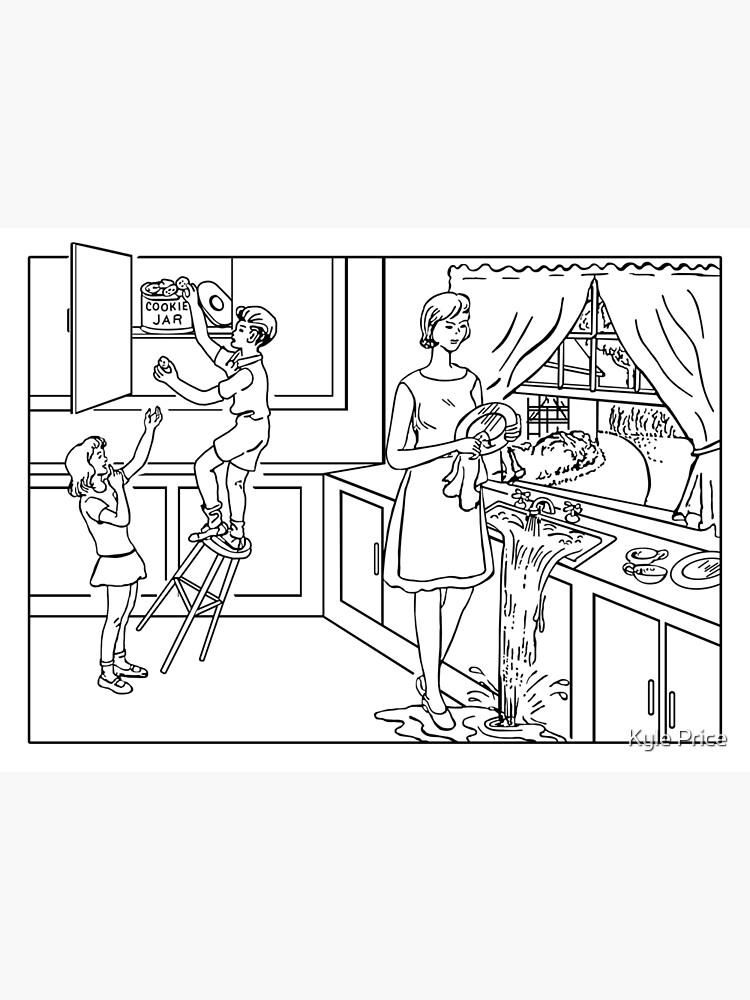
"In the area of language and communication, SLP's reported in survey that 80% of them had this domain within their "top 5". Outcomes? The patient demonstrates increased endurance for using oral language to meet ADL needs; also, that the patient achieves criteria for communicative competence: meeting needs, sharing information, sustaining social closeness and observing social etiquette. Tools included paper and pen, tablet, smartphone and speech generating device. Terms: aphasia, anomia, paraphasia. A usable screening test? Either the Cookie Theft picture from the Boston Diagnostic Aphasia Examination, or the Picnic scene from the Western Aphasia Battery.
"Three down, two to go! The next domain known to most SLP's can be termed speech, voice, fluency and cough, where up to 61% of survey respondents claimed this domain within their top five referrals. Outcomes within this category would include increased endurance for increased intelligibility, rate and naturalness; patients might also be working to decrease the intensity and frequency of a chronic cough, or sustain respiratory support for conversational speech. Tools? The breathing trainers mentioned in the area of swallowing; a mirror to give feedback on word and phrase articulation; the sound level meter, also from the swallowing discussion. We depend upon efficient vocal cord function for both operations. Commonly used terms in the domain include hygiene, the Passy-Muir tracheostomy speaking valve, a tracheoesophageal puncture speech system, or a text - to - speech app usable on a smartphone. The 10 - item Voice Handicap Index, or the Leicester Cough Questionnaire are easily - used screening tools for this domain.
"Why are we including this one? Respondents to the Healthcare Survey reported that 0% - absolutely NONE of the SLP's identified persons with hearing problems as among their top five clinical domains. Yet we're teaching our colleagues about hearing loss, because of its relationship to both falls and cognitive impairment in home health patients. What are the top outcomes? That the patient understands oral language to get needs met, or that the patient and support circle manage the assistive technology of the patient to listen. Assistive technology tools would include Personal Sound Amplification Products (PSAP's); Over - the - Counter hearing aids (for mild/moderate hearing loss); and prescription hearing aids (for moderate/severe hearing loss). Terms related to hearing loss treatment will include providing proper lighting, using assistive technology for signalling the patient to gain attention, and supplementing the oral language message with gesturing. How can we assess for hearing loss when we're not audiologists? A perceptual assessment of speech in noise is available online, as the National Hearing Test: free annually to AARP members. An assessment of hearing handicap, the 10-item Hearing Handicap Inventory for the Elderly - Screening, can identify more breakdowns of the real - life listening situations.
"There! All five clinical domains that we SLP's address in home health care. So, where does that leave our connection to our nurses? WE NEED YOUR HELP. Please help us by: Identifying patients with significant and recent impairments in any of the five core domains; Teaching patients and support circles in the use of compensatory strategies for sustaining function in the core domains; Referring patients who might benefit from skilled SLP intervention; "Thanks again for your participation today. Questions? Welcome to Home Health, and we'll look forward to working with you! Nurses rule!"

Wednesday, March 6, 2024

Turn your head and cough

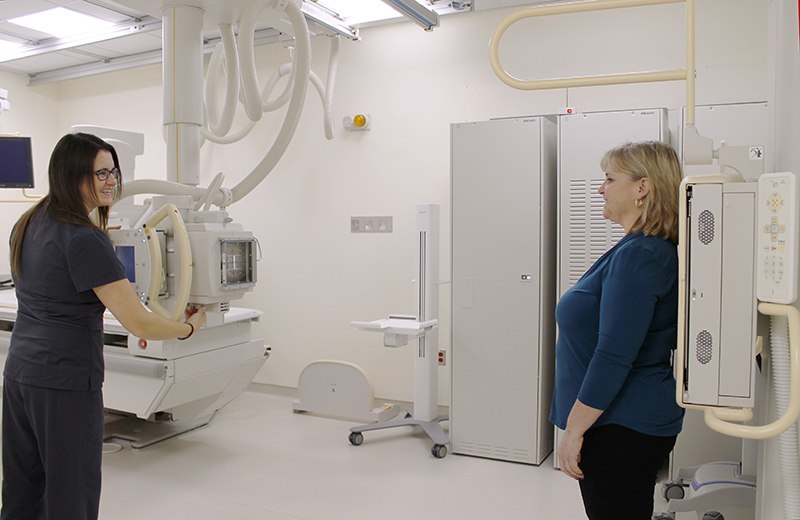
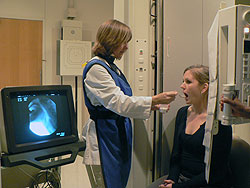
This is the hospital. I was working the day shift out of fluoroscopy division. My leaden apron and thyroid shield were threatening to shine in the dark, after all the barium compound I had been slinging about lately. On that certain day - a toddler with recent episode of vomiting, then an older man a few days post an initial stroke, and after that - a guy who had complained of a frequent 'tickle' in his throat, sometimes happening with mealtimes, and sometimes not.
Just the facts, please, Sir. The man answered by saying that he needed to cough throughout the day. "It wasn't the kind of cough that made it hard to breathe, but it nagged me and it just won't go away. Warm drinks, cough drops, and then I still feel that I can't cough out what's in there!" The job entrusted to the radiologist and to me included: describe the pharyngeal swallow function, and see how all parts of the sequence were coordinated.
What did the modified barium swallow results tell us? There was no more than trace penetration of swallowed food or liquid into the larynx. Coughs happened, but they were out of sync with the sequence of swallowing. OUT OF SYNC! The radiologist and I agreed: it's not a swallowing problem but a cough problem. As I drilled down into this patient's history, more and more became clear - this was a chronic cough.
Smokers often have a chronic cough. So do many persons with chronic respiratory diseases, and those who have suffered environmental insults to their cardiopulmonary systems. Gastrointestinal insults as well. Persons such as the patient described above may have seen this doctor and that; family medicine, GI medicine, ENT medicine, pulmonology, internal medicine, infectious disease, allergy, etc., etc., before they learn that they have chronic cough. I told him he most likely had chronic cough. Just the facts, sir. What to do about this chronic cough? Speech - language pathologists have answers. This case continues.

Saturday, December 9, 2023

Nuts to Despair

History does have a habit of mimicking a favorite recipe, with the passage of time. For example, some periods of history need to be set aside for rest - George Floyd and the racial reckoning, in a pressure cooker. Other historical events are better presented after being chilled, like a freshly assembled fruit salad - Emmett Till memorials in Mississippi being desecrated by bullets, anyone? When historians are afraid of a historical epoch becoming lost to the national discourse, they might spice it up - ergo, a recent book on Lincoln that focuses on the 16th President's influencers. Other historical times, they might be pepped up by garnishes and textures. When you look at that sweeping cinematic period in the US's recent history, you can't not think of World War II, and the famous retort an American general gave a German general - when faced with the prospect of surrender: 
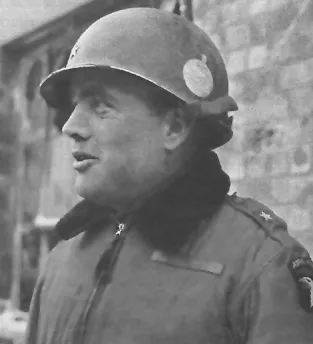
An account of General McAuliffe's message to his troops can be found at:

https://www.archivesfoundation.org/documents/surrender-nuts-gen-anthony-mcauliffes-1944-christmas-message-troops/

We in the CSD professions are affected by, adorned with, weighted by, dragged down under, swept along by, and uplifted with events of history. Whether we like outside events infiltrating our therapy environments, they do and they will. Your school may have experienced a mass shooting, or it could have happened at the mall a few blocks away. Surges in respiratory diseases with cold weather restrict the movements of your senior clients, and sometimes you, if you work in assisted living or memory care. Your hospital may be crippled by a stenosis of cash flow and dehydration of supply stores, because reimbursements are being returned to your healthcare facility at the speed of Congress.


To borrow from the Honorable Elizabeth Warren: yet, we persist. Our charge from the professions, and our guidance given by our mentors, teachers, colleagues and our support circles, include finding hope in every day we share with our consumers. They include giving the gifts of patience and insight; of persistence, humility and grace; of strength, joy and vision. Every instance we have to help people we serve, move closer to that quality of life they desire - that's the greatest gift we can want - ever. In the face of often seismic startling cataclysms that often do rock our everyday worlds, we dedicate ourselves to being that stability our consumers need. We in the professions offer that hospitality, that sanctuary and that energy that persons we serve, might need. 


And so amongst the hierarchies of metaphors that come from history - a therapy room might be a machine gun nest from World War I. The room could also be seen as the suffragette march of 1913, when Ida B. Wells taught a lesson of true courage. History also holds the story of Anne Sullivan, Helen Keller's hero; Fabi Hirsch, Gabby Giffords' SLP, is another. Was Roald Dahl a hero for his wife, Patricia Neal, and then his son? See: https://www.theguardian.com/books/2016/sep/12/roald-dahl-medical-pioneer-stroke-hydrocephalus-measles-vaccination. Dahl's legacy is rather tarnished by some parts of his documented belief system. See:  https://www.bbc.com/culture/article/20230530-roald-dahl-the-fierce-debate-over-rewriting-childrens-classics. Perhaps the author's life needs a tenderizing with an acidic agent, so that we can know what's important to recognize in history, and what can be strained out.


The professions teach that we often act as history's strainer - that we help our consumers and their supports decide what to keep, what to give away and what is needed. During the holiday season in the US, let us all let anxiety, depression, fear and hopelessness take a holiday. Often. Stay stalwart. 



Thursday, November 23, 2023

I would prefer not to (fall)

  (Blogger's note: this post is loosely based upon the series "Note to Self", as featured on CBS News. You can find examples of these stories at https://www.cbsnews.com/cbs-mornings/note-to-self/ . No blame can be attributed to the network, for what has happened here to taint the series). 

"Hello, boy! I'm glad you came to visit; otherwise it's very quiet at this end of the hall. The staff come to find me at meal times, they sprint with my wheelchair down the hall for dining, then whisk me back down that long hall you walked up - so damned fast, I feel like I'm gonna fly through a window! 


"You do look like me. I feel fairly comfortable talking with you, to tell you what I hope you can do, to avoid what's happened to me. Before I start:

"It is very quiet here. As I said. The nurse comes in and berates me for eating a Reese's Fast Break,  right after breakfast. I had barely picked up my dog-eared copy of TRISTRAM SHANDY when she last burst in, proclaiming my diabetes would make me drop lifeless by Fourth of July next! Every word, every syllable of her screed cut through the quiet,  before I laughed her way and raised the paperback to try again. 

"OK: first, make sure it's the right time and place to hear something important. You may keep YouTube mixes of Tupac or Blake Shelton or Queen B., playing louder than Jeez in your house, because you don't like to be alone! Poo! When you can't hear yourself think, you don't THINK! Oh, sorry for yelling....


"But you gotta watch how long you're around loud noise - ever hear of Return to Forever, that fusion jazz group from long ago - I like to make you smirk at my musical tastes - ?? I saw those guys at the old Memphis Mid - South Coliseum, back when you could normally hear after a concert - they blew out my ears for three days! https://youtu.be/aN_Y7aNgvhs?si=4xl0v7jhQGjCbIqI 

"Can you hear me? Please do that. 

"RTF's speakers were cranked up to the max that night. You don't need that, but if they are - get farther away. If I'm in the dining area here and there is that insipid classic rock music they ALWAYS play, I don't talk with anybody there - can't hear 'em! They'll occasionally hear me in the office, and switch to that 'Easy Listening' arrangement of Zeppelin that I like. Then I can flirt with Josie who's at my table, like I mean it. 


"Please do that. Hear me, boy?? Don't ruin your ears with noise! 

"Hearing aids????? You know I lost most of my cash in that Crypto kerfuffle some years ago. Medicaid keeps me fed and housed, yeah - but if I had learned my lesson and did what I've told you to do...and that ain't all of it....wouldn't need tech - naw - luh - gee! 

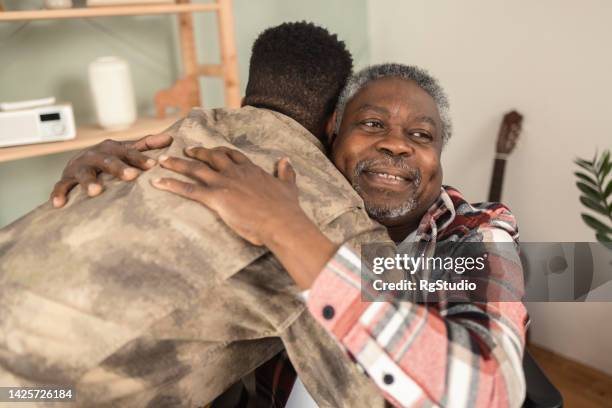
You hear me? C'mon over here, and give me a hug - there. Glad to see you - look into my eyes so I'm sure you'll hear me - come, back, soon - bye now!"


Monday, November 13, 2023

Communication Wellness: Sweet Fitness

 Since Banting, Macleod and Best confirmed insulin as essential for modulating blood sugar levels in the 1920's,  physicians have had a steadily growing arsenal of tools for controlling diabetes in their patients. I've written elsewhere, about how seeing the severe complications of diabetes in rehab patients had supercharged my interest in disease prevention. Not only do persons with diabetes face bodily impairments to their extremities, their vision and their hearts, but they also appear to struggle with cognitive function - their brains are exfoliated from the inside.
In addition to the challenges to their attention, recall and higher cognitive functions, persons with diabetes also have their skills impaired for visual acuity and perception, for dexterity, for their fine motor control, and their eating/drinking/swallowing. Not an easy way to meet the day, when your speaking, thinking, reading and writing, and also hearing, eating, drinking and swallowing might be limited!

Tomorrow- November 14 - is World Diabetes Day. If you are tempted to celebrate the day by running errands, taking a good walk or run, or by completing a round of household chores, and you are concerned about your blood sugar, - you may need to take some steps to maximize your fitness.  


 *HAVE THE RIGHT PLAN: Your healthcare provider is an important partner in a fitness plan, for managing your blood sugar levels and coordinating your lifestyle components contributing to fitness (e g. diet, sleep, tobacco use). Do you need help managing your plan? Trust in a friend to accompany you in your activities. Is your health status changing with the plan? Tweak your plan. 

*HAVE THE RIGHT EQUIPMENT: Do you have the best footwear? The right way to track your blood sugar levels? All the nutrition/hydration support that you might need for your exercise? All the human support you might benefit from, if your activity challenges your body and mind? 


 *HAVE THE RIGHT PERSPECTIVE: Talk to people in your support circles, including your healthcare provider, about your program and how you feel it's progressing. Learn to trust the advice you get as your fitness program evolves with your needs. Keep your prize uppermost. Keep your dreams realistic and show your pride, as you approach your goal. 


Sunday, November 12, 2023

Communication Wellness: Be Kind, So They Can Sleep

Good sleep is more than essential to healthy cognition, communication and swallowing. It feels good! When you are living with a healthy sleep pattern, you may echo Shakespeare: "O sleep! O gentle sleep! Nature’s soft nurse, ..." (Hylton, 1993). Recent research indicates that effective sleep habits help a person sustain essential nerve conduction functions, flush the nervous system of toxic material, and assure retention of the sleeper's memories (NINDS, 2023). Yet many, many of us struggle with getting the recommended quantity and quality of sleep to stay healthy (CDC, 2022). Outside of medical management of severe sleep problems, one of the better weapons in the sleep-deprived person's arsenal is sleep hygiene.What is sleep hygiene? The practice of sleep hygiene uses a collection of strategies and routines that allow most persons to get their maximum potential from a good night's sleep (Suni and Vyas, 2023). The reader can review the Sleep Foundation article, as well as other reviews of the practice (Irish, 2015; Breus, 2023; MGH, 2023) to develop and implement such a skill set. 


It's then kinda a no-brainer for CSD clinicians like ourselves, reader, to support the consumers who need help to sleep better. What makes this extra-clinical activity fairly easy, is that clues to a better sleep can be found with the calendar! I'll give you an example. November 13 (tomorrow as I write this) is "World Kindness Day"(Random Acts of Kindness, 2023). Some sleep hygiene activities that you might have at the ready, to advocate for sleepy people everywhere, could include: 

* CONTROL NOISE - there are construction sites in most urban areas, where noise is evidence of progress. Unfortunately, residential areas near the site suffer the consequences of piledrivers at dawn, or jackhammers in the heat of summer.  An example is the Hyde Park Labs, a planned multi-story adjunct of the University of Chicago (Hyde Park Labs, 2023), which is scheduled to open in 4th quarter of 2024. To even the odds that nearby residents might get the best sleep, stop by a morning treat shop to bribe the construction crew to start an hour later. For this example, the Dat Donut store is approximately 5 miles away from the construction site, and a neighborhood treasure for their "Big Dat" pastry (Dat Donut, 2023). 


* MAXIMIZE COMFORT - older persons often find that they might fall asleep anywhere, at any time (ask me how I know this!). When a senior wakes up from a sudden nap, she will most likely have aches in the head, neck and shoulders. You can advocate for new residents of congregate living facilities, be they independent care, assisted living or memory care units, be issued annually one new neck pillow for use in improving their sleep comfort. Most pillows of this type and size retail for less than $40.00 USD (Imbler, 2023). An example of a senior congregate living facility, amenable to supporting resident sleep hygiene is the Clarendale of Algonquin, IL (Clarendale of Algonquin, n.d.). 
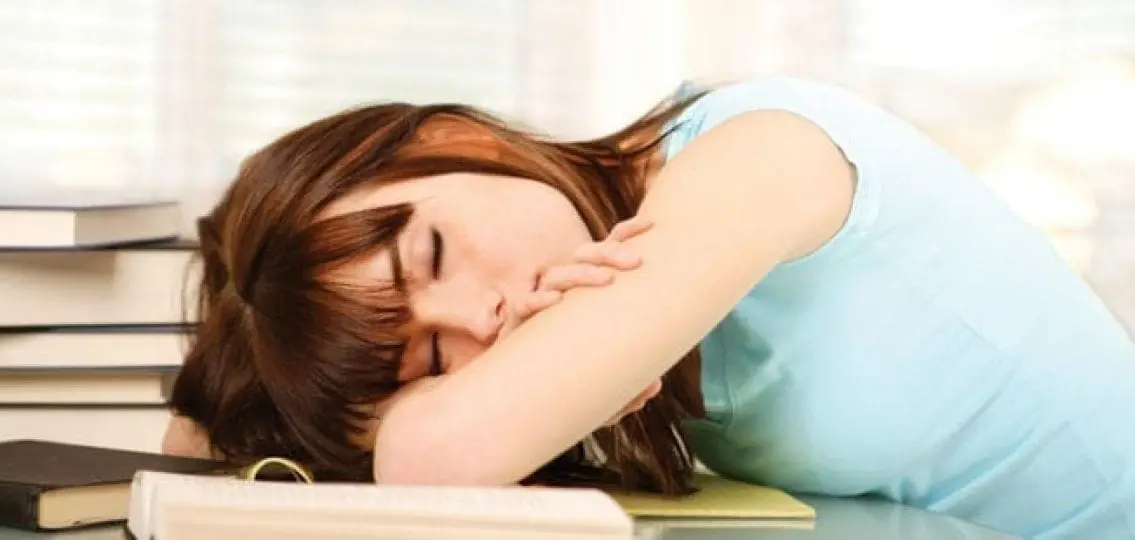


* TEACH, TEACH, TEACH - young people are caught up in the tornado of becoming an adult while in high school. Education and training after high school graduation can only perpetuate poor sleep habits, that a teen might take on to experience their school, work, leisure experience. Consider for your neighborhood high school a health class' unit on SLEEP: for example, the Lincoln Way Community High School District 210 of suburban Chicago, offers health education to high school freshmen.Yet teaching good sleep hygiene is not supplementing curricula for mental/emotional health, relationships, sexual reproduction, infectious and non - communicable diseases, drugs and nutrition (LW210, 2023). An e-learning platform piloted for Australian schools is only one example of the possibilities of improved sleep hygiene for this vulnerable population (Davis, Blunden, and BoydPratt, 2022). 

Get some rest, then get busy tomorrow!