Sunday, January 7, 2018

Be a Good Citizen

I think there's a lot to do these days, just to keep this world a good place to be. We know that our country is in transformative times, when the underpinnings of what drives the civil society are all challenged. When the 24 hour news cycle, and the parallel, large bore, continually evolving information superhighway lanes keep pushing, bombarding, twisting, inundating our information processors between our ears, - human nature tells us to pull the covers up, as tightly as possible. "Why, why, why!? Leave me alone!" Why not just go through our everyday, only processing the breaking news we're forced to digest, because - it's all too much. "Too much!"


I mean, haven't we had it drilled into our procedural memories as SLP's, that productivity is one of the biggest feet on our daily gas pedal?!? Get those persons served, get your documentation done and PHEW! "That's all I can stands, I can't stands no more", in the immortal words of Popeye the Sailor. Though Popeye meant that it was time to right a wrong, in the case of the SLP clinician who is asked to get involved in the wider socio-economic-political world, that task may be a dike that even Hans Brinker couldn't plug. Why get involved in the bigger world, beyond the clinic or treatment room?

But ultimately, even the most hardened of us by the daily professional grind - we know that in order to make a significant difference in the bigger world, we have to carry the water of good citizenship ourselves.  Whether it is to  spread the news in your community about a clinic fundraiser; to buttonhole a legislator whose vote can decide a critical budgetary issue, keeping the lights on for your practice; to write an newspaper opinion essay on the work of your fellow professionals, and how cleanly our work dovetails with the goals of a body of government; to engage in dialogue with persons of all stripes across all the social media platforms, without concern for personal attack or truncation of your voice; or to perpetuate the values of the democratic republic that has supported the growth of our services, by being prepared then VOTING; - our taking a stand as a citizen of our society requires focus, requires energy that, at times, is very spare in all our lives, but - when it is done well, it makes all our lives more stable and more enriched and more - perfect. Novus ordo seclorum. 


If you see that being an advocate for an individual, a guerilla fighter for your profession, a lobbyist for an issue persons served face every day, a letter writer for your employer's cause, or a candidate for office in a professional association; - if you see that is for you, then - find a mentor to guide you through the webs and labyrinths of government, of public and private institutions; develop expertise or seek consultants to help you research information, as needed, for your interests; make a plan of short and long-term goals (we know how to do this!) for the projects that call for your energies; and then set out with glee and with purpose, to make the world a better place for persons served - and for the persons who serve them and their circles. Your entire skill set as an SLP will serve you well, as you grow in your role as a good citizen.




Monday, January 1, 2018

Be an entrepreneur

The reader overhears part of a motivational talk I give myself often, as I am leaving my car each morning to enter my job site: "This is a valuable service I provide. I don't go to work because it is where I am supposed to be, but it is work in which I believe. Today (the car door closes) I am going to make a lot of money for my employer, and help many people have a better quality of life. I am going to make deep inroads into my patients' needs. There may be scads of barriers in my way as I work on these goals, but - I will make progress on these goals!"

Sales. We don't go into the professions of audiology or speech-language pathology ostensibly to sell, but selling is a primary goal of what we attempt to do. In the beginnings of our careers, and even as we become mature and self-starting clinicians, we have to sell ourselves that we can do this. I didn't prepare the materials as well as I had hoped; - I stayed up too late; - I do NOT want to face my supervisor today; - and there are a bazillion other reasons not to go into work. But, let's assume the battlements at the job site are energetically rushed. Now we have to sell our work to our customers. Who's that?

Our customers are everyone from the person served and her/his circles of support; the referral sources; the support staffs around that person and behind the referral sources; the third-party payers that keep the human service system funded;  the educational system that prepares future professionals in the fields; - and the larger organizations that employ or otherwise empower our employment to serve persons. We close the sale for each of our customers when we fulfill our mission of service; when we work efficiently; when we work with sensitivity to the evolving needs of the person; when we demonstrate that our services contribute to a healthy bottom line; when we demonstrate that our services contribute to persons' increased health and wellness, not only for individuals but also for the population.

What helps close a sale for a clinician? First, realizing that you have a sales job to do for your customer. Tailoring then presenting your sales pitch. Depending on your customer, you have to make the pitch in a way that will get a clear response. Is it the response you want? Hone, polish, trim, refine and re-pitch the pitch until the deal is closed....if it can be closed. The cycle is repeated continuously throughout the work day, as a function of the customer's status. Constant deal-making. Constant marketing. The art of the deal is that deal-making is intrinsic to the clinical workday.  Who wins with your becoming an effective clinical entrepreneur? The person served wins. All your customers win. You win.

Saturday, December 23, 2017

It's Christmas. Eat!

I was working the graveyard shift out of Dysphagia Division. You know how it is before a holiday: the cases pile up, like rhinoceros waste when the zookeepers go on strike. There were so many concerns about people swallowing that I was getting choked up. No recourse existed, but to see all the people I could before being shooed away by managers for the Christmas time off.

I started the day shift (yes; I was asked to cover another shift) helping a lady eat, who was not aware she was having problems. The method was simple: present the spoon to her line of sight, wait for her to open her mouth and accept the utensil, then press lightly down into the tongue body as the spoon is being withdrawn.  The person served had the best chance to swallow her meal without clinical signs of aspiration (CSA). Staff were shown how to pace their feeding style to the strengths of the patient.

There was, then, a woman who was struggling after a diagnosis of cancer to get anything down, even liquids. All material were coming out of her nose, at least 75% of the time. First, the decision was made to change the liquid consistency from THIN to NECTAR, so that the patient might more easily maintain liquid flow in the pharynx. The patient also demonstrated 7 seconds mean duration for expiratory pressure, measured in "blowing bubbles" through a straw into a glass of water, with nostrils pinched shut. There was barely a 1 second duration of bubbles sustained, when nostrils were NOT pinched shut. Luckily this patient had been maintaining her weight through PEG tube feeding.

I barely had time to punch out, after the last case had been completed; dash to my car and head to the international airport, to make my flight to Cancun for the holiday.. Just my luck: someone at the table in the airport restaurant, while I was waiting to board, started to choke on a burger. Someone hurrying, just like I had felt myself hurrying all day to see these swallowing cases. Someone too pressed for time to be in the moment; to listen to her/his body and eat/drink within the limits of her potential. I suffered through the sensations of my own GERD, before talking to each patient about GI PEACE.  Heckuva job, swallowing police. It never stops.


Be a Healer

"Healing" is dramatic; it calls upon that suspension of disbelief, cited in English literature, to give your body, mind and soul to an agent that displays powers you don't understand. You trust the authority of the agent, and your trust in what the agent offers is the voice you hear, above others, in your head. Heal me, please heal me. Far from healing being antiseptic, peaceful or conclusive, it can be raucous, sweaty and wrapped in mystery. I want to be healed; I have to be healed; I will do almost anything to be healed.  I give up my body, or my mind to you to be healed. I will pour out my gratitude and my devotion - my FEALTY to you, when I am healed. Please heal me!                                                                                                                                                                                              

Healing is also seen as cerebral, data-driven. The legacy of disease hunters and their conquest of rabies, polio and measles, is a series of complimenting clinical trials and omnivorous
"running"of subjects, defining cohorts, piling up data, checking hypotheses, building the large "N", deciding if this is the key that fits the lock, determining if this is the trial that allows the word "proof" to be used, and scouring the sources for every spare dime to complete every last task. This is not only the place for lab rats and lab bench jockeys, but for IRB meetings, for grant writers, for bleary eyes staring at computer screens, for family members bringing their loved ones to a trial, for repetition/repetition/repetition, and for building your CV with paper after paper. Heal you? There's an RCT for that. You want to be healed? Hospital A, where I work, has doctors who do that. You're not in network? Too bad. Healing is technical. Healing is business. Heal me! I can pay. Until I see the final bill, I am sure I can pay.


Speech-language pathologists can be and are healers. When they are at their best, "speechies" embody both the technical and the emotive. They exemplify the data-driven and the life-affirming. They appeal to the human need as well as the scientific method. Clinicians do it by playing the games that entail effective treatment plan management: they elicit the goals of the persons served and keep that goal uppermost for each person; they demonstrate continuously evolving project management skills ("Are we on the right track?", you ask. "Are we doing the right thing? Do YOU feel we are making progress?"), using both near-point perception and disinterested data to guide the project towards its planned conclusion; and they follow Covey's commandment, begin with the end in mind; they find the bridge between treating the impairment with component skills training, and using the functional skill in real life environments as soon as possible.

The SLP as healer should not be "puffed up" or oversell her/his skill, product, or project. If you look at Oliver Cromwell's statement to the Church of Scotland, "....think it possible you may be mistaken", converted to a statistical rule named for the English leader, you may see that healing in the clinical sphere is a function of science and faith. You may learn that, to be a clinical healer, you depend as much upon your human connection to the person served, as you do upon the rigor and predictability of your method. You may discover that in serving persons with communication, cognition and swallowing impairments, - that they appreciate your education and training, but they merely want to be healed.


Sunday, December 3, 2017

Be a scholar

Above and beyond being "well read", as the August 27, 2017 post for this blog urges ; -
speech-language pathologists must have the constitution to link what they do in the treatment setting, to the grand body of cumulative knowledge on human communication, cognition and swallowing. You don't do that because you want a car on the professional ego train, or that you want to keep up the momentum you had in university for setting the curve. Some scholars can do both - climb the ladder of riches, while working as a clinician/researcher/academic. Basic and applied research in our fields, is regardless, THE reward if you seek to answer a scholarly question. Whether to understand the processes underlying behavior within the population, or to discover valid and reliable, real life solutions for impaired individuals -scholarly endeavor gives us clinicians the credibility we need, in the marketplace for human service.

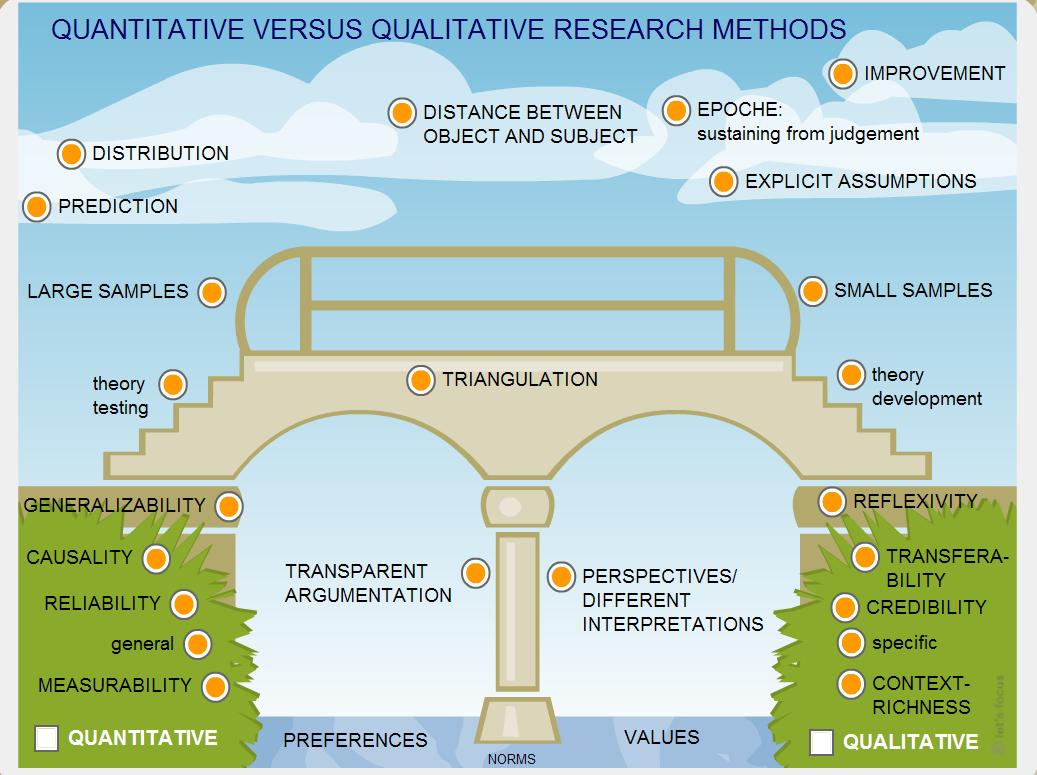
This post will not teach you nearly enough fundamentals of scholarly research: there are literature reviews, books, convention presentations and courses, post-doctoral fellowships and master's level internships, already in place and accessible to all with interest and drive. There is quantitative research, where discrete data collection and rigorous statistical method allow you to establish proof of a phenomenon in human communication sciences. That school of thought is well represented by training programs such as - https://communication.northwestern.edu/departments/csd/research
Qualitative research will approach human communication phenomena from a largely descriptive perspective: "...a variety of analytic procedures designed to systematically collect and describe authentic, contextualized social phenomena with the goal of interpretive adequacy”. 

Damico, J. S., & Simmons-Mackie, N. N. (2003). Qualitative research and speech-language pathology: A tutorial for the clinical realm. American Journal of Speech-Language Pathology, 12, 131–143.

An example of a training program that affords the budding researcher experience in qualitative research methods is -  http://www.ucs.louisiana.edu/~jsd6498/codi610/codi610page.html

 Regardless of your method, - you will have occasion to use both paradigms in the course of your career, - identifying and attacking a research problem using scholarship can light you up. It can ignite or revitalize your career. It can save the world! It will feel that good.

Sunday, November 5, 2017

Be a servant

If you look back at the March 27, 2016 entry for this blog, "Who Exactly Are We?", you will find three examples of a skill set typical of speech-language pathologists. Because many of us in the professions drift from a strictly clinical role to one that melds clinic practice with mentoring, management or administration, you might ask - do any combinations of the skill sets bring you the greatest success as a leader? Leadership is not only a vital component of our workplaces - it can satisfy a need many of us clinicians have for professional growth, and it can be enjoyable to give above and beyond the therapy room.

Let's cross match a sample of the clinical skills, with some traits of a good leader,
 to find out what leadership is for you .

About leaders: Jill Geisler addressed this skill set for successful managers, posted to poynter.org on 12/6/2012:

1. Strategic thinking
2.  Collaboration
3. Emotional Intelligence
4. Critical Thinking
5. Communication
6. Motivation
7. Feedback
8. Tough Conversations
9. Coaching
10.Making Values Visible and Viral


Now here is a skill set for speech-language pathologists, taken from the American Speech-Language-Hearing Association (ASHA) website. 

1. Teachable
2. Strong ethics
3. Good communication skills
4. Capable technologically
5. Conversant with good business practice
6. Entrepreneurship
7. Social consciousness
8. Civility
9. Objectivity
10. Analytic ability
11. Patience
12. System advocacy
13. Positive
14. Strong values


And so we begin to see clues about how the twain might meet, between clinicians and leaders. We might be seen as leaders for our customers, the persons we serve, in that we must communicate clearly our proposed plans; we must coordinate the changes in behavior we are managing, with their effects on the persons served and their communities; and we must manage the case efficiently, meeting the planned objectives on time and budget. We are, then, trained in the clinical setting to be proactive managers of behavioral change, in addition to steering one ship among a fleet of education or health services in the marketplace.

Folding leadership traits for coordination, action, discipline, project management and helmet fit, into the clinical skills for project management, clinical alliance management, sales acumen and scientific rigor, we have a batter rich in organization, flavored with business sense and heightened by brand new whiz bang tech. Is there enough of the humanity of being a clinician? DO you find enough sustenance in such an mixture to get you through tough days, to sustain the buy-in of your persons served?


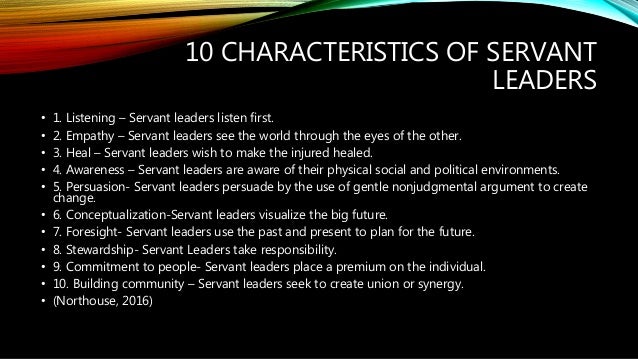
What about the servant leader; one whose leadership style is built upon "ethical and caring behavior"?  Its skill set might include (Spears, 2010):

1. Listening
2. Empathy
3. Healing
4. Awareness
5. Persuasion
6. Conceptualization
7. Foresight
8. Stewardship
9. Commitment to the growth of people
10. Building community

When this concoction is formed and the elements seared in, you might find that the result has elements of a skill set that allow you a tighter alliance, a clearer vision, and a human scale approach to the management of cases - and the perpetuity of clinical services.

What do you carry in your skill set bag? How much do you borrow and share from all three domains? Your servant.


Sunday, September 10, 2017

Be a geek


"Oh YES, they call her the geek;
All her test data is on fleek;
She can treat from Sholem to Sadiq,
But keep a super mystique; - 
Yes, she's an SLP GEEK!"
(with apologies to Ray Stevens)


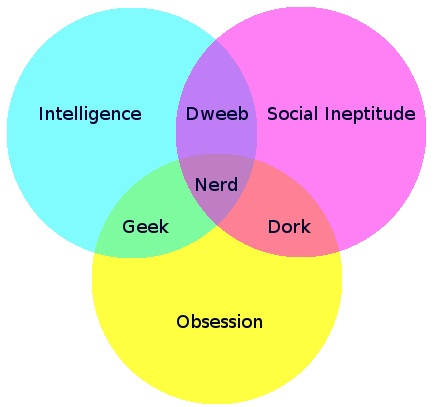
Even though there are minute distinctions to be made among geeks, nerds, dweebs and dorks, I feel the need to use only one of these discerning terms when describing an SLP who loves to dabble in the arcana of the work we do. The colorful Venn diagram you see below shows that a geek melds the best of "intelligence" and "obsession", in forming her world view of - in this case - the professions.

Would a dweeb make it as a clinician? Running the gauntlet of practicum classes, then an internship or two, then the CFY - ?! How about a dork? The endless cycles of push - pull, of Lucy saying, "Ricky, I want to sing with your band!", then finding out she doesn't have the pipes for the work, would be exhausting...and let's just forget the nerd; at the mercy of all these forces in the Venn diagram, you may as well be a - an elocutionist!

Geek = intelligence + obsession. You solve problems and you want to do it so badly. The culture of training, our business models and our practice patterns all breed geekness. When your practice is expected to be evidence - based, that means hypotheses to test; variables to be juggled; sample sizes to optimize; literature to review and conclusions to weigh. We want to be smart in solving the problems, that persons served bring to our offices to solve. We want to put in the hours; the weeks, months, semesters, years, to make our profession more than the best kept secret in town."Are we not men? We are geeks!".