If you look back at the March 27, 2016 entry for this blog, "Who Exactly Are We?", you will find three examples of a skill set typical of speech-language pathologists. Because many of us in the professions drift from a strictly clinical role to one that melds clinic practice with mentoring, management or administration, you might ask - do any combinations of the skill sets bring you the greatest success as a leader? Leadership is not only a vital component of our workplaces - it can satisfy a need many of us clinicians have for professional growth, and it can be enjoyable to give above and beyond the therapy room.
Let's cross match a sample of the clinical skills, with some traits of a good leader,
to find out what leadership is for you .
About leaders: Jill Geisler addressed this skill set for successful managers, posted to poynter.org on 12/6/2012:
1. Strategic thinking
2. Collaboration
3. Emotional Intelligence
4. Critical Thinking
5. Communication
6. Motivation
7. Feedback
8. Tough Conversations
9. Coaching
10.Making Values Visible and Viral
Now here is a skill set for speech-language pathologists, taken from the American Speech-Language-Hearing Association (ASHA) website.
1. Teachable
2. Strong ethics
3. Good communication skills
4. Capable technologically
5. Conversant with good business practice
6. Entrepreneurship
7. Social consciousness
8. Civility
9. Objectivity
10. Analytic ability
11. Patience
12. System advocacy
13. Positive
14. Strong values
And so we begin to see clues about how the twain might meet, between clinicians and leaders. We might be seen as leaders for our customers, the persons we serve, in that we must communicate clearly our proposed plans; we must coordinate the changes in behavior we are managing, with their effects on the persons served and their communities; and we must manage the case efficiently, meeting the planned objectives on time and budget. We are, then, trained in the clinical setting to be proactive managers of behavioral change, in addition to steering one ship among a fleet of education or health services in the marketplace.
Folding leadership traits for coordination, action, discipline, project management and helmet fit, into the clinical skills for project management, clinical alliance management, sales acumen and scientific rigor, we have a batter rich in organization, flavored with business sense and heightened by brand new whiz bang tech. Is there enough of the humanity of being a clinician? DO you find enough sustenance in such an mixture to get you through tough days, to sustain the buy-in of your persons served?

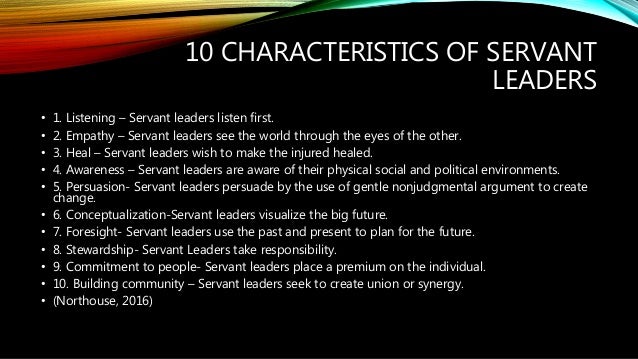
What about the servant leader; one whose leadership style is built upon "ethical and caring behavior"? Its skill set might include (Spears, 2010):
1. Listening
2. Empathy
3. Healing
4. Awareness
5. Persuasion
6. Conceptualization
7. Foresight
8. Stewardship
9. Commitment to the growth of people
10. Building community
When this concoction is formed and the elements seared in, you might find that the result has elements of a skill set that allow you a tighter alliance, a clearer vision, and a human scale approach to the management of cases - and the perpetuity of clinical services.
What do you carry in your skill set bag? How much do you borrow and share from all three domains? Your servant.
Sunday, November 5, 2017
Sunday, September 10, 2017
Be a geek
All her test data is on fleek;
She can treat from Sholem to Sadiq,
But keep a super mystique; -
Yes, she's an SLP GEEK!"
(with apologies to Ray Stevens)
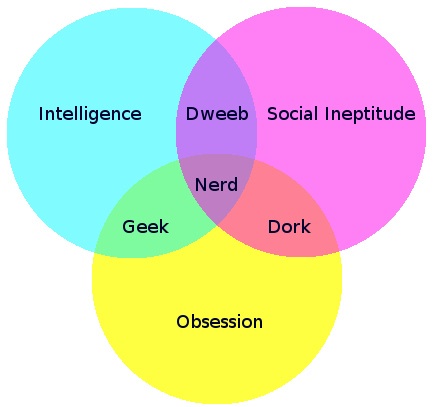
Even though there are minute distinctions to be made among geeks, nerds, dweebs and dorks, I feel the need to use only one of these discerning terms when describing an SLP who loves to dabble in the arcana of the work we do. The colorful Venn diagram you see below shows that a geek melds the best of "intelligence" and "obsession", in forming her world view of - in this case - the professions.
Would a dweeb make it as a clinician? Running the gauntlet of practicum classes, then an internship or two, then the CFY - ?! How about a dork? The endless cycles of push - pull, of Lucy saying, "Ricky, I want to sing with your band!", then finding out she doesn't have the pipes for the work, would be exhausting...and let's just forget the nerd; at the mercy of all these forces in the Venn diagram, you may as well be a - an elocutionist!
Geek = intelligence + obsession. You solve problems and you want to do it so badly. The culture of training, our business models and our practice patterns all breed geekness. When your practice is expected to be evidence - based, that means hypotheses to test; variables to be juggled; sample sizes to optimize; literature to review and conclusions to weigh. We want to be smart in solving the problems, that persons served bring to our offices to solve. We want to put in the hours; the weeks, months, semesters, years, to make our profession more than the best kept secret in town."Are we not men? We are geeks!".
Sunday, August 27, 2017
Be well read
I didn't start wearing corrective lenses until I had turned 21. For years and years (it seems an eternity when you are young - becoming an adult) I had read, read and read some more. I had read at school; at home in every orientation in space; in the library; in the car; and wherever else I could make a book's world my own. There were board books and chapter books; books read aloud, books on cassette and then those portrayed on TV, encouraging me to read them; books out of library stacks that needed immaculate protection, those that were issued by my school and required a pristine look at turn-in; and my own constantly mutating collection of books. It was so much fun to be a reader from an early age. The apocryphal story in my family was that I had learned to read before I finally talked. True or not; I was a reading guy, and it was such a fuel for my life. The tortoise shell frames with my first glasses at 21; - they were just my attempt at a first fashion statement, after being able to read with less eye strain.
Reading is, of course, a discipline that is obligatory to begin and sustain your SLP career. If a clinician-researcher does not master the skills to digest not only the source material for core professional knowledge, but also the allied and supplementary material from fields deemed interprofessional - sharing some knowledge base with SLP - the marketability of the SLP will be marginal. Many in the field want to be specialists, whether that be in autism, augmentative/alternative communication, aphasiology, assistive technology, or additional specialties. Those professionals who want to "drill down" and understand in depth, a narrow focus for professional practice, will have their niche firmly in hand when they read all the necessary literature with fluency. The alternate end of this continuum of professional readers, may hold the generalist who has, out of human nature's demands, some professional strengths but is also prepared to serve anyone who seeks out this practice. Reading by the generalist allows access to knowledge bases across the entire professional spectrum, and in general, superior research skills that facilitate working with all persons having the needs of a well read SLP clinician.
Yet, even beyond the professional reading that the SLP clinician carries as a perpetual responsibility - there is the need and obligation to read for work-life balance, for pleasure, and for growing as a literate professional who can engage with most persons served. I have regularly heard from my fellow students and colleagues, that they do not have time to read outside the professional sphere. I often do not directly respond, but that is because I have had to lift my mandible off the ground and reattach to my jaw. I would go BONKERS BAT CRAZY if I did not pick up newspapers, magazines and books, in addition to all the professional reading I do. Besides feeding my incessant curiosity about the world, reading prepares me to be more like the people I serve. When I have built up my store of general education, I am better prepared to relate well to persons seeking my services; - to find their areas of interest and establish connections based on what the person and I share. So read, read, read, my colleagues - read everything!
Reading is, of course, a discipline that is obligatory to begin and sustain your SLP career. If a clinician-researcher does not master the skills to digest not only the source material for core professional knowledge, but also the allied and supplementary material from fields deemed interprofessional - sharing some knowledge base with SLP - the marketability of the SLP will be marginal. Many in the field want to be specialists, whether that be in autism, augmentative/alternative communication, aphasiology, assistive technology, or additional specialties. Those professionals who want to "drill down" and understand in depth, a narrow focus for professional practice, will have their niche firmly in hand when they read all the necessary literature with fluency. The alternate end of this continuum of professional readers, may hold the generalist who has, out of human nature's demands, some professional strengths but is also prepared to serve anyone who seeks out this practice. Reading by the generalist allows access to knowledge bases across the entire professional spectrum, and in general, superior research skills that facilitate working with all persons having the needs of a well read SLP clinician.
Yet, even beyond the professional reading that the SLP clinician carries as a perpetual responsibility - there is the need and obligation to read for work-life balance, for pleasure, and for growing as a literate professional who can engage with most persons served. I have regularly heard from my fellow students and colleagues, that they do not have time to read outside the professional sphere. I often do not directly respond, but that is because I have had to lift my mandible off the ground and reattach to my jaw. I would go BONKERS BAT CRAZY if I did not pick up newspapers, magazines and books, in addition to all the professional reading I do. Besides feeding my incessant curiosity about the world, reading prepares me to be more like the people I serve. When I have built up my store of general education, I am better prepared to relate well to persons seeking my services; - to find their areas of interest and establish connections based on what the person and I share. So read, read, read, my colleagues - read everything!
Sunday, August 20, 2017
Be a CNA!
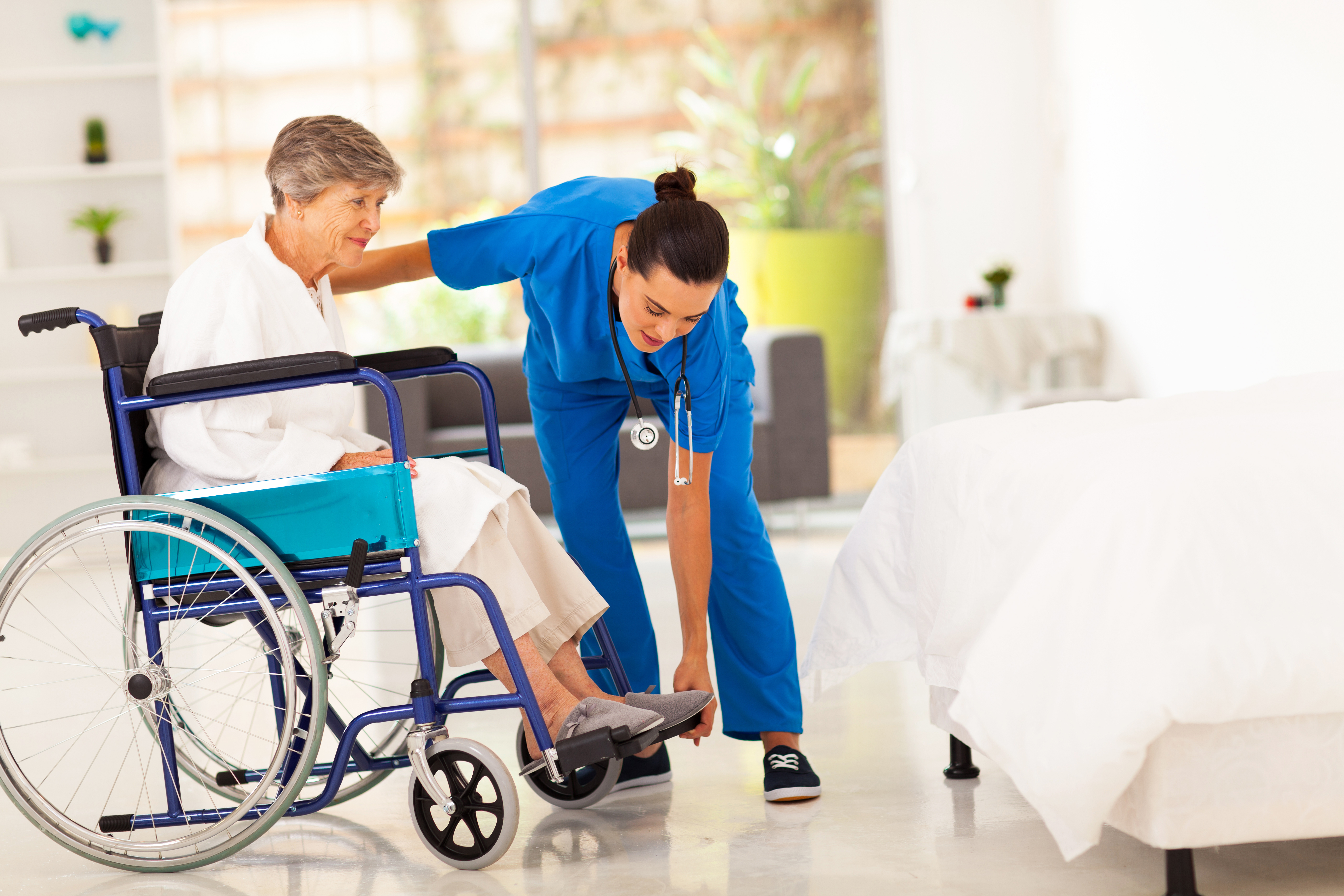
Back in the day, they called the position "orderly". There were meal trays to pass, trash cans to keep empty, pre-operative shaves for male patients, and room lights to answer for the nurses. In the first full time job I had assumed after high school, I was an orderly in the county general hospital - thanks largely to my grandmother, on the nursing staff and one of my most powerful moral compasses. "Monie" knew I needed not just a job, but a job that challenged my emotional and social architecture. There had been a part-time stint of bagging groceries at the Kroger, but I was such an unfocused dweeb at that - also, my trig teacher had been a supervisor at the store, so GEEZ - what a blemish on my future if I had tried to stay! I couldn't not be successful at this hospital job, and at $1.65/hour - I had it all. Money in my pocket. Nurses and aides to keep me constantly moving and teach me things. Hostess fruit pies and Pepsi's for lunch! Any thought of my future career was at the time, only a nugget of light I didn't know I owned deep in my consciousness. Working as an orderly/CNA was a life pivot that, now, I wouldn't trade for all the stock options littering Wall Street.
On the one hand, why would you rhapsodize about a job where you were on the bottom of the hospital pecking order? An SLP is trained and conditioned to work with and communicate with doctors, nurses, psychologists, educators, parents, rad technologists and the like. You are entrusted to be in most settings, semi-autonomous and self-driven to manage your caseload and advocate for persons served. The orderly was instead, task- and criterion-driven to work down a checklist of responsibilities for a shift. Making beds with sharp hospital corners! Collecting meal trays for dietary staff! Collecting, as an elderly Italian-American man once offered up, the "UREEN" for the lab! Yet, as I learned the job on a urology ward and later in the hospital's ER, then in a university hospital (ENT ward, general surgery clinic) and nursing home in Iowa - there was so much more.
With more and more work experience, I made the transition from completing non-medical to routine medical tasks. With knowledge I had accumulated about the medical conditions of persons served, I got the chance to assist nurses and doctors in frequent procedures. Catheter placements! Staple removal!! Nasogastric tube feeding!!! I learned to be vigilant for persons' needs - whether physical or emotional. I was pulled out of my shy dweeb shell, when forced to check in frequently with those persons assigned to me: as a result, I grew to know each person very well. I got to know the units on which these persons were housed very well, too. As a speech -language pathologist that will engage with these facilities, whether they are medical or long-term care, I respect the direct care staff and seek their advice for best care of the person served.
And so, WHY do I feel privileged to have been a CNA? The skill set that grew out of those work experiences includes:
* physical effort in patient care, higher than that of most SLP's: hard physical work feels good!
* work processes of high frequency, that extend across diagnostic categories to meet criteria of a treatment plan: you can have a lot of pride in work that is repetitive and of low complexity.
* interpersonal communication experiences across ages, both genders and all socioeconomic tiers: when people are ill or convalescing, having someone to listen to them can spur healing.
* being THE direct care staff who knows the person served very well, and serves as an advocate for them with the healthcare system: frequent attention to the person served only strengthens the therapeutic alliance.
On the one hand, why would you rhapsodize about a job where you were on the bottom of the hospital pecking order? An SLP is trained and conditioned to work with and communicate with doctors, nurses, psychologists, educators, parents, rad technologists and the like. You are entrusted to be in most settings, semi-autonomous and self-driven to manage your caseload and advocate for persons served. The orderly was instead, task- and criterion-driven to work down a checklist of responsibilities for a shift. Making beds with sharp hospital corners! Collecting meal trays for dietary staff! Collecting, as an elderly Italian-American man once offered up, the "UREEN" for the lab! Yet, as I learned the job on a urology ward and later in the hospital's ER, then in a university hospital (ENT ward, general surgery clinic) and nursing home in Iowa - there was so much more.
With more and more work experience, I made the transition from completing non-medical to routine medical tasks. With knowledge I had accumulated about the medical conditions of persons served, I got the chance to assist nurses and doctors in frequent procedures. Catheter placements! Staple removal!! Nasogastric tube feeding!!! I learned to be vigilant for persons' needs - whether physical or emotional. I was pulled out of my shy dweeb shell, when forced to check in frequently with those persons assigned to me: as a result, I grew to know each person very well. I got to know the units on which these persons were housed very well, too. As a speech -language pathologist that will engage with these facilities, whether they are medical or long-term care, I respect the direct care staff and seek their advice for best care of the person served.
And so, WHY do I feel privileged to have been a CNA? The skill set that grew out of those work experiences includes:
* physical effort in patient care, higher than that of most SLP's: hard physical work feels good!
* work processes of high frequency, that extend across diagnostic categories to meet criteria of a treatment plan: you can have a lot of pride in work that is repetitive and of low complexity.
* interpersonal communication experiences across ages, both genders and all socioeconomic tiers: when people are ill or convalescing, having someone to listen to them can spur healing.
* being THE direct care staff who knows the person served very well, and serves as an advocate for them with the healthcare system: frequent attention to the person served only strengthens the therapeutic alliance.
Sunday, August 13, 2017
Be an SLP!
The types and numbers of persons who join the professions - they are as infinite as the number of points between any two points. And, even though this blog has attempted to point out what's what about being a speech-language pathologist, it's extremely difficult to capture all the relevant skill sets and perspectives that people like me employ. So,we'll have another series of short posts following this one, that give you new, fresh and tasty views of what is means to be an SLP!
Coming from an individual SLP; this is, of course, a personal view. The paths that many of our professions' founders followed, as well as those of some of our colleagues, to nurture and grow the mission of service to our communities....what a long, strange trip it's been.
During my graduate training, an earlier review text for the national credentialling exam (PRAXIS) was Perkins' SPEECH PATHOLOGY: An Applied Interdisciplinary Behavioral Science. Interdisciplinary: that's the rub. People have come to wear the clinical cloak from the whole world. Everyone communicates and swallows, and we'll give some examples of perspectives on the field in succeeding posts. The topics will ask if you would be a CNA; someone well read; a geek; a servant; an entrepreneur; a team player, a conscience; a good citizen; a healer or a scholar. It's such a big world, that brings the next generation of practitioner/researchers to lead our fields.
What do you bring to the worktable? Looking forward to responses from readers of this blog, about what makes a quality SLP.
Coming from an individual SLP; this is, of course, a personal view. The paths that many of our professions' founders followed, as well as those of some of our colleagues, to nurture and grow the mission of service to our communities....what a long, strange trip it's been.
During my graduate training, an earlier review text for the national credentialling exam (PRAXIS) was Perkins' SPEECH PATHOLOGY: An Applied Interdisciplinary Behavioral Science. Interdisciplinary: that's the rub. People have come to wear the clinical cloak from the whole world. Everyone communicates and swallows, and we'll give some examples of perspectives on the field in succeeding posts. The topics will ask if you would be a CNA; someone well read; a geek; a servant; an entrepreneur; a team player, a conscience; a good citizen; a healer or a scholar. It's such a big world, that brings the next generation of practitioner/researchers to lead our fields.
What do you bring to the worktable? Looking forward to responses from readers of this blog, about what makes a quality SLP.
Wednesday, July 26, 2017
Preventing the scourge
The new patient had been in her chair about ten minutes, when I entered the waiting room near the end of the clinic day. Just above her chair, there was a banner sign that read "PREVENT the Scourge: Get Tested". She was about 60, dressed well and appeared poised, even when she was forced to wait a few minutes. Cleaning up an exploded Twinkie cake had taken more time than I thought. Oh well, I'm glad she did not leave - and when she had heard her name and we exchanged introductions at the door of our exam room, she came in and started telling her story. There was a chance we could head off a big problem for her, if I had read her case history closely.
Like most of us over 50, she had noticed that she was not understanding what people were saying to her. She had obtained a master's degree in education when in her 20's, and had retired two years ago after 25 years of teaching. At times through her tenure, she said, working conditions in her schools may have taken a toll on her hearing. High ceilings, cavernous classrooms and smooth building surfaces in older school buildings forced her to struggle to be understood by her students. Not only was she fatigued daily near her retirement time from listening, but she also found her voice was becoming strained and dogged her continually. Her circuits were getting fried, it seemed.
The testing was routine and went smoothly, and it felt easy to empathize with her during the evaluation; - to acknowledge her responses to the procedures, keep her energy up for participating actively through all the exams, and to help find some reserves to digest their meaning: what next?
We took a good break before reviewing the information, and planning any interventions. We each get a cup of tea, and a Fig Newton or two. Then the review and the counseling started: I hope we were not too late.
"Thanks for coming today, and letting us serve you. I think you understand well what has happened, and we'll need to decide together what the best course is for you. Your audiogram says - "
"You've lost some significant ability for understanding conversations. You see, we use the high frequencies to understand speech in daily situations, and those frequencies are often the most sensitive to the stresses our ears take. Noisy and echoing listening conditions, and the changes in our general health that feed the health of the ear, can cause those sensitive frequencies to be lost for processing sound. When you lose those frequencies for fast processing of sound, the brain can step in and 'fill in the blank', so you understand the message. BUT, that loss of processing power in the ear may and often does continue, so that the brain has to compensate more and MORE for your conversations. Tell me this - do you ever feel exhausted from the effort you give to listen to conversations??"
"Because we're trying to prevent these problems from becoming a chronic communication problem that affects most daily function, we do the hearing and cognitive, or thinking, tests - and then help you estimate what effect your hearing changes might have on your daily living. Once again, do you ever feel exhausted from listening?"
(Blogger's note: Thanks to Jennifer Jones Lister and Jerri Edwards, for their July 2017 article in Access Audiology titled "Lose Your Hearing, Lose Your Mind?: The Relationship between Hearing and Cognition".)
Like most of us over 50, she had noticed that she was not understanding what people were saying to her. She had obtained a master's degree in education when in her 20's, and had retired two years ago after 25 years of teaching. At times through her tenure, she said, working conditions in her schools may have taken a toll on her hearing. High ceilings, cavernous classrooms and smooth building surfaces in older school buildings forced her to struggle to be understood by her students. Not only was she fatigued daily near her retirement time from listening, but she also found her voice was becoming strained and dogged her continually. Her circuits were getting fried, it seemed.
The testing was routine and went smoothly, and it felt easy to empathize with her during the evaluation; - to acknowledge her responses to the procedures, keep her energy up for participating actively through all the exams, and to help find some reserves to digest their meaning: what next?
We took a good break before reviewing the information, and planning any interventions. We each get a cup of tea, and a Fig Newton or two. Then the review and the counseling started: I hope we were not too late.
"Thanks for coming today, and letting us serve you. I think you understand well what has happened, and we'll need to decide together what the best course is for you. Your audiogram says - "
"You've lost some significant ability for understanding conversations. You see, we use the high frequencies to understand speech in daily situations, and those frequencies are often the most sensitive to the stresses our ears take. Noisy and echoing listening conditions, and the changes in our general health that feed the health of the ear, can cause those sensitive frequencies to be lost for processing sound. When you lose those frequencies for fast processing of sound, the brain can step in and 'fill in the blank', so you understand the message. BUT, that loss of processing power in the ear may and often does continue, so that the brain has to compensate more and MORE for your conversations. Tell me this - do you ever feel exhausted from the effort you give to listen to conversations??"
"Because we're trying to prevent these problems from becoming a chronic communication problem that affects most daily function, we do the hearing and cognitive, or thinking, tests - and then help you estimate what effect your hearing changes might have on your daily living. Once again, do you ever feel exhausted from listening?"
(Blogger's note: Thanks to Jennifer Jones Lister and Jerri Edwards, for their July 2017 article in Access Audiology titled "Lose Your Hearing, Lose Your Mind?: The Relationship between Hearing and Cognition".)
Sunday, July 16, 2017
Communication fitness: the stuff
{Blogger's note: the 4/23/17 post titled "Communication Fitness" drew a lot of response, so - there's more to be done. In light of my discovering a real - world equivalent of this clinical idea in use @ Northwestern University, we need to keep pushing the envelope}
It shouldn't be a surprise to us in the professions, that getting adults onto video game platforms would be touted as critical for boosting their cognitive fitness. When there is a chance to publicize our clinical advances, news organizations like to see people hooked up to, in circuits with, or dependent upon technology!! It's cutting edge. It's SEXY...and in some training scenarios, it has been shown that computerized "brain training" can raise scores on cognitive assessments, e.g. those for attention. The effects of this computerized training being transferred to everyday life? The jury is still out. Yet customers (to distinguish them from persons served in clinical treatment) for communication fitness programs, will gravitate to computer-based cognitive games as easily as 'gym rats' ramble to a treadmill.
[PROBLEM: customer wants to improve her concentration for things she hears. SOLUTION: customer presses a button whenever she can name a popular song played aloud, given four possible answers on the computer screen].
Yet Wii, XBox, and other game, tablet, laptop and smartphone - accessible cognition - canoodling formats are here in our bag of tricks for the foreseeable future. They encourage buy - in with adults for the "brain fitness" enterprise. They are portable and often intuitive to use. Fun is contagious, and using computer-based games as part of a cognitive fitness program fuels the social need to communicate and to think. Yet, playing games is not what most adults do all day. When I ask persons served who enroll in clinical programs with me, "How will you know when you're better? What do you want to gain from working with me?", they mention their abilities for cleaning the house, or staying focused and efficient on the job, or not being surprised by their family members appearing - even though the customer had communicated with family re a visit, earlier that day.
In this role, the speech-language pathologist is not the game master but instead, a take on the interior designer. The SLP immerses the cognitive fitness customer in real environments, tailored to the customer's needs - so that the skills that need support are exercised; that real-time feedback is available, and that it is a supportive environment that yields specific learning opportunities. The customer is then prepared to re-engage in real life, with her skill set bolstered. The context - dependent learning available, helps ensure the customer can apply what is learned, back in her real world.
[PROBLEM: customer wants to improve her concentration for activities done in the kitchen. SOLUTION: customer makes a meal for herself and cognitive fitness staff in the training kitchen]
What does each cognitive fitness approach have in common?
* An SLP constructs and supervises the activities.
* Regardless, this is not skilled treatment that requires the intervention of an SLP. A cognitive fitness customer may interact with a volunteer or a paraprofessional to complete a fitness program.
* A successful outcome of fitness training = customer returns to her everyday activity at previous level of independence.
* Cognitive fitness training is NOT paid for through insurance.
* The SLP should initiate cognitive fitness programming for adult customers, to extend the influence of the professions.
* Cognitive fitness can be seen as a preventative intervention, supporting adult wellness programs to help keep adult customers viable and safe in all their customary (residential, occupational, social) environments.
Structuring the successful cognitive fitness program: that will require patience and fortitude.
It shouldn't be a surprise to us in the professions, that getting adults onto video game platforms would be touted as critical for boosting their cognitive fitness. When there is a chance to publicize our clinical advances, news organizations like to see people hooked up to, in circuits with, or dependent upon technology!! It's cutting edge. It's SEXY...and in some training scenarios, it has been shown that computerized "brain training" can raise scores on cognitive assessments, e.g. those for attention. The effects of this computerized training being transferred to everyday life? The jury is still out. Yet customers (to distinguish them from persons served in clinical treatment) for communication fitness programs, will gravitate to computer-based cognitive games as easily as 'gym rats' ramble to a treadmill.
[PROBLEM: customer wants to improve her concentration for things she hears. SOLUTION: customer presses a button whenever she can name a popular song played aloud, given four possible answers on the computer screen].
Yet Wii, XBox, and other game, tablet, laptop and smartphone - accessible cognition - canoodling formats are here in our bag of tricks for the foreseeable future. They encourage buy - in with adults for the "brain fitness" enterprise. They are portable and often intuitive to use. Fun is contagious, and using computer-based games as part of a cognitive fitness program fuels the social need to communicate and to think. Yet, playing games is not what most adults do all day. When I ask persons served who enroll in clinical programs with me, "How will you know when you're better? What do you want to gain from working with me?", they mention their abilities for cleaning the house, or staying focused and efficient on the job, or not being surprised by their family members appearing - even though the customer had communicated with family re a visit, earlier that day.
In this role, the speech-language pathologist is not the game master but instead, a take on the interior designer. The SLP immerses the cognitive fitness customer in real environments, tailored to the customer's needs - so that the skills that need support are exercised; that real-time feedback is available, and that it is a supportive environment that yields specific learning opportunities. The customer is then prepared to re-engage in real life, with her skill set bolstered. The context - dependent learning available, helps ensure the customer can apply what is learned, back in her real world.
[PROBLEM: customer wants to improve her concentration for activities done in the kitchen. SOLUTION: customer makes a meal for herself and cognitive fitness staff in the training kitchen]
What does each cognitive fitness approach have in common?
* An SLP constructs and supervises the activities.
* Regardless, this is not skilled treatment that requires the intervention of an SLP. A cognitive fitness customer may interact with a volunteer or a paraprofessional to complete a fitness program.
* A successful outcome of fitness training = customer returns to her everyday activity at previous level of independence.
* Cognitive fitness training is NOT paid for through insurance.
* The SLP should initiate cognitive fitness programming for adult customers, to extend the influence of the professions.
* Cognitive fitness can be seen as a preventative intervention, supporting adult wellness programs to help keep adult customers viable and safe in all their customary (residential, occupational, social) environments.
Structuring the successful cognitive fitness program: that will require patience and fortitude.
Subscribe to:
Posts (Atom)