Thursday, October 20, 2016

Shelter for the ingathering


I owe all of my understanding about this cultural wellspring, to a review of websites e.g. Chabad.org, through watching the PBS series "Sacred Journeys", and from recalling conversations over the decades with Jewish friends and persons served. Any lapses in the quality of the interpretation of the doctrines, their practice, or their being a metaphor for what a speech-language pathologist does - the fault is mine alone. My spiritual walk continues daily, and I welcome everyone's comments on how communication can do the "pretty wonderful" things it does for our better understanding.
The upshot of this blog post for readers: James Thurber and E.B. White once wrote "a man needs a den". A speech-language pathologist needs a SUKKAH.

As I am writing this, we are at the midpoint of the Jewish festival of Sukkot (translated from Hebrew as "booths"or "tabernacles"), which celebrates the protection given the Jewish people by God during their forty years' journey through the Arabian desert. Sukkot also is known as a harvest festival marking the end of the agricultural year, and then is termed the "Festival of the Ingathering". One hallmark of the festival for observant Jewish is the construction of a person's own sukkah (singular of sukkot) adjoining one's permanent home. The sukkah builder is to live within the structure during Sukkot as much as possible, blessing the structure daily and having meals in the sukkah with family and friends.


A sukkah's place in the harvest? It comes from the farmer traditionally living in such a structure, during the intense work schedule of bringing in the crops. Sharing a meal  in your sukkah is thus a time for celebration, and for blessings of the season to be dispersed amongst your loved ones.
I do not see any salient theological alignment, between what my colleagues do each day in their clinical work and what observant Jewish do in their sukkah. I do like still, the imagery of the sukkah as a protective enclosure about the person served. It may be a room with a door, with utter quiet provided from the outside world - though one of the university faculty stands opposite the mirror glass. It may be one corner of an elementary school playground,with room for student and teacher to stand alone. It may be a dual-occupancy SNF bedroom, with daytime TV dramas playing as mood music in the background. It may even be the hospice bed of a person slipping away, but the work of the speech-language pathologist evokes the spirit of the sukkah as protection from the world -  protection to grow and develop. As the newest Nobel literature laureate said it: "shelter from the storm".


Likewise, bringing in the harvest via use of the sukkah makes me think of the days of hard-fought success in meeting a person's treatment goals. The person and the speech-language pathologist spontaneously shine with the joy of accomplishment. Those readers of this blog who know of my fondness for incorporating gardening work into therapy, may know the pleasure of picking the first ripe tomato. Some of my colleagues have even helped their persons served, in picking the first punctuation mark they might use.

My everyday existence as a speech-language pathologist gives me the chance to create safe and fertile environments, and then to help extract the fruits of labor by the persons served. Sukkot is one symbolic stream that conveys the aims of the SLP in beautiful terms.

Friday, October 14, 2016

Spitting Raisinettes

They are fairly harmless candies, as candies go: a serving size is 10 pieces, with the total calories per serving size estimated at 41. And, as much as speech-language pathologists are dependent upon series of 10 repetitions of an activity - 41 calories may be the total calories you are required to exchange. But, SPITTING?!?!?

Why ask the person served to do this? This was a person with newly diagnosed amyotrophic lateral sclerosis (ALS), a degenerative disease that inevitably ravages the motor skills of the person and the person's support circle. Walking, toileting, sitting and standing, working, turning in bed, eating, talking, swallowing, coughing and breathing all are significantly challenged as the disease progresses. Why would you - the voices in my head screeched to me - insist that a person with ALS spit candy? Won't the physical effort be counterproductive to the patient's respiratory endurance, and degrade quality of life? Won't it hasten the person's functional decline?

It was a devilishly simple activity as designed: the person with ALS had a very comfortable, over- stuffed rocking chair. (S)he sat with head back, arms draped down the armrests and body in a neutral, seated midline position. Approximately three feet from the person's planted feet, a sea of white paper towels lay on the floor at the base of a television stand. I stood at the head of the person served, put a single Raisinette in her/his mouth, and directed the candy be spat onto the towel from where he sat. BLOW!!

It turned out that even persons with ALS could benefit from recent advances in exercise physiology and swallowing. Plowman et al. 's analysis of the effects of expiratory muscle strength training on swallow and cough function (Muscle Nerve. 2016 Jun; 54(1): 48–53), had suggested that persons in the early stages of ALS could experience some improvement in both domains. The admittedly silly activity presented to this person, at this moment in time, was an attempt to illustrate the mechanisms of a strong, functional cough - prior to starting use of a cough assist machine. 

"Sit back now - don't lean forward and blow while your waist is flexed. That's right: now, breathe in very deeply at the belly, so you feel your abdominal muscles are firm and a little distended. Here is the candy (placing it at the person's puckered lips); now - BLOW HARD! BLOW from your belly! BLOW BLOW! BLOW!!!"

And, golly gee willikers, this person DID BLOW the candy onto the towels on the floor, 8 out 10 times with maximum verbal and gestural cues. Abdominals, intercostals, sternocleidomastoid,....all well involved when the person had been struggling to get up the viscous frothy secretions that had been a continuous trouble. Even though the person served had initially reacted with shock when the candy FLEW THROUGH THE AIR, and landed on bare hardwood flooring just outside the barrier of paper towels - PICK THAT UP! was an exclamation heard more clearly than any other speech attempt of the past three months!


Tuesday, October 4, 2016

This Is the Voice (....)

She was pacing back in the wings off stage, before her presentation to the university lecture series was to begin. She was not on the university faculty; she had, though, completed her graduate classwork here and knew that her mentors would be scattered throughout the audience. She had begun to build her research specialty in voice disorders here; after there had been clinical discoveries too numerous to mention in the university speech clinic: hearing the initial sounds, words and sentences come out of a truck driver after a TEP prosthesis had been placed in his trach stoma; the delight of electronic squiggles when a cheerleader who needs to learn more resilient vocal habits, sings her "ah" as long as she can into the microphone; a middle-aged mother post CABG, works to erase the effects of her extubation granuloma; or even, the Parkinson patient reading aloud a bank of sentences loaded with junctures and with high front vowels.


Yes, she had been paying her dues over the years, in many clinical settings, to learn more and do more good for voices of all kinds. She knew though, that this lecture today might put her career as a voice scientist on the map - and open so many doors of opportunity. A new cohort of research subjects, perhaps. Maybe a collaboration with one of her former mentors. Guest lecturing in some classes at her alma mater?! So many opportunities may come about, because of this one appearance.


Now, it was almost time for her introduction, so - she chatted to herself in sotto voce, to hit the bullet points of her presentation, and hoped with articulated words that the projector for her PowerPoints will work correctly! Sooooooooooooooo embarrassed when she had given this talk in Iowa City, and when the projector was turned on - it smelled like one of those loose meat sandwiches popular in the upper Midwest. Let's hope, she said, that they pay close attention to the conclusions slide. That's my big finish.


So many thoughts flashing through her head now, like she is rifling through all the slides mentally, in rapid succession. Out in the audience, she sees through from the wings  to her former professors. There are her four favorites, sitting together in the center! She was forever grateful that her studies, and the patient prodding of her mentors, took her in the direction of voice science. It isn't the most lucrative of the specialties in speech-language pathology, nor is it the "sexiest", - but it is and it will be hers. Suddenly, she heard him....


Her head cocked as she heard - Carson Daly??


"This is The Voice Expert Extraordinare...." and she trod onstage to very appreciative applause.

Sunday, October 2, 2016

Shall I attach myself?


I had been looking for some metaphors or images, that captured the depth of tragedy in which one finds her/himself with a dementia. It is the dissolution of self, in a most frightening form. Ultimately, the trope that arrived to my subconscious was the recurrence of macabre images from the Patrick Swayze/Demi Moore/Whoopi Goldberg film, GHOST.


When Tony Goldwyn, as Swayze ' s adversary, has his ectoplasmic self enveloped in black writhing, - I had found my images. It is terrifying to me; losing through the onset of dementia one's connection to the bigger world, the multiple perspectives, and the powers to reflect, reminisce and to rhapsodize. If I am writing this blog and am demented, then any attempt to make this topic understandable may be churned up and pulled into a vanishing point.


The late Robin Williams was found at autopsy to have shown signs of Lewy body dementia (LBD). The constellation of symptoms includes central, core, suggestive and supportive features - some similar to, and some very different than those seen in the most well known dementia: Alzheimer's disease. http://www.lbda.org provides resources that further outline the Lewy body dementia diagnostic criteria. One 2013 paper on LBD from the Mayo Clinic, described in the epidemiological literature*, cited its incidence as roughly one-fourth that for Parkinson disease. When Williams had discerned that his mental status had changed, and what the cause might have been, I can only imagine the terror and the pain he must have felt at knowing his creativity, his zest for life and his utter humanity were being dragged into fog.


Williams has had esteemed company, descending into that flat world of dementia. Charlton Heston, Univ. of Tennessee basketball coach Pat Summitt, Glen Campbell, Norman Rockwell, Ronald Reagan and E.B. White are only a few of the famous whose creative and productive lives have been spirited away. And, like other diseases and syndromes that affect the individual's ability to communicate, think and live independently, dementia brings gloom into the lives of the friends, family, support circles and wider world around the person afflicted. Those who know and care about the person with dementia - they are left to lament that the person they know - that person is leaving, or is gone.


It may be true - true, that the person with dementia is becoming someone not recognizable to their circles of support. The vestiges of the person that is remembered, should still compel her/his loved ones to keep near, and love the one they're with. The late Oliver Sacks made a particular point in his neurological case studies, of imbuing the persons he served with dignity - and giving them relentless respect. Whomever they had become at the time, Sacks saw that these persons were not that different than us and deserved our compassion.** They also deserve our connecting with them.


"Shall I attach myself to the man who sprays wax on the grass?" - this was a statement passed on from an actual patient with dementia, who said it to a colleague in a rehab hospital, who passed it along to me. YES, you should - that would be my answer. And we should attach to you.

* Savica R. et al, "Incidence of Dementia with Lewy Bodies and Parkinson Disease Dementia", JAMA Neurology, 2013, 3579.
**  for example, read Sacks' essay "The Lost Mariner", originally found in the 2/16/1984 NEW YORK REVIEW OF BOOKS, then collected in THE MAN WHO MISTOOK HIS WIFE FOR A HAT. New York: Touchstone/Simon and Schuster, 1998, 256 pp.


Tuesday, September 27, 2016

I Know Why

One reason that communication is pretty wonderful: you can do it anywhere, at any time. You can do it lying down. You can do it as a clown. You can chat with mom and Dad. You can fight evil, and not be sad. Communication is like the best all - cotton undergarment; it fits all, it's extremely comfortable,and no one can come by and snap your strap. It is yours. No one had better say you cannot communicate. "I got this", as the young people say.


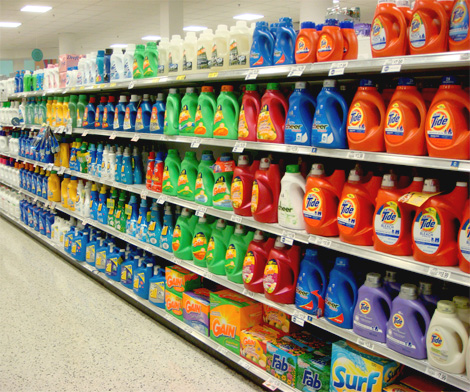
 I therefore often tell persons I serve, that the best way to improve your communication is to communicate. I know why this might be the best  solution for some persons served: they see the predicament that brought them to my attention, as occurring in real life. They want to practice things that they will do in real life...."I'm never going to do that! 'Name 5 brands of laundry detergent you see advertised on TV' " (perplexed scowl accompanying)....


That person may tell you instead, that she/he knows she will be functioning better - when her daughter drops in unexpectedly from college with a week's worth of laundry, and needs it in 24 hours. Her post concussion syndrome would initially have capsized any attempt to run her household. But, following practice of the activity in the house that eliminated any concern for the component skills constituting 'doing laundry', this person served rocks the house with laundry.


 Though this person served may have occasional feelings of "Now WHAT am I doing?", or momentarily forget to add the fabric softener when  the phone rings,  - or that she needs a rest between loads - she gets her laundry done.  Yes, SLP does laundry. But- what if the performance of the person served breaks down during the marathon washing for collegian daughter??


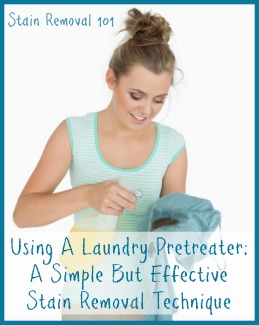
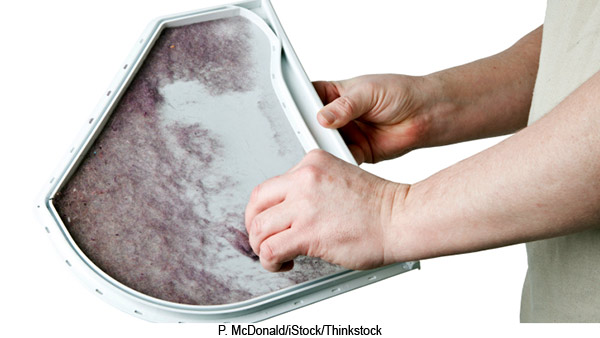
Perhaps she needs the washing marathon broken down during treatment, to work on the wash cycle in isolation: the sequence of sorting, pre-treating, loading, adding detergent, setting cycle, starting, adding fabric softener, then transferring spun clothing to either the dryer or hanging them to air-dry. The series of actions are organized and strung together: the inventory of materials needed, sufficient quantity of each, the spaces in the laundry area that must be maneuvered, the time intervals involved, and strict control of environmental distractions (e.g. persons observing, entertainment played in the background, animals walking through the wash area), help the person served not be sad about the wash cycle. I know why the training of this activity works, given the focus supplied. Less variables to control, a more "clinical" environment to make paying attention to tasks easier, and multi-modal sensory feedback to give the person served oodles of clues.


There are still other persons served that would find - that they continue to demonstrate impairments of bodily function. The laundry scenario may then be disassembled even more. so the various cognitive-communicative component skills that support each step in the sequences WASH, DRY, FOLD - (non)verbal memory, attention, or expressive language to name just a few - could be strengthened to a degree that laundry is made new again! "When you think of laundry detergents you can buy in the store, you think of ....?". I know why impairment-based training is essential, relevant and effective for a cohort we serve. The satisfaction of serving persons who find themselves struggling to connect with the world is bottomless.


I know why the work of professionals in speech-language pathology is so wonderful. I get this.

Saturday, September 3, 2016

Are you just sitting?

A previous post in this blog indirectly posed a question: does  'slow therapy', an outgrowth of slow medicine advocated by Victoria Sweet and others*, have any place in the modern human service system? Do speech language pathologists have the space and time to, in addition to treating components of the core impairments of bodily function; - to support and nurture all other parts of the person they serve? As the previous post indicated, you may do it - but you should not write it into the record. BUT, yes - you SHOULD do it. Slow therapy can mean better quality outcomes for the persons served. When you use this approach, you may want to signal to the person you are not one of 'the usual suspects'. You do not conduct SLP business "as usual".

Sweet put it this way, describing her encounter in "just sitting" with a patient at the Laguna Honda Hospital (p. 327, paperback edition): "The diagnosis had appeared without me sending her to the emergency room, without additional tests, scans or biopsies. Somehow, just by sitting with her, I'd understood what was wrong. I began to try it with my other patients. Just sitting". She goes on to say that by taking 5-10 minutes to sit at the bedside of other patients, she knows what has to be done.

What, though, is just sitting? Is it replicable? What are the steps to take to accomplish it? How should the SLP place importance upon it, among all the other tricks in her bag? Sweet goes on to describe the experience as "most like waiting for a train in Switzerland...Sitting on a bench, with ticket purchased and in your pocket, knowing that the train will arrive on time; there is nothing more to worry about and nothing more to do". It is the supreme degree of focus that a skilled diagnostician brings to every visit with persons served, because every clinical visit is a behavioral experiment. It is the physical presence that a trained observer like an SLP may use purposefully, to elicit actions or discourse from the persons served: a deliberate "Hawthorne effect".

Every visit with your person served gives you opportunity to revisit the therapeutic alliance, first forged at evaluation and primal to the success of your encounter with that person. There is a time for obtaining major bundles of data from your person, at which time you might receive the nickname "the question lady" or the equivalent. There is also a time for taking in the person's whole, when you are just sitting.


* Quotations are taken from:

Sweet, Victoria. GOD'S HOTEL: A Doctor, A Hospital, and a Pilgrimage to the Heart of Medicine. New York: Riverhead Books, April 2013.


Monday, August 22, 2016

Alliances

(I owe much in this blog post to having recently read Abraham Nussbaum's book, THE FINEST TRADITIONS OF MY CALLING (2016).  Nussbaum is a psychiatrist and university faculty in Denver Colorado, who grew this book out of a faculty scholar project in Medicine and Religion at the University of Chicago. )


About a decade ago, I drafted a document - and the writing of it took a number of days, so I was proud  that I had shown so much discipline to complete the writing and evaluate it. The draft was titled "One Hundred True Things about Medical Speech-Language Pathology". It was full of aphorisms, crunchy bits, the 'hidden curriculum', and transverse sections of clinical activities and outcomes.


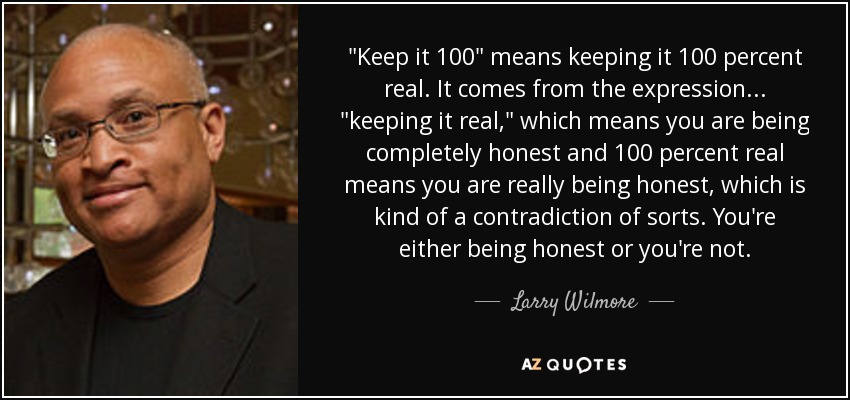
Students who had worked with me as master's degree candidates,  received a copy of the document during their clinical internship.   When i put out an open query to former students,  no one indicated tbat they currently had a copy. I needed to keep it 100, regardless of that original document seemingly consigned to history's dust bin.  I don't remember if this concept was touched upon in the list of true things. It should have been.


The therapeutic alliance: What a child psychatrist, who had led my employee orientation at the Allendale Association, Lake Villa IL, in August 2000, said - he was the psychiatrist who had treated the young man, confessing to arson in a 1958 Chicago church fire, - developing the rapport, the therapeutic relationship, or the therapeutic alliance between clinician and patient  was crucial and primary to clinical treatment.


 When the person served knows you,  trusts you and signals that they will take a journey of clinical change  with you, you may get wondrous things done. For the alliance is the foundation, the sourdough starter, the battery, the contract, the clear sky and the road ahead.

Placing the alliance primary in your clinical practice does not mean you are able, as an SLP, to shelve your policies and procedures, your time management and adherence to swchedules, your productivity targets, IEP deadlines, standardized tests' availability,  documentation rigor and timeliness, the distraction of additional staff vying for the time of the person served, the demands of your life outside work, or the inherent unpredictability of your clinical day. The alliance is primarily what the person served should see, with all else mediated by the SLP for the person served as it is needed. 


For the SLP wears many hats in her/his clinical roles, similar to the roles Nussbaum cites for the physician. Above and beyond your work as author, epidemiologist, technician, coach, teacher, and gardener,  - with the alliance properly set, you are the witness, you are the ship's captain and the servant (Nussbaum, 2016, pp. 260-61).