Sunday, July 22, 2018

Untangling tongues with things

Better Hearing and Speech Month 2018 is  over. We've bypassed National Joke Day; Workaholics Day, and even World Emoji Day. There's a lot still that can make us happy, about our potential for bringing a better quality of life to people we serve as SLP's.


In spite of decreasing program budgets, increasing controls over reimbursement, productivity targets for clinical practice that threaten making persons served, widgets; the challenges to our clinical foundations, through disciplines fighting over who will serve; even, will persons having needs, be served? - there are innovations, breakthroughs and standards upon which practitioners can stride, and see the next bright vistas for the professions. There are so many interventions that can be celebrated: I can take one in hand.


I owe thanks for inspiration to Katie Schwartz (Alt Career Options), as well as to Gayle Van Tatenhove (Core Vocabulary Classroom Kit) , Julie Tracy (Urban Autism Solutions), Beth McCauley (Animal Assisted Therapy), Rachael Baethge (Speech/Language Skills at the Zoo), Matthew Crawford (Shop Class as Soulcraft; The World Outside Your Head) and Kelly Lambert (Natural Enriched Environments)....and all those not mentioned, who have helped grow the field with instrumental, non-traditional approaches to treatment.
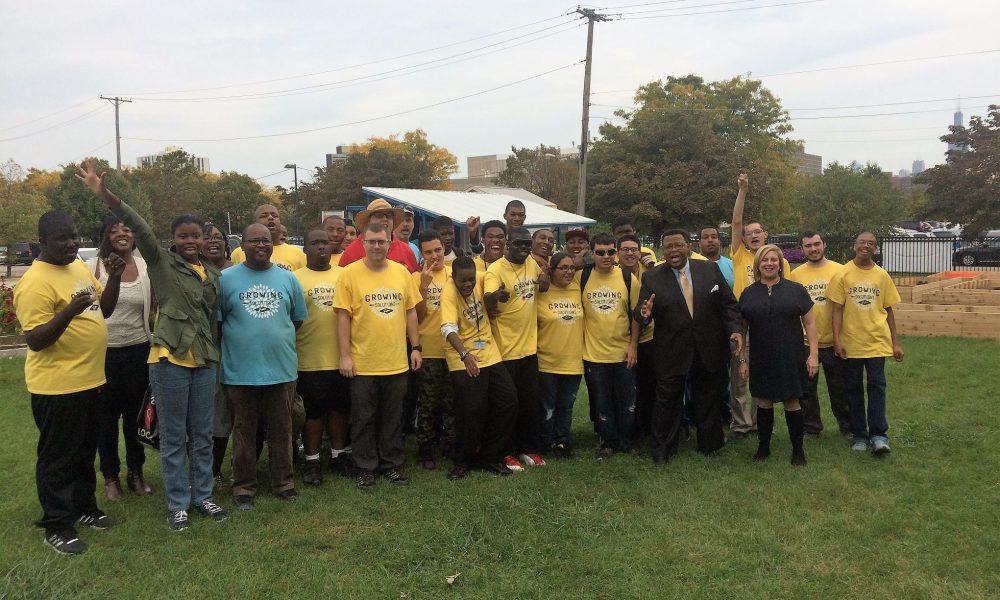


By instrumental, I point to instrumental activity, or what is called 'handiwork'....instead of picking up a  picture card, pick up a ball or a horse's reins. When you are bored with squeezing or pointing, substitute digging or watering. Have you done all the stimulus-response work in the clinic, you can abide? Get out into real life, and practice the skills where persons served will ultimately use them.


Why handiwork? The rich, abundant and emotive energy of everyday life is largely driven by instrumental action: we live through eating, painting, writing, driving, exercising, praying, and so many more actions that are mediated by communication. The writings and teaching of these innovators will remind us clinicians that communication:

* does not just happen in quiet spaces;
* often occurs when persons served are performing an action of daily living;
* requires the clinician to manage multiple, complex variables to help persons served to reach a functional outcome;
* provides outlets for persons served, to sustain and increase emotional health, in conjunction with cognitive communicative health;
* is how you do things;

Let's communicate where we live!


Monday, April 2, 2018

Could I ask for what I wanted?

"A clumsy, fat, left-handed, stuttering kid". Yes, I remember mentally reviewing that list of knocks I had given myself, while still in grade school. As concise as that list was, you would think that as a grade school "teacher's pet", I could find some concise answers to that list. Clumsy? Work on your coordination and strength. Fat? LOSE WEIG....sorry, lose weight; I tended to hear that solution from others at a loud level. Left-handed? Either have your hand dominance changed for you, or develop ambidexterity. Stuttering (another loud admonition)?? STOP STUTTERING!!


But life needed to go on. Life, food and learning needed nurturing. The food was especially captivating. Fried foods: so good. Fried chicken, fried oysters,  hamburgers, roast beef, roast pork, pork chops, shrimp, meat loaf, pizza, and spaghetti were among the more popular proteins. Corn, fried potatoes, mashed potatoes, rice and GRAVY, roasted potatoes, onion and celery, beans, peas, sweet potatoes, tomatoes, peppers, fried okra, lettuce and cucumbers were among the more traditional vegetables. But that omits any details of the snack calories available to me and my siblings: potato chips, cookies, crackers, candy, popcorn, gum, soft drinks (with peanuts poured inside), and fruit. In the final analysis, not that much different than the diet of most 1950's - 1960's kids, aspiring to be middle class. No one held a gun to my head during those years and said, "Eat that NOW", but I more often displayed my hearty gratitude for all that was served. All but spaghetti, because in grade school - I had been told by a sibling that spaghetti had worms in it.

There was garden produce harvested each year from our back yard, but not by me, if I could feign polio or some other low incidence malady. It was the act of growing up and being given a number of 'come to Jesus' talks, about learning how to cook and bake; learning how good it felt to contribute to the meal by picking, "snapping", cooking, serving, eating all those good morsels of vitamins, minerals, fiber and flavorful goodness - often accentuated by being cooked with butter and salt; but that was what was used for cooking at the time. Hindsight bias makes you feel so very smart, but it doesn't give you means to deny your history. "I got better", as the character in a noted "Monty Python" film noted. It took bare subsistence through my college career, and a few good friends who coached me through - when I moved to the Midwest US - selecting and preparing more fresh food. That trend would continue through transition to my non-single life.

I learned to ask for fresh, sustainable, lower-fat, lower-carbohydrate, properly-portioned food for my meals. One popular admonition about one's diet is as follows: Eat food. Not too much. Mostly plants. Thanks to journalist Michael Pollan and others - there were rules for healthy eating I could use.

Would I ever have reached a point where I could imagine being non-single, if I did not confront my fluency disorder? It started in the summer term between junior and senior undergraduate years, when I was enrolled in a general speech class for teacher training. My first speech completed, I was told to have an evaluation at the University speech clinic or - a teacher education track was not in my future. In that summer semester, with my first formal speech therapy program underway (there were no programs for SLP in my Mississippi district, during my school years), I grew up a lot. On a collision course with my growth as a fluent speaker, there were the Watergate hearings. There was my application to graduate school, soon to segue from a master's program in English to one in communicative disorders. And then, there was my trying out for a part in the Ionesco play "The Bald Soprano" as part of my treatment.

In each of these tracks of my impending adulthood, could I ask for what I wanted? We shall see.  

Sunday, April 1, 2018

Be a Conscience

It's such a foreboding concept, conscience. Foreboding because we give the idea so much weighted respect. Conscience, after all, is one of our higher functions that make us truly human. It is one of the attributes of humanness that our moral mentors hold up through human history, as a "thou shalt" skill to acquire. Conscience is so much more than consciousness.  Where consciousness pertains to the baseline self-awareness of your internal state, conscience gives legs, voice and vision to your internal state. If consciousness is the voice of "I am", then conscience is the voice of  "Here I am, and - OMG! What did I just do?" Conscience may cause the ground under your professional life to go shaky, but with experience and good humor, you may keep your self-awareness balanced and have the best possible day in the workplace.


The profession needs consciences - individual clinicians, academics and advocates that actively bring their legs, voice and vision to keep their work focused, vital and memorable. When the work is focused, the clinician respects the work processes that have been proven optimal. Processes that do not allow the integration of the professional's skill, the needs of the person served, and the goals of the institution that sponsors the clinician - they get re-tuned to resonate with the vitality or life force of the clinician.  When you are prepared for the work day by being grounded with your own vitality, you can complete work tasks that can stand on their quality, and can be applied as memorable across patients and impairments.


As you become grounded in how your conscience, properly applied, can bring the most to your clinical or research activities, - also think about how the world external to your workplace can be guided by conscience. Does your person served, live in an environment that could contribute to their impairments? Is the support structure for the person the best that could be imagined? How do the person's communities, in concentric circles about this person's world, bring positive or negative energy to the person's quality of life? The clinician - researcher who exercises her/his conscience in the wider world; it is work that can be most rewarding - but perhaps not of the monetary variety.

Martin Luther King, Jr., is quoted as saying "There comes a time when one must take a position that is neither safe, nor politic, nor popular, but he must take it because conscience tells him it is right".


Sunday, February 11, 2018

Be a Team Player


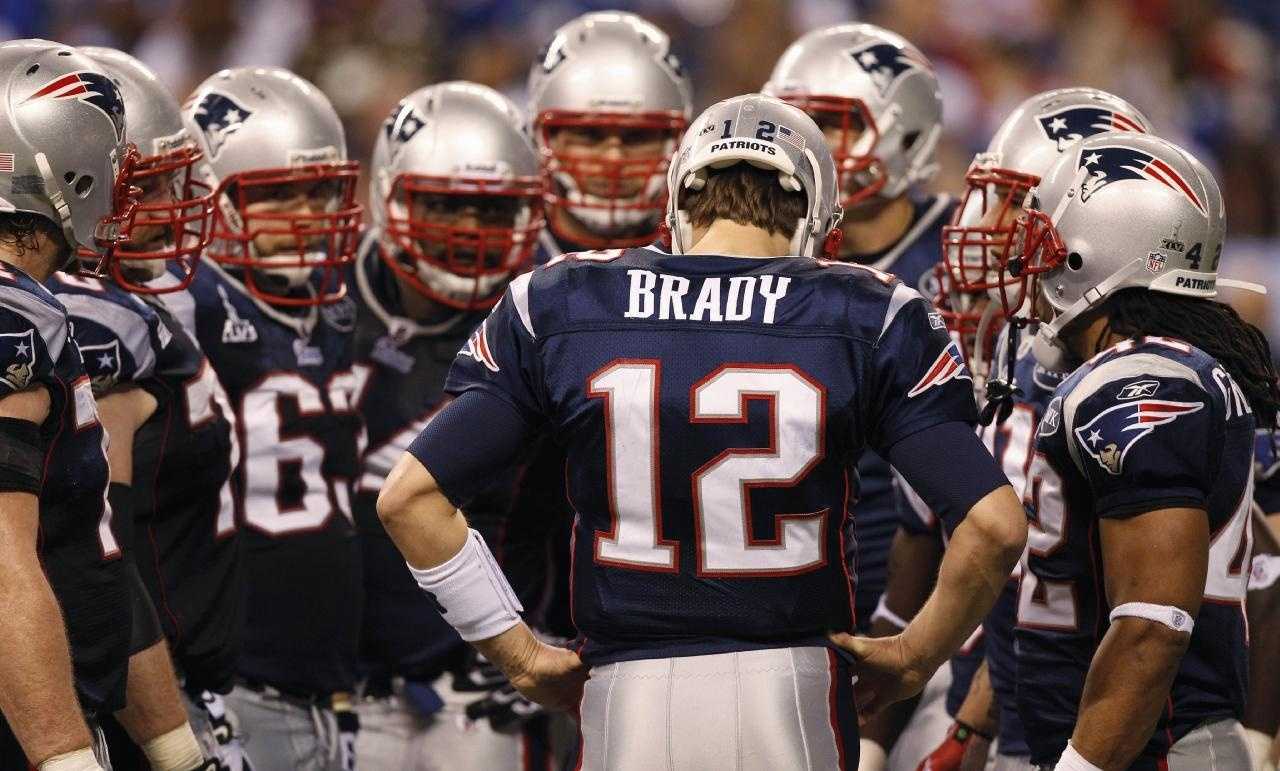
There may be no "I" in team, but there can be dog heads on a team. Since it's Super Bowl Week once again, and the 2017 post during Super Bowl week has been one of the most read int his blog's history  - here we go again. 

"Isn't that the way they say it goes" - you are barely comfortable in your own skin as a clinical professional, and then you are asked to be part of a group of professionals who, largely, don't do what you do! Aren't you subsuming your identity as an SLP to a group that demands more? 

In the right atmosphere, you can easily work alongside your interprofessional peers in a work team and set your standards high. You can energize your career, by helping persons served achieve outcomes outside the therapy room. More energy for your persons served and your workday, can bring the SLP many, many growth opportunities. 

Let this year's Super Bowl halftime entertainer tell you: 


I'm bringin' team work back (YEA)
Those PT's don't know how to state a fact (YEA)

I'll show them; writing won't bring heart attack (YEA)
....
Solo staff?
When you do treatment, you block wheat from chaff!

We need you for our team, for all, not half;
Your time is gold for patients, their behalf;...
....
Work with us (Be on our team)
Please help us (Be on our team)
DO MORE through us (Be on our team)


We'll do much more (with teamwork)
To keep our patients well; life's not a bore (with teamwork)
We tweak real life, so those we serve have life galore (with teamwork)
....
Work with us soon ( Go team!)
We'll see you at the meeting at full moon (Go team!)
To get your teamwork on....(Go team!)


Sunday, January 7, 2018

Be a Good Citizen

I think there's a lot to do these days, just to keep this world a good place to be. We know that our country is in transformative times, when the underpinnings of what drives the civil society are all challenged. When the 24 hour news cycle, and the parallel, large bore, continually evolving information superhighway lanes keep pushing, bombarding, twisting, inundating our information processors between our ears, - human nature tells us to pull the covers up, as tightly as possible. "Why, why, why!? Leave me alone!" Why not just go through our everyday, only processing the breaking news we're forced to digest, because - it's all too much. "Too much!"


I mean, haven't we had it drilled into our procedural memories as SLP's, that productivity is one of the biggest feet on our daily gas pedal?!? Get those persons served, get your documentation done and PHEW! "That's all I can stands, I can't stands no more", in the immortal words of Popeye the Sailor. Though Popeye meant that it was time to right a wrong, in the case of the SLP clinician who is asked to get involved in the wider socio-economic-political world, that task may be a dike that even Hans Brinker couldn't plug. Why get involved in the bigger world, beyond the clinic or treatment room?

But ultimately, even the most hardened of us by the daily professional grind - we know that in order to make a significant difference in the bigger world, we have to carry the water of good citizenship ourselves.  Whether it is to  spread the news in your community about a clinic fundraiser; to buttonhole a legislator whose vote can decide a critical budgetary issue, keeping the lights on for your practice; to write an newspaper opinion essay on the work of your fellow professionals, and how cleanly our work dovetails with the goals of a body of government; to engage in dialogue with persons of all stripes across all the social media platforms, without concern for personal attack or truncation of your voice; or to perpetuate the values of the democratic republic that has supported the growth of our services, by being prepared then VOTING; - our taking a stand as a citizen of our society requires focus, requires energy that, at times, is very spare in all our lives, but - when it is done well, it makes all our lives more stable and more enriched and more - perfect. Novus ordo seclorum. 


If you see that being an advocate for an individual, a guerilla fighter for your profession, a lobbyist for an issue persons served face every day, a letter writer for your employer's cause, or a candidate for office in a professional association; - if you see that is for you, then - find a mentor to guide you through the webs and labyrinths of government, of public and private institutions; develop expertise or seek consultants to help you research information, as needed, for your interests; make a plan of short and long-term goals (we know how to do this!) for the projects that call for your energies; and then set out with glee and with purpose, to make the world a better place for persons served - and for the persons who serve them and their circles. Your entire skill set as an SLP will serve you well, as you grow in your role as a good citizen.


Monday, January 1, 2018

Be an entrepreneur

The reader overhears part of a motivational talk I give myself often, as I am leaving my car each morning to enter my job site: "This is a valuable service I provide. I don't go to work because it is where I am supposed to be, but it is work in which I believe. Today (the car door closes) I am going to make a lot of money for my employer, and help many people have a better quality of life. I am going to make deep inroads into my patients' needs. There may be scads of barriers in my way as I work on these goals, but - I will make progress on these goals!"

Sales. We don't go into the professions of audiology or speech-language pathology ostensibly to sell, but selling is a primary goal of what we attempt to do. In the beginnings of our careers, and even as we become mature and self-starting clinicians, we have to sell ourselves that we can do this. I didn't prepare the materials as well as I had hoped; - I stayed up too late; - I do NOT want to face my supervisor today; - and there are a bazillion other reasons not to go into work. But, let's assume the battlements at the job site are energetically rushed. Now we have to sell our work to our customers. Who's that?

Our customers are everyone from the person served and her/his circles of support; the referral sources; the support staffs around that person and behind the referral sources; the third-party payers that keep the human service system funded;  the educational system that prepares future professionals in the fields; - and the larger organizations that employ or otherwise empower our employment to serve persons. We close the sale for each of our customers when we fulfill our mission of service; when we work efficiently; when we work with sensitivity to the evolving needs of the person; when we demonstrate that our services contribute to a healthy bottom line; when we demonstrate that our services contribute to persons' increased health and wellness, not only for individuals but also for the population.

What helps close a sale for a clinician? First, realizing that you have a sales job to do for your customer. Tailoring then presenting your sales pitch. Depending on your customer, you have to make the pitch in a way that will get a clear response. Is it the response you want? Hone, polish, trim, refine and re-pitch the pitch until the deal is closed....if it can be closed. The cycle is repeated continuously throughout the work day, as a function of the customer's status. Constant deal-making. Constant marketing. The art of the deal is that deal-making is intrinsic to the clinical workday.  Who wins with your becoming an effective clinical entrepreneur? The person served wins. All your customers win. You win.

Saturday, December 23, 2017

It's Christmas. Eat!

I was working the graveyard shift out of Dysphagia Division. You know how it is before a holiday: the cases pile up, like rhinoceros waste when the zookeepers go on strike. There were so many concerns about people swallowing that I was getting choked up. No recourse existed, but to see all the people I could before being shooed away by managers for the Christmas time off.

I started the day shift (yes; I was asked to cover another shift) helping a lady eat, who was not aware she was having problems. The method was simple: present the spoon to her line of sight, wait for her to open her mouth and accept the utensil, then press lightly down into the tongue body as the spoon is being withdrawn.  The person served had the best chance to swallow her meal without clinical signs of aspiration (CSA). Staff were shown how to pace their feeding style to the strengths of the patient.

There was, then, a woman who was struggling after a diagnosis of cancer to get anything down, even liquids. All material were coming out of her nose, at least 75% of the time. First, the decision was made to change the liquid consistency from THIN to NECTAR, so that the patient might more easily maintain liquid flow in the pharynx. The patient also demonstrated 7 seconds mean duration for expiratory pressure, measured in "blowing bubbles" through a straw into a glass of water, with nostrils pinched shut. There was barely a 1 second duration of bubbles sustained, when nostrils were NOT pinched shut. Luckily this patient had been maintaining her weight through PEG tube feeding.

I barely had time to punch out, after the last case had been completed; dash to my car and head to the international airport, to make my flight to Cancun for the holiday.. Just my luck: someone at the table in the airport restaurant, while I was waiting to board, started to choke on a burger. Someone hurrying, just like I had felt myself hurrying all day to see these swallowing cases. Someone too pressed for time to be in the moment; to listen to her/his body and eat/drink within the limits of her potential. I suffered through the sensations of my own GERD, before talking to each patient about GI PEACE.  Heckuva job, swallowing police. It never stops.