Sunday, October 2, 2016

Shall I attach myself?


I had been looking for some metaphors or images, that captured the depth of tragedy in which one finds her/himself with a dementia. It is the dissolution of self, in a most frightening form. Ultimately, the trope that arrived to my subconscious was the recurrence of macabre images from the Patrick Swayze/Demi Moore/Whoopi Goldberg film, GHOST.


When Tony Goldwyn, as Swayze ' s adversary, has his ectoplasmic self enveloped in black writhing, - I had found my images. It is terrifying to me; losing through the onset of dementia one's connection to the bigger world, the multiple perspectives, and the powers to reflect, reminisce and to rhapsodize. If I am writing this blog and am demented, then any attempt to make this topic understandable may be churned up and pulled into a vanishing point.


The late Robin Williams was found at autopsy to have shown signs of Lewy body dementia (LBD). The constellation of symptoms includes central, core, suggestive and supportive features - some similar to, and some very different than those seen in the most well known dementia: Alzheimer's disease. http://www.lbda.org provides resources that further outline the Lewy body dementia diagnostic criteria. One 2013 paper on LBD from the Mayo Clinic, described in the epidemiological literature*, cited its incidence as roughly one-fourth that for Parkinson disease. When Williams had discerned that his mental status had changed, and what the cause might have been, I can only imagine the terror and the pain he must have felt at knowing his creativity, his zest for life and his utter humanity were being dragged into fog.


Williams has had esteemed company, descending into that flat world of dementia. Charlton Heston, Univ. of Tennessee basketball coach Pat Summitt, Glen Campbell, Norman Rockwell, Ronald Reagan and E.B. White are only a few of the famous whose creative and productive lives have been spirited away. And, like other diseases and syndromes that affect the individual's ability to communicate, think and live independently, dementia brings gloom into the lives of the friends, family, support circles and wider world around the person afflicted. Those who know and care about the person with dementia - they are left to lament that the person they know - that person is leaving, or is gone.


It may be true - true, that the person with dementia is becoming someone not recognizable to their circles of support. The vestiges of the person that is remembered, should still compel her/his loved ones to keep near, and love the one they're with. The late Oliver Sacks made a particular point in his neurological case studies, of imbuing the persons he served with dignity - and giving them relentless respect. Whomever they had become at the time, Sacks saw that these persons were not that different than us and deserved our compassion.** They also deserve our connecting with them.
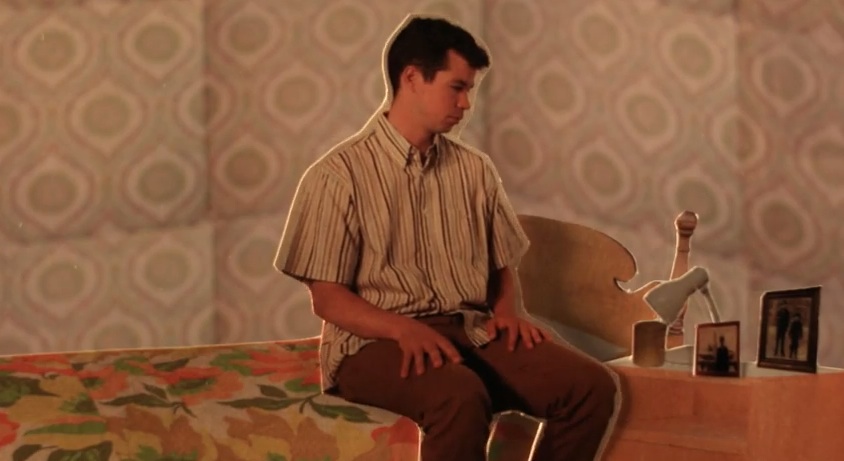


"Shall I attach myself to the man who sprays wax on the grass?" - this was a statement passed on from an actual patient with dementia, who said it to a colleague in a rehab hospital, who passed it along to me. YES, you should - that would be my answer. And we should attach to you.

* Savica R. et al, "Incidence of Dementia with Lewy Bodies and Parkinson Disease Dementia", JAMA Neurology, 2013, 3579.
**  for example, read Sacks' essay "The Lost Mariner", originally found in the 2/16/1984 NEW YORK REVIEW OF BOOKS, then collected in THE MAN WHO MISTOOK HIS WIFE FOR A HAT. New York: Touchstone/Simon and Schuster, 1998, 256 pp.



Tuesday, September 27, 2016

I Know Why

One reason that communication is pretty wonderful: you can do it anywhere, at any time. You can do it lying down. You can do it as a clown. You can chat with mom and Dad. You can fight evil, and not be sad. Communication is like the best all - cotton undergarment; it fits all, it's extremely comfortable,and no one can come by and snap your strap. It is yours. No one had better say you cannot communicate. "I got this", as the young people say.


 I therefore often tell persons I serve, that the best way to improve your communication is to communicate. I know why this might be the best  solution for some persons served: they see the predicament that brought them to my attention, as occurring in real life. They want to practice things that they will do in real life...."I'm never going to do that! 'Name 5 brands of laundry detergent you see advertised on TV' " (perplexed scowl accompanying)....


That person may tell you instead, that she/he knows she will be functioning better - when her daughter drops in unexpectedly from college with a week's worth of laundry, and needs it in 24 hours. Her post concussion syndrome would initially have capsized any attempt to run her household. But, following practice of the activity in the house that eliminated any concern for the component skills constituting 'doing laundry', this person served rocks the house with laundry.


 Though this person served may have occasional feelings of "Now WHAT am I doing?", or momentarily forget to add the fabric softener when  the phone rings,  - or that she needs a rest between loads - she gets her laundry done.  Yes, SLP does laundry. But- what if the performance of the person served breaks down during the marathon washing for collegian daughter??


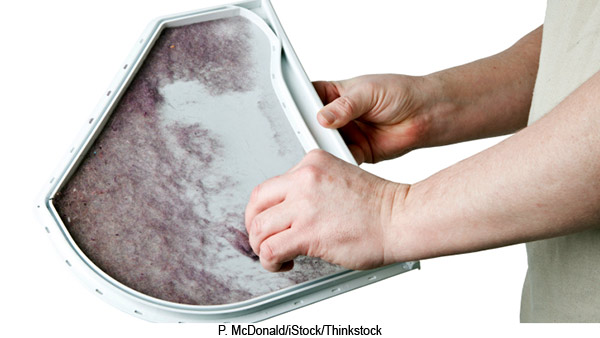
Perhaps she needs the washing marathon broken down during treatment, to work on the wash cycle in isolation: the sequence of sorting, pre-treating, loading, adding detergent, setting cycle, starting, adding fabric softener, then transferring spun clothing to either the dryer or hanging them to air-dry. The series of actions are organized and strung together: the inventory of materials needed, sufficient quantity of each, the spaces in the laundry area that must be maneuvered, the time intervals involved, and strict control of environmental distractions (e.g. persons observing, entertainment played in the background, animals walking through the wash area), help the person served not be sad about the wash cycle. I know why the training of this activity works, given the focus supplied. Less variables to control, a more "clinical" environment to make paying attention to tasks easier, and multi-modal sensory feedback to give the person served oodles of clues.


There are still other persons served that would find - that they continue to demonstrate impairments of bodily function. The laundry scenario may then be disassembled even more. so the various cognitive-communicative component skills that support each step in the sequences WASH, DRY, FOLD - (non)verbal memory, attention, or expressive language to name just a few - could be strengthened to a degree that laundry is made new again! "When you think of laundry detergents you can buy in the store, you think of ....?". I know why impairment-based training is essential, relevant and effective for a cohort we serve. The satisfaction of serving persons who find themselves struggling to connect with the world is bottomless.


I know why the work of professionals in speech-language pathology is so wonderful. I get this.

Saturday, September 3, 2016

Are you just sitting?

A previous post in this blog indirectly posed a question: does  'slow therapy', an outgrowth of slow medicine advocated by Victoria Sweet and others*, have any place in the modern human service system? Do speech language pathologists have the space and time to, in addition to treating components of the core impairments of bodily function; - to support and nurture all other parts of the person they serve? As the previous post indicated, you may do it - but you should not write it into the record. BUT, yes - you SHOULD do it. Slow therapy can mean better quality outcomes for the persons served. When you use this approach, you may want to signal to the person you are not one of 'the usual suspects'. You do not conduct SLP business "as usual".

Sweet put it this way, describing her encounter in "just sitting" with a patient at the Laguna Honda Hospital (p. 327, paperback edition): "The diagnosis had appeared without me sending her to the emergency room, without additional tests, scans or biopsies. Somehow, just by sitting with her, I'd understood what was wrong. I began to try it with my other patients. Just sitting". She goes on to say that by taking 5-10 minutes to sit at the bedside of other patients, she knows what has to be done.

What, though, is just sitting? Is it replicable? What are the steps to take to accomplish it? How should the SLP place importance upon it, among all the other tricks in her bag? Sweet goes on to describe the experience as "most like waiting for a train in Switzerland...Sitting on a bench, with ticket purchased and in your pocket, knowing that the train will arrive on time; there is nothing more to worry about and nothing more to do". It is the supreme degree of focus that a skilled diagnostician brings to every visit with persons served, because every clinical visit is a behavioral experiment. It is the physical presence that a trained observer like an SLP may use purposefully, to elicit actions or discourse from the persons served: a deliberate "Hawthorne effect".

Every visit with your person served gives you opportunity to revisit the therapeutic alliance, first forged at evaluation and primal to the success of your encounter with that person. There is a time for obtaining major bundles of data from your person, at which time you might receive the nickname "the question lady" or the equivalent. There is also a time for taking in the person's whole, when you are just sitting.


* Quotations are taken from:

Sweet, Victoria. GOD'S HOTEL: A Doctor, A Hospital, and a Pilgrimage to the Heart of Medicine. New York: Riverhead Books, April 2013.


Monday, August 22, 2016

Alliances

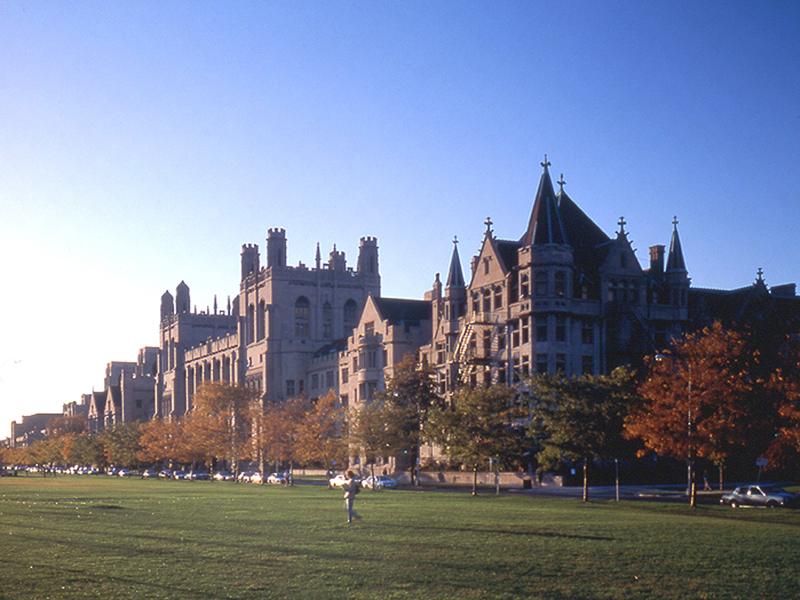
(I owe much in this blog post to having recently read Abraham Nussbaum's book, THE FINEST TRADITIONS OF MY CALLING (2016).  Nussbaum is a psychiatrist and university faculty in Denver Colorado, who grew this book out of a faculty scholar project in Medicine and Religion at the University of Chicago. )


About a decade ago, I drafted a document - and the writing of it took a number of days, so I was proud  that I had shown so much discipline to complete the writing and evaluate it. The draft was titled "One Hundred True Things about Medical Speech-Language Pathology". It was full of aphorisms, crunchy bits, the 'hidden curriculum', and transverse sections of clinical activities and outcomes.


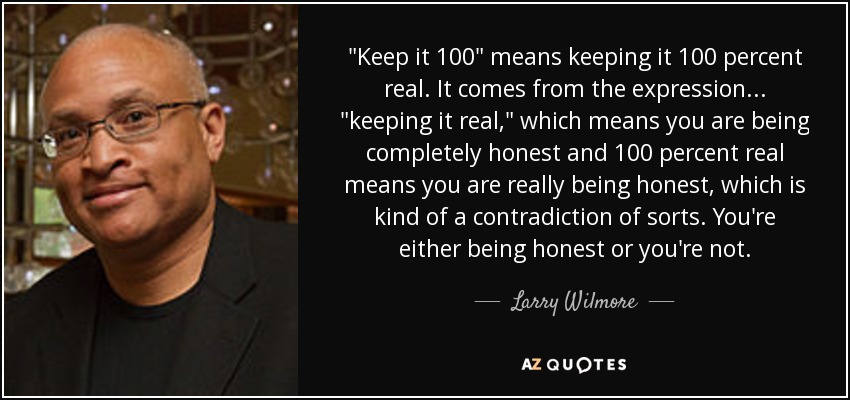
Students who had worked with me as master's degree candidates,  received a copy of the document during their clinical internship.   When i put out an open query to former students,  no one indicated tbat they currently had a copy. I needed to keep it 100, regardless of that original document seemingly consigned to history's dust bin.  I don't remember if this concept was touched upon in the list of true things. It should have been.


The therapeutic alliance: What a child psychatrist, who had led my employee orientation at the Allendale Association, Lake Villa IL, in August 2000, said - he was the psychiatrist who had treated the young man, confessing to arson in a 1958 Chicago church fire, - developing the rapport, the therapeutic relationship, or the therapeutic alliance between clinician and patient  was crucial and primary to clinical treatment.


 When the person served knows you,  trusts you and signals that they will take a journey of clinical change  with you, you may get wondrous things done. For the alliance is the foundation, the sourdough starter, the battery, the contract, the clear sky and the road ahead.

Placing the alliance primary in your clinical practice does not mean you are able, as an SLP, to shelve your policies and procedures, your time management and adherence to swchedules, your productivity targets, IEP deadlines, standardized tests' availability,  documentation rigor and timeliness, the distraction of additional staff vying for the time of the person served, the demands of your life outside work, or the inherent unpredictability of your clinical day. The alliance is primarily what the person served should see, with all else mediated by the SLP for the person served as it is needed. 


For the SLP wears many hats in her/his clinical roles, similar to the roles Nussbaum cites for the physician. Above and beyond your work as author, epidemiologist, technician, coach, teacher, and gardener,  - with the alliance properly set, you are the witness, you are the ship's captain and the servant (Nussbaum, 2016, pp. 260-61).


Wednesday, August 10, 2016

The things we don't write about: a cautionary tale

You may be that speechie, that one in a million,
You've accomplished what you had said
But it had better have been in that treatment plan
That's the way that we'll be PAID.


The people you serve, they admire your nerve,
How you hoist spirits up from the dead
Was it measurable though, what you did; - head to toe - ?
If not, we may not get PAID.


Let's get PAID, - keep the lights on and do stuff -
And when we get PAID, we can do the other good stuff!


We won't say what it is, but know it's all right
When the client needs something, you bring it to light
It's QUALITY, folks, just some extra delight
When they see it, we will get PAID.


We don't write about quality - what does it do?
You document progress in quantities, true - but,
The invisible human-scale cosmic glue; -
That's what, writ down, dooms our bein' PAID.


So "ten trials of X led to ten data points"
Like lining up empties in some swank beer joints
Though quality, meaning to data appoints;
Just that, means WE AREN'T GETTING PAID.


Sunday, July 24, 2016

Slow Therapy

I had picked up a copy of the 2012 publication GOD'S HOTEL, by Dr. Victoria Sweet, so that I might gather background, then read another book with a similar theme. I discovered that Sweet ' s memoir of her career at Laguna Honda Hospital, the nation's last almshouse on the SW side of San Francisco, could have described a hospital where I once worked. GOD'S HOTEL deserves a careful look in its own right. In the evolution of my own SLP career, I have done quite a few Laguna Honda things. Like the country's last almshouse, my employer had been doing some medical care differently. But first, why the title? "God's Hotel?".


One function of the medieval hospital, grown out of the monastery, was to offer not only opportunities for healing, but also for social welfare; hospitality along with care. The SLP, especially in the medical setting but impacting every setting, lives that balance every day as a steward of communication and swallowing. Were there time and space in a setting like Laguna Honda, for taking time and space to bring quality service to all?


In France and other countries that hospital was called the "Hotel Dieu"; one had even existed in New Orleans, from the mid-nineteenth century until the time of Hurricane Katrina. Just like these institutions had fulfilled unique roles in the healthcare system to serve the poor, San Francisco's Laguna Honda had existed for those persons having nowhere else to go when ill. The physicians and staff had had the time and the resources to care for those persons.


Dr. Sweet had helped grow at Lagunda Honda the concept of ' slow medicine', to describe how she took ideas from 'premodern' medicine (p. 139); specifically, how the writings of the abbess Hildegard of Bingen inspired her dissertation on one approach to nourish and restore the life force of a patient  (veriditas = 'green truth'). In this view of healthcare, the patient is a garden to be tended, not a machine to be repaired. This approach is not compatible with the modern healthcare system, but occasionally with my employer there were openings with an individual patient that made me think - something else was possible.


With slow medicine in the form of gardening therapy, there were approaches to engaging patients at Chicago's Michael Reese Hospital that led to more successes with more patients.  With the open mind that it fed, - a mind open to creativity,  to individuality and compassion -  slow therapy was one sterling example of caring for the patient. Sweet cited in GOD'S HOTEL (p. 91) as a huge precursor of her work, the writing of Dr. Francis W. Peabody. Dr. Peabody is quoted - "...the secret of the care of the patient, is in caring for the patient". 

Slow therapy made its mark for me at MRH, when I was bringing patients out the east doors of the rehab unit, to work the plants and keep them healthy until harvest.  Gardening sessions allowed the patient to find her/his voice, while conducting routine gardening tasks (cultivating, weeding, watering). Individualized session activities stimulated and tapped the skill sets for cognition and communication. Then, just as the institution named Laguna Honda became a new medical center with new ways, so did Michael Reese become - a memory. 


Was that the end of slow therapy, as Laguna Honda's transformation appeared to be the death knell for slow medicine?


Sunday, July 17, 2016

What just happened?

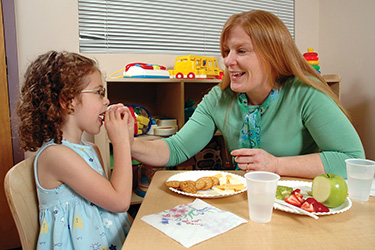
Leaving an SLP session, whether it occurred in a dedicated treatment room, an office, corner of a classroom, someone's living area, the kitchen table,  the bathroom sink, over a plate of food, under the best of intentions, or between meeting time, bite-o' lunch time, and report - writing time, analysis of a professional visit makes you feel good because you find often, that you are in control. The boss may peek in occasionally, and if you are an incipient or new professional, you're under the watchful eye of a clinical supervisor. What just happened, they might ask - !? But of course, you are not asking that question solely when the session has ended.

Before it even starts, you know how you want it to end. As you engage in the activities you have planned for your person served, your path - your trajectory - your connection to your objective flexes and changes continually, like a space vehicle's trajectory before landing on a 'heavenly body' continually changes as YOU approach IT. You ask this question then, many many times. Many, many, numerous, known and unknown variables influence your getting to the end. The person's skill set, or yours. Interruptions. The rhythm, the pacing, the emphases placed and the importance for insight vs. mastery. Then, as the clock ticks down the minutes remaining in the session, your decision making may center on only a few variables:


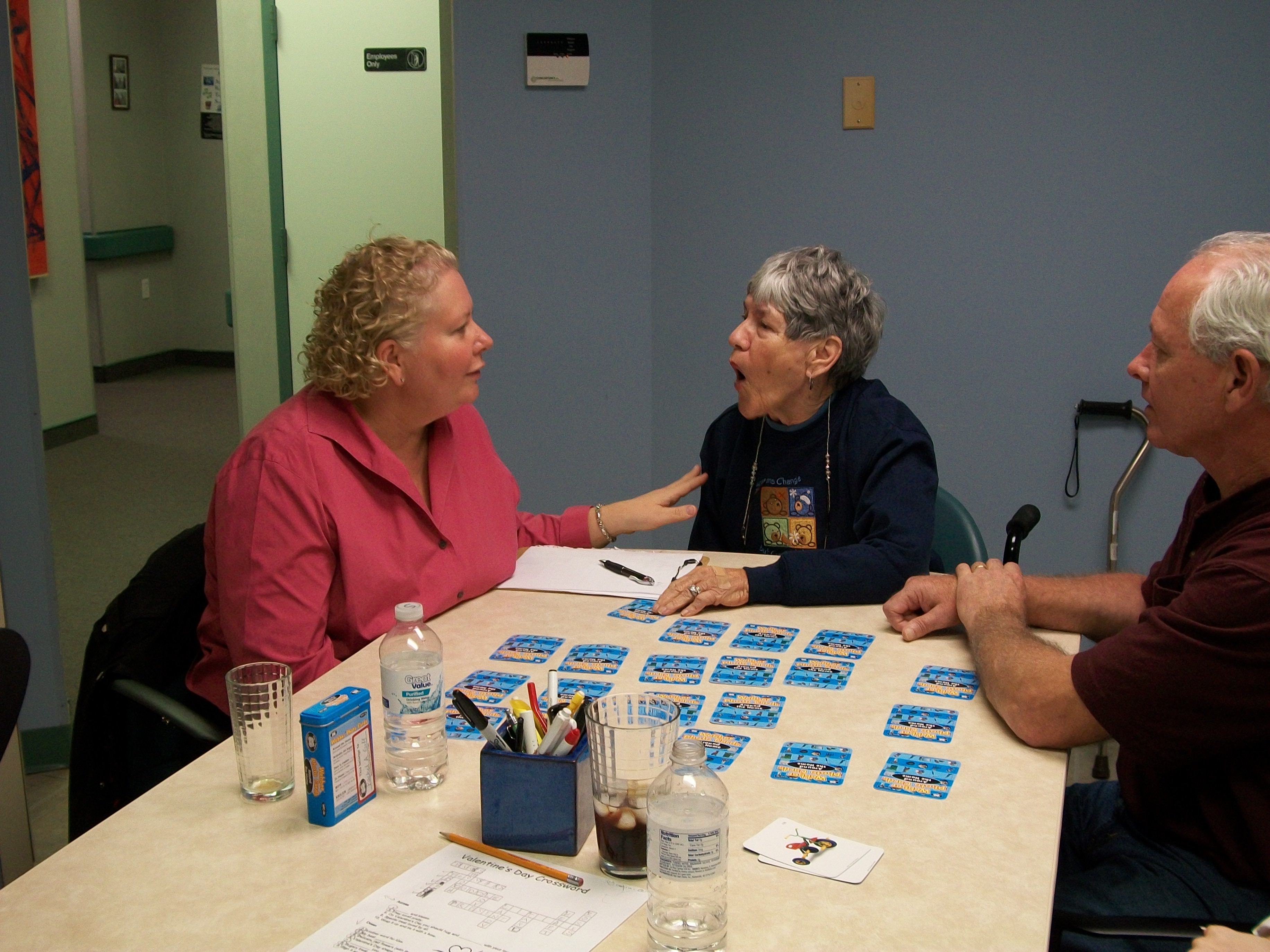
* Did the person you served get it? If the session focused on treating the impairment, were impairment - based activities getting buy-in from the person served? On the other hand, if training to increase performance on an impairment based skill made no sense,  - would there be an advantage to using participation based, real life activities?


* what does the data say? It is the arbiter upon which we depend, to determine clear evidence that the activity in question works. Trust your data collection, when it reflects your powers of observation and the variables you chose to control for, Find any trends and ask, "What does it all mean?".

* does the person hold what you do, and by extension YOU - in greater regard? As a professional, you are obligated to serve the person; not necessarily, to develop an acquaintance or friendship. But, one reason that communication is "pretty wonderful", is that it enables people to touch each other; to make a difference. A good session may sell the person served on doing another, and another, until some goals are met. Yes, ask promptly "what just happened".